
Pruning
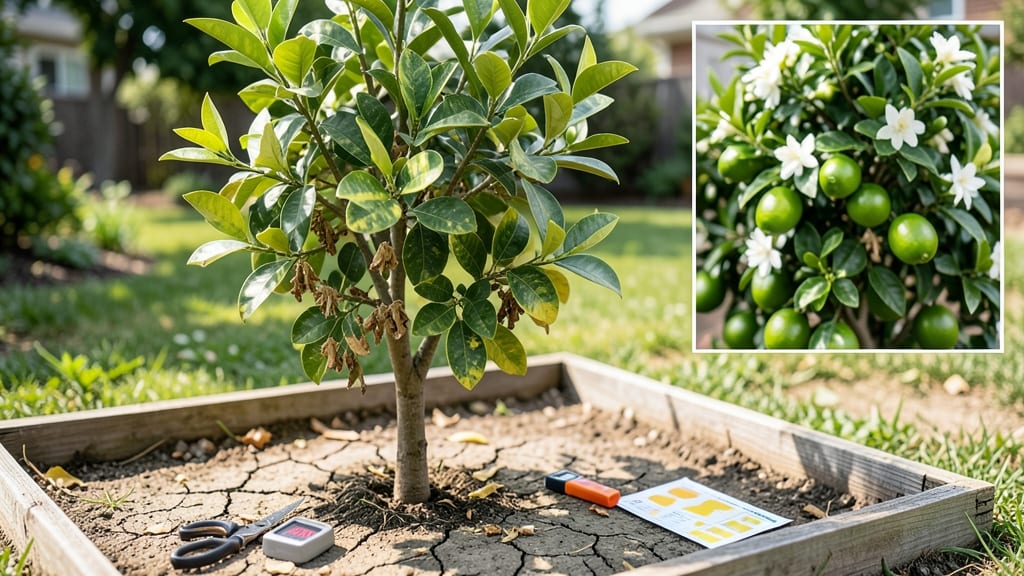
Your lime tree’s thick canopy is stealing sunlight—and that’s why it’s not fruiting. 🌿 I’ve seen this happen with my Meyer lime tree, where dense branches block light from reaching the inner growth, leaving flowers starved for energy.
The fix isn’t complicated, but it requires strategic cuts to open up that canopy and let sunlight hit every part of the tree.
First, focus on removing 20-30% of the thickest branches—especially those growing inward or crossing. Use clean, sharp pruners to cut just above a leaf node or outward-facing bud.
This isn’t about drastic thinning; it’s about creating airflow and light penetration. After pruning, your tree will redirect energy toward blooms instead of maintaining unnecessary growth.
You’ll start seeing the difference in 4-6 weeks—new growth will emerge, and next season’s flowers will have the sunlight they need to set fruit.
Pair this with a balanced fertilizer (high in nitrogen early in the season, then switch to phosphorus/potassium for blooming) and consistent watering, and you’ll be on your way to a bountiful harvest.
Pro tip: If your tree is young (under 5 years), it might still be maturing—give it another year before expecting heavy fruit. For older trees, this pruning technique works every year to keep the canopy open and productive. The key is patience and precision.
Root Causes of Missing Limes
When your lime tree stands tall but refuses to bear fruit, the issue often lies in its environment, health, or genetic quirks. Understanding these root causes can help you diagnose the problem and take targeted action. Here’s a breakdown of why your lime tree might be skipping the fruiting stage:
Lime trees (Citrus aurantifolia and related varieties) are sun-worshippers—they thrive in 6 to 8+ hours of direct sunlight daily. Without enough light, the tree diverts energy toward leaf growth instead of flowering and fruiting.
- Why it happens: Sunlight triggers photosynthesis, which fuels the production of floral hormones (like gibberellins and auxins). Low light weakens the tree’s ability to initiate blooms. - Actionable fix: Move potted trees to sunnier spots or prune nearby shade-casting plants.
If indoors, supplement with grow lights (12–16 hours/day).
Lime trees are tropical or subtropical and struggle outside their ideal temperature range. Extreme heat, cold snaps, or inconsistent seasons can halt fruit production.
- Why it happens:
- Cold stress: Temperatures below 30°F (-1°C) can damage flower buds, while prolonged exposure to below 50°F (10°C) stunts blooming.
- Heat spikes: Sudden temperature swings (e.g., desert-like days followed by cool nights) disrupt pollination and fruit set.
- Actionable fix:
- Cold climates: Plant in microclimates (e.g., near south-facing walls) or use row covers in winter.
- Hot climates: Provide afternoon shade during peak summer to prevent heat shock.
- Container growers: Move pots indoors during frosts or use heat mats in winter.
Lime trees are drought-tolerant but hate soggy roots. Watering issues—whether overwatering or underwatering—can stress the tree and prevent fruiting.
- Why it happens: - Overwatering: Saturated soil suffocates roots, cutting off nutrient uptake.
This triggers root rot (Phytophthora or Fusarium), which diverts energy away from fruit production. - Underwatering: Drought stress causes the tree to conserve water, prioritizing survival over flowering. - Actionable fix: - Soil check: Stick your finger 2–3 inches deep—water when dry.
Use well-draining soil (sandy loam + perlite). - Drip irrigation: Delivers consistent moisture without wetting foliage (reduces fungal risks). - Mulch: Apply 2–3 inches of organic mulch (straw, wood chips) to retain moisture and regulate temperature.
Fruiting demands specific nutrients, and deficiencies can sabotage bloom formation. Common culprits include nitrogen excess (leafy growth over flowers) or lack of phosphorus/potassium (critical for fruit development).
- Why it happens: - Nitrogen-heavy fertilizers: Too much N promotes foliage at the expense of flowers. Look for yellowing leaves with dark green veins (classic N overload). - Phosphorus (P) shortage: Needed for root and flower development.
Symptoms include purple stems or slow growth. - Potassium (K) deficiency: Weakens fruit set and leads to yellow leaf edges. - Actionable fix: - Soil test: Use a citrus-specific test kit to check pH (ideal: 6.0–7.0) and nutrient levels. - Balanced fertilizer: Switch to a low-N, high-P/K formula (e.g., 5-10-10 or 6-9-6) twice a year (spring and early summer). - Organic boosts: Compost tea or bone meal (for P) can help.
Lime trees rely on bees, butterflies, or wind for pollination. Without it, flowers drop off without forming fruit.
- Why it happens: - Lack of pollinators: Urban areas or greenhouses may lack bees.
Some lime varieties (like ‘Mexican Lime’) are self-pollinating, but others (like ‘Key Lime’) need cross-pollination. - Poor flower health: Stress (drought, pests) can produce non-viable pollen or weak stigmas. - Actionable fix: - Hand-pollinate: Use a soft paintbrush to transfer pollen between flowers on different trees. - Plant companion flowers: Attract pollinators with marigolds, basil, or lavender nearby. - Avoid pesticides: Neonicotinoids kill bees—opt for neem oil or soapy water sprays instead.
A dense, unpruned canopy blocks sunlight from reaching inner branches, reducing flower production. Additionally, aggressive pruning at the wrong time (e.g., during bloom season) can remove potential fruit-bearing wood.
- Why it happens: - Shade competition: Inner branches get less light, so the tree focuses energy on outer growth. - Hormonal imbalances: Pruning too late in the season can delay flowering hormones (like florigen). - Actionable fix: - Structural pruning: Remove suckers, dead wood, and crossing branches in late winter/early spring (before buds swell). - Thin the canopy: Aim for open centers to let light penetrate.
Use clean, sharp pruners to avoid disease. - Avoid summer pruning: Heavy cuts in summer can stress the tree and reduce next year’s blooms.
Pests like aphids, scale, or citrus leaf miners sap the tree’s energy, while diseases (e.g., citrus canker, greening) disrupt metabolic processes needed for fruiting.
- Why it happens:
- Sap-sucking insects: Aphids and scale inject toxins that distort new growth and prevent flower buds from forming.
- Fungal/bacterial infections: Citrus canker causes lesions on leaves, reducing photosynthesis. Greening disease (bacterial) clogs phloem vessels, starving the tree.
- Actionable fix:
- Monitor leaves: Check for sticky residue (honeydew), yellowing, or holes.
- Neem oil sprays: Apply every 2 weeks during pest season (spring–fall).
- Copper fungicides: Treat canker with copper hydroxide (follow label rates).
- Remove infected branches: Prune and sterilize tools with 70% isopropyl alcohol.
Young lime trees (<3–5 years) may not fruit until they’re mature enough (typically 5–7 feet tall). Some varieties are less prolific or self-sterile, requiring a second tree for pollination.
- Why it happens:
- Juvenile phase: Trees focus on root and trunk growth before reproductive maturity.
- Genetic traits: ‘Rangpur Lime’ (a rootstock) rarely fruits; ‘Bearss Lime’ needs another lime tree nearby.
- Actionable fix:
- Patience: Wait until the tree is established (3–5 years).
- Plant a pollinator: If growing Key Limes, add a Mexican Lime or Persian Lime nearby.
- Check variety: Ensure you’re growing a fruit-bearing cultivar (e.g., avoid ‘Sour Orange’ rootstock alone).
Environmental stressors (transplant shock, soil changes, or extreme conditions) can trigger dormancy-like states, halting flowering.
- Why it happens:
- Transplant shock: Newly planted trees conserve energy for root establishment.
- Soil pH extremes: Below 5.5 or above 7.5 locks out micronutrients (e.g., zinc, iron) needed for blooms.
- Actionable fix:
- Acclimate gradually: Harden off potted trees before transplant
Revive Your Lime Tree’s Fruit Production
If your lime tree is struggling to bear fruit, the good news is that most issues are fixable with targeted care. Below, we’ve mapped out practical solutions based on the most common causes—from overcrowded canopies to nutrient deficiencies—plus prevention tips to keep your tree thriving. Let’s get your lime tree back on track to producing those tangy, juicy rewards! 🍋✨
A dense, tangled canopy competes for sunlight and resources, leaving little energy for fruit production. Pruning strategically encourages airflow, sunlight penetration, and flower development.
🔪 Step-by-Step Pruning Guide
- 📅 Time It Right
- Prune in late winter or early spring (before new growth starts) for best results. Avoid heavy pruning in summer, as it can stress the tree and delay fruiting.
- 🌟 Identify Problem Areas
- Look for:
- Crossing or rubbing branches (they weaken the tree and block light).
- Dead, diseased, or weak wood (remove these first).
- Overly dense inner growth (focus on thinning here).
- Look for:
- ✂️ Thin Out, Don’t Just Cut Back
- Remove 20-30% of the canopy in one session to avoid shocking the tree.
- Target the center: Cut back branches that grow inward to open up the canopy.
- Aim for an "open vase" shape—this allows sunlight to reach all parts of the tree.
- 🌱 Encourage New Growth
- After pruning, fertilize with a balanced citrus fertilizer (high in nitrogen for foliage, then shift to phosphorus/potassium for blooms).
- Water deeply to help the tree recover.
💡 Pro Tip:
Use sterilized pruners (wipe with rubbing alcohol) to prevent spreading disease. If you’re unsure which branches to cut, snap a photo and compare it to a healthy lime tree’s shape online!
Lime trees need the right nutrients to produce flowers—and eventually, fruit. A deficiency in key elements can stall blooming entirely.
📊 Nutrient Fixes for Fruit Production
| Issue | Signs | Solution |
|---|---|---|
| Nitrogen Deficiency | Yellowing leaves (older first) | Apply nitrogen-rich fertilizer (like blood meal) in early spring. |
| Potassium Deficiency | Weak stems, yellow edges on leaves | Use a potassium sulfate fertilizer or compost with banana peels. |
| Phosphorus Shortage | Stunted growth, few flowers | Switch to a high-phosphorus fertilizer (e.g., bone meal) before blooming season. |
| Magnesium Deficiency | Yellow patches between leaf veins | Spray Epsom salt solution (1 tbsp per gallon of water) every 2 weeks. |
🌱 Soil & Watering Adjustments
- Test your soil: Use a citrus-specific soil test kit to check pH (ideal: 6.0–7.0) and nutrient levels.
- Mulch properly: Apply 2–3 inches of organic mulch (like wood chips) around the base (but not touching the trunk) to retain moisture and nutrients.
- Water deeply but infrequently: Lime trees hate soggy roots but need consistent moisture. Water at the base (not leaves) 1–2 times per week (adjust for climate).
💡 Pro Tip:
Citrus trees are heavy feeders! If your tree is in the ground, consider side-dressing (spreading fertilizer 6 inches from the trunk in a circle) for a slow-release boost. For container-grown trees, flush the soil with water every few months to prevent salt buildup from fertilizers.
Lime trees are sun lovers—without enough light, they’ll focus on leaves instead of fruit.
🌞 Light Requirements
- Minimum: 6–8 hours of direct sunlight daily.
- Ideal: Full sun (8+ hours) for maximum blooming and fruiting.
- Fix: If your tree is shaded, prune nearby trees/shrubs or relocate it to a sunnier spot.
🌡️ Temperature & Stress Factors
- Avoid cold drafts: Lime trees hate sudden temperature drops (below 40°F/4°C).
If you’re in a frost-prone area, cover the tree with frost cloth in winter. - Watch for heat stress: In hot climates, provide afternoon shade (especially for young trees) to prevent leaf scorch.
💡 Pro Tip:
Yellowing leaves? It could be sunburn (too much direct heat) or overwatering. Adjust care based on your climate—coastal areas may need more water, while desert regions need less.
Pests and diseases sap your tree’s energy, diverting it away from fruit production.
🐜 Common Culprits & Fixes
| Pest/Disease | Signs | Solution |
|---|---|---|
| Aphids | Sticky residue, curled leaves | Spray with neem oil or introduce ladybugs (natural predators). |
| Scale Insects | White/brown bumps on branches | Scrape off manually or use horticultural oil. |
| Root Rot | Wilting, yellowing leaves, foul smell | Improve drainage, reduce watering, and treat with fungicide. |
| Citrus Canker | Oozing sores on branches | Remove infected branches, sterilize tools, and apply copper fungicide. |
💡 Pro Tip:
Prevent pests naturally! Plant marigolds or basil nearby—they repel insects and improve soil health. Also, avoid over-fertilizing with nitrogen, as it attracts pests.
Keep your lime tree fruiting year after year with these habits:
- 📅 Prune annually to maintain an open canopy.
- 🍽️ Fertilize seasonally: Use a citrus-specific formula (e.g., 6-6-6 or 8-3-9) in early spring, summer, and fall.
- 💧 Monitor watering: Stick your finger 2 inches into the soil—if it’s dry, water deeply.
- 🌿 Watch for stress: Yellow leaves, leaf drop, or stunted growth? Act fast to diagnose the issue.
- 🌱 Rotate crops: If growing in containers, refresh the soil every 2–3 years to prevent nutrient depletion.
With these fixes, your lime tree should start blooming like crazy within a few months—and those limes will be ready to pick in no time! 🍋🌟 For persistent issues, consider consulting a local arborist or citrus specialist for a tailored plan.
Frequently asked questions
How long does it take for a lime tree to start fruiting after pruning?
With proper pruning, you should see new blooms in 4-6 weeks and fruit in about 6-12 months depending on the variety. The key is thinning the canopy to let sunlight reach inner branches—this triggers flower production. Younger trees (<3 years) may take longer to fruit even after pruning.
Can I use regular garden fertilizer on my lime tree?
No, avoid regular garden fertilizers—they’re often too high in nitrogen, which promotes leafy growth at the expense of fruit. Use a citrus-specific fertilizer with balanced N-P-K ratios (like 6-6-6 or 8-3-9) and switch to phosphorus/potassium-heavy formulas when blooming season approaches. Too much nitrogen = fewer limes!
What should I do if my lime tree has no flowers at all?
Check these first: sunlight (needs 6+ hours daily), age (young trees <3 years often don’t fruit), and pollination. If it’s mature and sunny, try hand-pollinating with a soft brush or planting companion flowers (like marigolds) to attract bees. For container trees, move to a sunnier spot immediately.
Is it normal for a lime tree to have flowers but no fruit?
Yes! This usually means pollination failure (needs bees/wind) or nutrient deficiencies (especially phosphorus/potassium). Try hand-pollinating flowers with a paintbrush and fertilize with a high-phosphorus formula (like bone meal) before bloom season. Stress from pests or extreme temps can also cause flowers to drop without fruiting.
How do I know if my lime tree is getting enough sunlight?
Check for pale green or yellow leaves (sign of insufficient light) or leaf scorch (too much direct sun). Ideal sunlight is 6-8 hours of direct morning sun—afternoon shade helps in hot climates. If growing indoors, supplement with grow lights 12-16 hours/day for consistent fruit production.