
Pruning
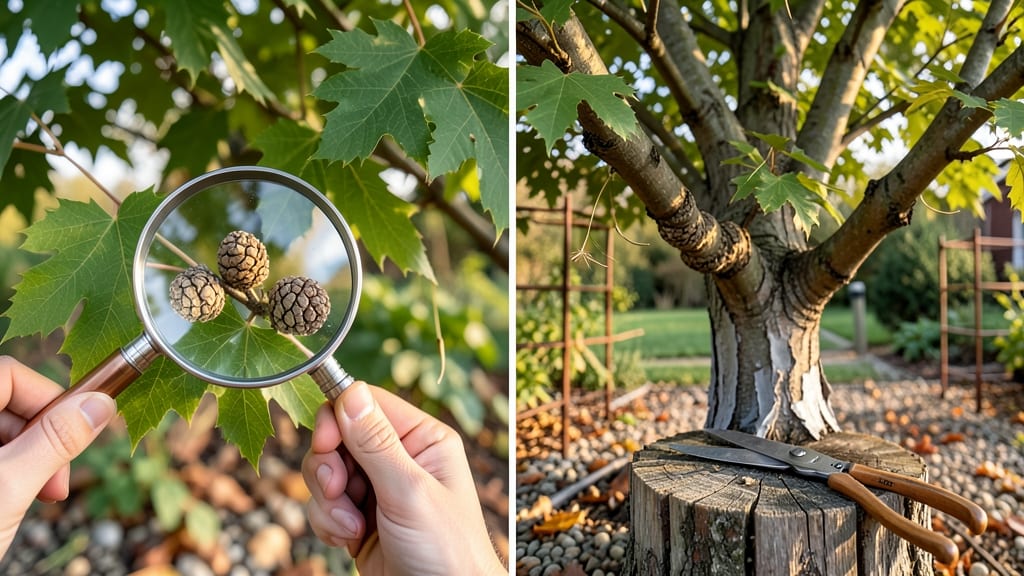
Those unsightly maple tree galls look like warty blisters on your tree's branches, but they're actually the work of gall wasps or mites. 🌳 I've dealt with my share of these growths, and while they might seem harmless, they can weaken your tree over time if left unchecked.
Galls form when these tiny insects lay eggs in the tree's bark, prompting the tree to grow abnormal tissue around them. The result? Those rough, swollen bumps that can appear on stems, leaves, or even roots.
While they're rarely fatal, heavy infestations can stress your tree and make it more vulnerable to disease.
Removing galls is simple: just prune them out with clean, sharp shears during late winter or early spring when the tree is dormant. Dispose of the infected branches in sealed bags to prevent reinfestation.
For severe cases, consider organic treatments like horticultural oil or neem oil to disrupt the insects' life cycle.
With consistent pruning and monitoring, you'll keep your maple tree healthy and gall-free for years. The key is acting early—don't wait until the galls multiply. Your tree will thank you with stronger growth and fewer surprises!
The Hidden Culprits Behind Tree Growths
Maple trees, with their stunning foliage and iconic syrup-producing sap, are a backyard favorite—but their bark isn’t always smooth sailing. Those unsightly, blister-like growths (called galls) popping up on branches or leaves aren’t just cosmetic nuisances.
They’re a sign of a biological battle raging beneath the surface. Understanding the root causes helps you fight back smarter. Here’s why your maple tree is developing these odd bumps—and what’s really triggering them.
Most maple galls are the handiwork of insects, particularly wasps, midges, and gall flies. These pests don’t just randomly attack—they’re precision engineers, injecting eggs (or saliva) into tender plant tissue.
The tree’s defensive response? Overproducing cells to wall off the intruder, creating a gall as a protective cocoon.
- 🔬 How it works:
- Females use their ovipositors (egg-laying tools) to deposit eggs under the bark or in leaf tissue.
- The tree’s hormones kick into overdrive, forming abnormal growths around the eggs or larvae.
- Common culprits: Andricus wasps (for woody galls) or Cecidomyiidae midges (for leafy galls).
- 🌿 Where to look:
- Stem galls: Swollen, hard bumps on branches (often reddish-brown when young).
- Leaf galls: Puffy, wart-like spots on foliage (may distort leaf shape).
- Root galls: Lumpy growths near the base (less common but serious).
💡 Pro Tip: Galls are rarely fatal to mature trees, but severe infestations can weaken branches. If galls appear every year or spread rapidly, it’s time to intervene.
Not all galls are insect-born. Environmental factors can also trigger abnormal growths, especially in young or stressed maples. Think of it like a plant’s callus—a response to injury, disease, or extreme conditions.
| Stressor | How It Causes Galls | Signs to Watch For |
|---|---|---|
| 🌡️ Extreme Heat/Drought | The tree’s abscisic acid (a stress hormone) spikes, causing cells to multiply uncontrollably in damaged areas. | Galls appear dry, cracked, or blackened; often on south-facing branches. |
| ❄️ Frost or Hail Damage | Physical trauma triggers wound responses, leading to callus-like growths around injuries. | Galls are irregularly shaped, sometimes oozing sap. |
| 🌱 Poor Soil or Nutrient Deficiency | Lack of boron or zinc disrupts cell division, causing gall-like deformities. | Galls are soft, spongy; often paired with yellowing leaves. |
⚠️ Warning: Environmental galls are not contagious, but they signal underlying stress. Fix the root cause (e.g., deep watering, mulching, or fertilizing) to prevent recurrence.
While less common, pathogens can also manipulate maple trees into growing galls. Fungi and bacteria infect wounds (like pruning cuts or insect bites), prompting the tree to seal off the infection with abnormal tissue.
- 🍄 Fungal Galls:
- Caused by Nectria or Valsa species, which invade weakened bark.
- Galls are spongy, pinkish and may oozed a yellowish fluid.
- Risk: Can lead to canker diseases if untreated.
- 🧫 Bacterial Galls:
- Bacteria like Pseudomonas enter through pruning wounds or sap flows.
- Galls are watery, translucent with a rotten smell.
- Risk: Spreads quickly; may kill branches if ignored.
🔥 Critical Action: If you suspect a fungal/bacterial gall, sterilize pruners with rubbing alcohol before cutting. Remove affected tissue down to healthy wood and dispose of it off-site.
Now that you know the real villains behind maple galls, the next step is how to safely remove them—without harming your tree. Stay tuned!
Fixing Tree Galls Naturally
If your maple tree’s branches are sprouting unsightly wart-like bumps or swollen growths, don’t panic—these galls are usually harmless but can weaken the tree if left unchecked. The good news? Most can be managed with simple, effective techniques.
Below, we’ve broken down solutions by the most common causes, from insect infestations to fungal infections, along with tips to keep your tree thriving.
When tiny insects like maple gall aphids or maple blister gall wasps trigger gall formation, the first step is to prune out the affected branches. Here’s how:
#### 🍳 Step 1: Identify & Prune Infested Growths - Use sterilized pruning shears to cut off galls and a few inches of healthy tissue below them. - Dispose of the clippings in a sealed bag (don’t compost them—the pests may spread). - Pro Tip: 💡 Prune on a dry, sunny day to reduce sap oozing and prevent fungal infections. #### 👨🍳 Step 2: Apply Natural Pesticides (If Needed) - Horticultural oil or insecticidal soap (like neem oil) can suffocate aphids and mites. Spray in early spring before eggs hatch. - Beneficial insects (ladybugs, lacewings) are a long-term fix—introduce them to your garden. - Avoid chemical sprays unless severe; they can harm pollinators and disrupt the ecosystem. #### ⏰ Monitor & Repeat - Check the tree weekly for new galls. Repeat treatments if infestations persist.If galls appear mushy, discolored, or ooze sap, a fungal or bacterial infection may be the culprit. Act fast to prevent spread:
#### 🔪 Step 1: Prune Aggressively - Cut out entire infected branches, including the collar (the swollen base where the branch meets the trunk). - Sterilize tools with rubbing alcohol between cuts to avoid cross-contamination. #### 🌡️ Step 2: Clean & Protect Wounds - Apply pruning sealant (like Tanglefoot Tree Wound Pruning Seal) to large cuts to prevent decay. - Pro Tip: ✨ For small wounds, let them air-dry naturally—sealants aren’t always necessary and can trap moisture. #### 🎯 Step 3: Boost Tree Immunity - Water deeply but infrequently to avoid soggy soil (fungi thrive in wet conditions). - Fertilize with compost or a balanced tree food (like Espoma Tree Tone) to strengthen the tree’s defenses.An ounce of prevention is worth a pound of cure! Follow these easy habits to keep your maple tree gall-free:
#### 🌿 General Tree Health - Prune regularly (every 2–3 years) to improve airflow and reduce stress. - Mulch properly—keep mulch 2–4 inches deep and 6 inches away from the trunk to prevent moisture buildup. - Avoid over-fertilizing with high-nitrogen products, which can attract pests. #### 🐜 Pest & Disease Control - Inspect trees in early spring (when pests are most active) and treat preventively. - Encourage biodiversity—plant native flowers and shrubs to attract predator insects. - Remove fallen leaves/debris in autumn to eliminate hiding spots for overwintering pests. #### 📊 When to Call a Pro - If galls spread rapidly or the tree shows signs of decline (yellowing leaves, dieback), consult an arborist. Severe cases may need systemic treatments.With consistent care, your maple tree can bounce back stronger—free of galls and full of vibrant foliage. Start small, stay vigilant, and watch your tree thrive! 🌳💚
Frequently asked questions about maple tree galls
Are maple tree galls harmful to my tree?
Most galls won't kill your tree, but severe infestations can weaken branches over time. The real concern is if galls appear every year or spread rapidly—they may signal stress or disease. Focus on removing them during dormant seasons to prevent pest buildup.
What’s the best time of year to remove galls?
Late winter or early spring is ideal when the tree is dormant. This minimizes stress and gives you time to monitor for new growth. Avoid pruning during hot summers or cold winters, as the tree is more vulnerable to damage.
Can I use regular garden shears to cut off galls?
No—always use sterilized pruning shears to avoid spreading infections. Wipe blades with rubbing alcohol between cuts, especially if dealing with fungal or bacterial galls. Disposable gloves are also recommended for hygiene.
Will neem oil work on all types of maple galls?
Neem oil is most effective against insect-related galls (like those caused by gall wasps or aphids). For fungal or bacterial galls, you’ll need a copper-based fungicide or systemic treatment. Always test a small area first to check for sensitivity.
How do I know if my tree has a gall problem or just normal growth?
Galls are abnormal, lumpy growths that distort the tree’s natural shape. Healthy growth is smooth and proportional, while galls often appear as hard, swollen bumps or warty patches. Compare affected areas to healthy branches for clarity.