
Pruning
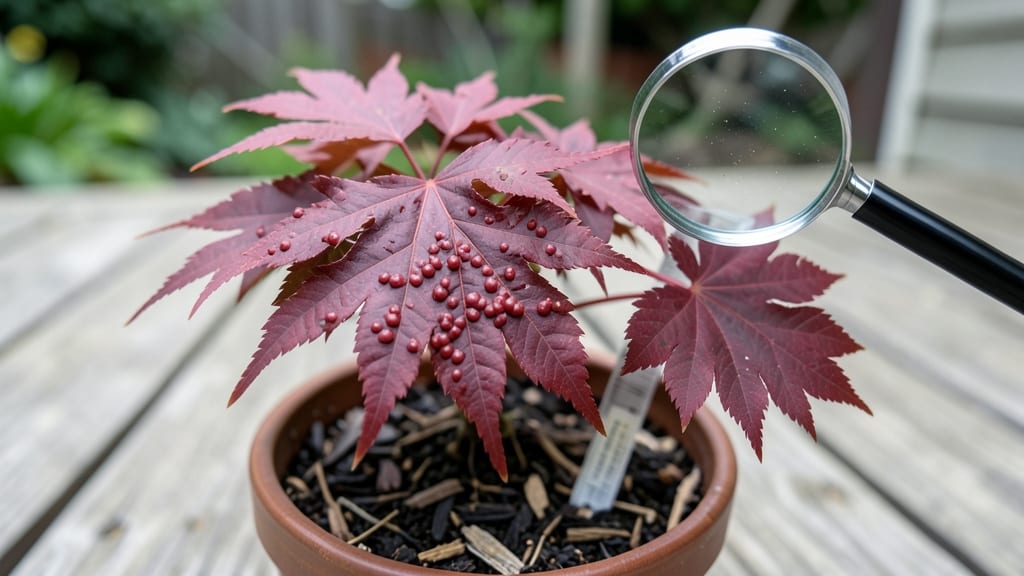
Those unsightly bumps on your maple leaves aren't just cosmetic—they're a sign your tree is fighting back against pests or disease. 🌿 I've spent years diagnosing leaf galls, and while they're rarely fatal, ignoring them lets problems spread.
The good news? Most cases respond well to simple interventions once you identify the culprit correctly.
Common triggers include maple leaf gall midges (those tiny, pea-sized bumps), scale insects hiding under waxy shells, or fungal infections like anthracnose creating raised spots. The key is examining both leaf surfaces and checking for webbing or honeydew—visual clues that tell you exactly what you're dealing with.
My first step? Always checking the undersides of leaves where pests love to hide.
You can often remove mild cases by pruning infected branches in late winter (when the tree is dormant) and disposing of them properly. For fungal issues, a copper fungicide spray in early spring creates a protective shield.
The goal isn't perfection—it's preventing next year's outbreak. Most trees recover beautifully once you address the root cause.
When in doubt, consult an arborist—especially if you see dieback beyond just the leaves. The earlier you act, the more your maple will bounce back with fresh, healthy foliage next season. Prevention is simpler than cleanup, and your tree will thank you for it.
Understanding Leaf Bump Triggers
Maple tree leaves developing bumps—often called galls—can look alarming, but they’re usually harmless (or even fascinating!) signs of nature’s intricate interactions. These growths form when tiny insects, mites, fungi, or bacteria trigger a defensive response in the tree.
Below, we break down the most common culprits and why they happen, so you can identify the issue and decide whether action is needed.
Maple galls are most famously caused by insect larvae, which inject chemicals or lay eggs that prompt the tree to overproduce cells around the intrusion. Here’s how it works:
- Maple Gall Midge (Rabdophaga) 🌿 These tiny, non-stinging midges lay eggs in leaf tissue, and the larvae secrete a hormone-like substance that forces the leaf to form a protective pouch-like gall.
The result? Round, spongy bumps (often called "maple apple galls") that can be bright green, yellow, or reddish. Fun fact: Some galls even attract wasps, which parasitize the midge larvae inside!
- Sawfly Larvae ⚒️ Sawfly larvae chew on leaf edges while injecting saliva that triggers rolled or blister-like galls. Unlike midges, these galls are often irregular in shape and may cause leaf distortion. Common species like Pontania create long, tubular galls along leaf veins.
- Scale Insects 🛡️ While scale typically targets stems, some species (like maple scale) can cause wart-like bumps on leaves. These insects suck sap, and the tree’s response creates raised, crusty patches. Heavy infestations may weaken the tree over time.
💡 Pro Tip: Most insect galls are benign—the tree survives, and the insects rarely kill it. However, if galls cover more than 30% of leaves, consider intervention (see removal tips later).
Fungi don’t always cause leaf spots—they can also induce abnormal growths through a process called hyperplasia. Here’s how:
- Anthracnose Fungus 🌧️ While anthracnose is better known for causing dark, sunken lesions, some strains trigger raised, corky bumps on leaves. The fungus infects through wounds or rain splashes, and the tree’s immune response creates wart-like growths, often surrounded by yellow halos.
- Powdery Mildew ❄️ Though powdery mildew usually coats leaves in a white, flour-like layer, severe infections can cause small, blister-like bumps as the leaf struggles to defend itself. These galls are often pale green or white and may appear in clusters.
⚠️ Warning: Fungal galls can spread quickly in humid, shady conditions. Prune infected leaves promptly and improve airflow around the tree to prevent worsening.
Not all leaf bumps are caused by insects or fungi—some stem from microscopic invaders:
- Eriophyid Mites (Gall Mites) 🔬 These tiny, spider-like mites (visible only under magnification) burrow into leaf tissue, causing silver, blister-like galls or witches’ broom (dense clusters of deformed shoots). Their feeding disrupts cell division, leading to puckered or curled bumps.
- Bacterial Leaf Gall 🧫 Bacteria like Pseudomonas syringae can infect maple leaves through wounds, triggering water-soaked, raised blisters that later turn brown. Unlike fungal galls, bacterial galls often oozes a clear or yellowish liquid when squeezed.
🌡️ Key Difference: Bacterial galls are more common in warm, wet springs, while mite galls thrive in dry, hot summers.
Sometimes, no pathogen is involved—instead, environmental factors trick the tree into forming bump-like growths:
- Hormonal Imbalances 🧪 Excessive nitrogen fertilizer or root damage can disrupt the tree’s growth hormones, leading to abnormal cell proliferation—including warty or puffy leaf bumps. These are often soft to the touch and lack the hard, woody texture of true galls.
- Physical Damage ⚡ Hail, frost, or mechanical injury (like lawnmower cuts) can cause scar tissue that appears as raised, calloused bumps. Unlike galls, these are usually irregular in shape and may not recur yearly.
✨ Silver Lining: Environmental galls often disappear on their own once the stressor is removed (e.g., adjusting fertilizer or protecting the tree from hail).
| Cause | Gall Appearance | Location | Season Active |
|---|---|---|---|
| Maple Gall Midge | Round, spongy, "apple-like" | Leaf surfaces | Spring–Summer |
| Sawfly Larvae | Rolled, tubular, or blister-like | Leaf edges/veins | Spring–Early Summer |
| Scale Insects | Warty, crusty, brownish patches | Leaves/stems | Year-round (worst in fall) |
| Anthracnose Fungus | Raised, corky, often with dark borders | Leaves | Spring (wet weather) |
| Eriophyid Mites | Silver, blistered, or curled | Leaf undersides | Summer–Fall |
| Bacterial Gall | Watery blisters, may ooze | Leaf surfaces | Spring (after rain) |
| Environmental Stress | Soft, irregular, no hard shell | Random areas | Year-round |
🎯 Final Note: If you’re unsure whether the bumps are harmful, observe the tree’s overall health. A few galls? Likely harmless. Wilting, yellowing, or widespread damage?
Time to investigate further (or call an arborist). Most maples tolerate galls well—they’re just the tree’s way of saying, "I’ve got this!" 🌳💪
Fixing and Preventing Maple Leaf Bumps
Now that you’ve identified the cause of those pesky bumps on your maple tree leaves—whether they’re caused by maple leaf galls, insect infestations, or fungal infections—it’s time to take action.
The good news? Most issues can be resolved with natural, garden-friendly solutions. Below, we’ll break down the best fixes for each cause, plus tips to keep your tree healthy long-term.
Galls are often harmless but can look unsightly. If they’re caused by insects like maple leaf gall mites or maple gall aphids, follow these steps:
1️⃣ Prune Infested Branches (Early Action)
🍳 Step 1: Use sterilized pruning shears to trim and remove heavily infested branches—especially those with large, deformed galls. 👨🍳 Step 2: Cut 6–12 inches below the last visible gall to ensure you’re removing the entire affected area. 🔪 Step 3: Dispose of pruned material in a sealed trash bag (not your compost pile) to prevent reinfestation.
💡 Pro Tip: If galls are small and sparse, you may skip pruning—many galls fall off naturally by late summer.
2️⃣ Apply Natural Insecticidal Sprays
⏰ Best Time: Early spring (before new growth) or late summer (after galls form).
| Solution | How to Use | When to Reapply |
|---|---|---|
| Neem Oil Spray | Mix 1 tsp neem oil + 1 tsp mild soap + 1 quart water. Spray evenly on leaves (top & bottom). | Every 7–10 days until galls stop appearing. |
| Horticultural Oil | Apply dormant oil in early spring (before buds swell) to smother overwintering insects. | Once per season (spring). |
| Insecticidal Soap | Spray directly on galls—works by disrupting insect cell membranes. | Every 5–7 days in active infestation. |
🌡️ Avoid spraying when temperatures exceed 90°F (32°C)—it can harm leaves.
3️⃣ Encourage Beneficial Predators
🐞 Ladybugs, lacewings, and parasitic wasps naturally prey on gall-forming insects. Boost their presence by:
- Planting native flowers (like dill, yarrow, or marigolds) near your tree.
- Avoiding broad-spectrum pesticides that kill beneficial bugs.
If the bumps are fungal (like anthracnose or tar spot), focus on fungicides and cultural controls:
1️⃣ Clean Up Debris (Prevents Spread)
🍂 Step 1: Rake and remove all fallen leaves in autumn—fungal spores overwinter here. 🍂 Step 2: Sterilize tools with rubbing alcohol before and after pruning.
2️⃣ Apply Fungicidal Sprays
| Solution | How to Use | Best Time to Apply |
|---|---|---|
| Baking Soda Spray | Mix 1 tbsp baking soda + 1 tsp oil + 1 gallon water + a drop of soap. Spray weekly. | Early spring & after rain. |
| Copper Fungicide | Follow label instructions—spray preventively in spring and after storms. | Before buds open & post-rain. |
| Organic Fungicide (e.g., Serenade ASO) | Spray every 2–3 weeks during wet seasons. | At first sign of spots + every 3 weeks. |
💡 Pro Tip: Water at the base (not overhead) to keep leaves dry—fungi thrive in moisture.
3️⃣ Improve Air Circulation
✂️ Thin out dense branches to allow sunlight and airflow. 🌿 Mulch properly (2–3 inches of organic mulch, not touching the trunk).
If bumps are from sap-sucking insects, use these targeted fixes:
1️⃣ Blast Off Pests with Water
💦 Step 1: Use a hose with a strong jet to knock off aphids/scale from leaves. 💦 Step 2: Repeat every 3–5 days until infestation clears.
2️⃣ Use Sticky Traps for Monitoring
🕷️ Hang yellow sticky traps near the tree to catch and monitor flying insects.
3️⃣ Introduce Natural Predators
🐝 Buy beneficial nematodes (for soil-dwelling pests) or release ladybugs (for aphids).
Once your tree is healthy, keep it that way with these easy maintenance habits:
✅ Fertilize in Early Spring – Use a balanced, slow-release fertilizer to boost tree vigor. ✅ Water Deeply (But Less Often) – 1 inch per week (deep watering encourages strong roots). ✅ Prune in Late Winter – Remove dead/diseased branches before new growth starts. ✅ Monitor Regularly – Check leaves weekly in spring/summer for early signs of trouble. ✅ Avoid Overwatering – Soggy soil = fungal paradise—ensure proper drainage.
By following these targeted solutions, your maple tree should bounce back with smooth, healthy leaves in no time. 🌿✨ Most issues resolve within one growing season with consistent care—so don’t wait, start treating now!
Frequently asked questions
Are maple tree leaf bumps always caused by pests or diseases?
Not necessarily! While many bumps (called galls) result from insects like maple gall midges or fungi like anthracnose, some are harmless. Environmental factors like excessive nitrogen or physical damage (e.g., hail) can create similar-looking growths. Check for webbing, honeydew, or oozing—these signal true problems.
Can I safely remove galls from my maple tree by hand?
Yes, but use caution! Gently pinch off small galls with gloved hands, but avoid crushing them (it can spread fungal spores). For larger clusters, prune the entire branch 6–12 inches below the last gall. Always sterilize tools with rubbing alcohol between cuts to prevent cross-contamination.
Will galls kill my maple tree?
Almost never—galls are rarely fatal. However, severe infestations (covering 30%+ of leaves) can weaken the tree over time. Monitor for yellowing leaves, dieback, or wilting—these indicate a deeper issue. Most maples tolerate galls like a temporary annoyance, not a death sentence.
How do I tell if bumps are from mites vs. fungi?
Mite galls (like those from eriophyid mites) often appear silver or blistered and may cause leaf curling. Fungal galls (e.g., anthracnose) are usually corky, brown, and surrounded by yellow halos. Check leaf undersides too—mites love hiding there, while fungi often show spore dust on surfaces.
When is the best time to treat maple leaf bumps?
Act in early spring (before buds swell) to prevent new galls, or late summer (after galls form). Avoid treating in extreme heat (>90°F) or freezing temps. For fungal issues, apply sprays after rain or in humid conditions—when spores are most active.