
Watering
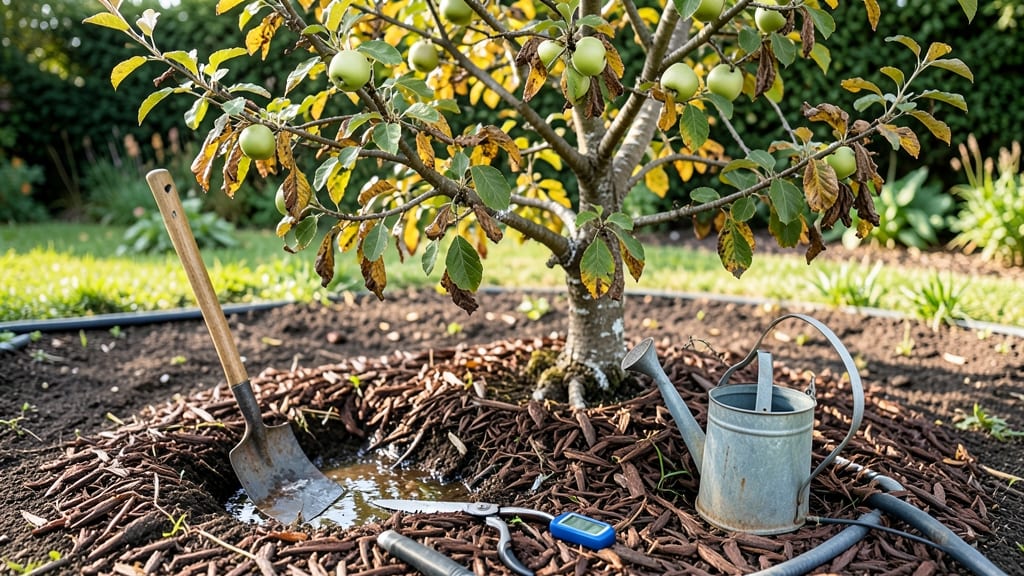
Your tree's sad, drooping branches don't mean it's too late. 🌳 Overwatered tree recovery starts with understanding the root of the problem—literally. We've nursed back more trees than we'd like to admit, and the first step is always the same: stop watering immediately and let the soil dry.
Yellowing leaves, mushrooms sprouting at the base, or soil that smells like rot? Those are your tree's SOS signals. The good news is roots can recover if you act fast. We'll show you how to prune damaged branches, aerate compacted soil, and adjust your watering schedule without guessing.
Within weeks, you'll see new growth pushing through—firm, green leaves instead of limp yellow ones. The key is patience; roots heal slower than leaves regrow. By summer, your tree might look like it never faced a crisis.
For stubborn cases or large trees, an arborist's tools make all the difference. But for most backyard trees, these steps work wonders. Let's get your tree back to thriving—one careful adjustment at a time.
Common Causes of Tree Overwatering
Overwatering a tree—whether intentional or accidental—can suffocate its roots, deprive them of oxygen, and invite fungal diseases or root rot. Understanding why this happens is the first step to preventing it and reviving an affected tree.
Here’s a breakdown of the most common causes, explained in simple terms with actionable insights.
Soil that doesn’t drain well is the #1 culprit behind overwatering. When water pools around roots instead of draining away, it creates an anaerobic (oxygen-deprived) environment. Roots need oxygen to respire—just like humans need air to breathe. Without it, they suffocate, weaken, and become vulnerable to pathogens.
- Why it happens:
- Compacted soil (often from foot traffic, construction, or heavy clay)
- Low-lying planting spots where water collects
- Soil amended with too much organic matter (like peat moss), which holds water like a sponge
- Actionable fix:
- Test your soil’s drainage by digging a 1-foot hole, filling it with water, and timing how long it takes to drain. If it’s slower than 4–6 hours, amend the soil with sand, perlite, or grit.
- For heavy clay soil, mix in compost + coarse sand (50/50 ratio) to improve aeration.
- Avoid planting trees in depressions—grade the soil to slope away from the trunk.
Even well-meaning gardeners can drown their trees by following outdated rules like “water every day” or assuming “more is better.” Trees have deep, extensive root systems that store moisture—overwatering tricks them into thinking they’re in a swamp.
- Why it happens:
- Automatic sprinklers set on timers without soil checks
- Watering based on schedule instead of soil conditions (e.g., rain + irrigation)
- Using shallow watering methods (like hose-end sprinklers) that wet only the top inch of soil
- Mulching too deeply (over 3–4 inches) or using water-retaining mulch (like untreated wood chips) without proper spacing
- Actionable fix:
- Water deeply but infrequently: Aim for 1–1.5 inches of water per week (including rain), delivered in long, slow sessions (e.g., 30–60 minutes, 2–3x per week).
- Use a soil moisture meter or the “finger test” (stick your finger 2–3 inches down—if damp, wait).
- Switch to drip irrigation or soaker hoses to target roots directly.
- Keep mulch 2–4 inches away from the trunk and limit depth to 2–3 inches.
Automated systems like sprinklers or drip lines are convenient, but they’re notorious for overwatering—especially if poorly installed or maintained. Trees planted near sidewalks, driveways, or slopes are particularly at risk.
- Why it happens:
- Sprinkler heads too close to the tree (within 12–18 inches of the trunk)
- Runoff from sloped yards that pools at the tree’s base
- Clogged or misaligned emitters in drip systems, causing water to gush instead of trickle
- Ignoring weather adjustments (e.g., leaving sprinklers on during heavy rain)
- Actionable fix:
- Adjust sprinkler heads to avoid wetting the trunk and focus on the root zone (12+ inches from the trunk).
- Install a rain sensor to shut off irrigation during precipitation.
- Check drip lines for clogs or leaks and ensure emitters are spaced 12–24 inches apart.
- For sloped areas, create a berm (raised soil mound) around the tree to catch runoff.
When roots sit in soggy soil for too long, they become a buffet for fungal pathogens like Phytophthora or Armillaria. These microbes thrive in waterlogged conditions, attacking root tissues and blocking nutrient uptake.
- Why it happens:
- Chronic overwatering creates the perfect anaerobic + moist environment for fungi
- Poor air circulation in dense mulch or thick thatch traps moisture
- Wounded roots (from construction or improper pruning) are entry points for pathogens
- Actionable fix:
- If root rot is suspected, reduce watering immediately and let the soil dry between sessions.
- Apply fungicide (copper-based or phosphite) to soil if fungal growth is visible (white mold, blackened roots).
- Aerate compacted soil with a garden fork to improve oxygen flow.
- Remove thatch or excess mulch to allow soil to dry faster.
Pro Tip: 🌡️ Temperature matters! Fungi grow fastest in warm, wet conditions (60–85°F). If your area is humid, water early in the morning to let foliage dry quickly.
Revive Your Tree Step by Step
Overwatered trees may look like a lost cause, but with the right approach, you can nurse them back to health—sometimes even saving them from the brink. The key is identifying the root cause (pun intended) and taking targeted action.
Below, we’ll map common overwatering symptoms to practical fixes, plus prevention tips to keep your tree thriving long-term.
Signs: Yellowing leaves, mushy stems, or a foul smell from the soil. Fix:
- Pause watering for at least 1–2 weeks to let the soil dry out. Overwatering creates anaerobic conditions, suffocating roots.
- Check soil moisture before watering again: Stick your finger 2–3 inches deep. If damp, wait longer.
- Pro tip: 💡 Use a moisture meter for accuracy—don’t guess!
Signs: Water pooling, soggy soil, or roots exposed at the surface. Fix:
- Aerate the soil with a garden fork or tiller to break up compacted areas.
- Add organic matter: Mix in compost, perlite, or coarse sand (10–20%) to improve drainage.
- Raise the tree’s base slightly by adding a 1–2 inch layer of gravel or mulch (but not directly against the trunk).
- For potted trees: Repot into a container with drainage holes and fresh, well-draining potting mix.
Signs: Blackened leaves, soft/brown stems, or fungal growth. Fix:
- Sterilize pruners with rubbing alcohol to prevent spreading disease.
- Remove dead/dying branches at the base of the trunk, cutting just outside the branch collar.
- Thin out dense foliage to improve airflow and reduce humidity (which fuels rot).
- 🔪 Warning: Avoid heavy pruning—focus on removing only what’s clearly dead.
Signs: Recurring soggy soil or slow recovery after drying out. Fix:
- Water deeply but infrequently: Aim for 1–2 inches per week (adjust for climate). Let the top 3–4 inches of soil dry between waterings.
- Water at the base (not leaves) to avoid fungal issues. Use a soaker hose for even distribution.
- Morning watering is best—leaves dry faster, reducing disease risk.
- 🎯 Pro tip: Mulch around the base (2–4 inches deep) to retain moisture without suffocating roots.
Once your tree recovers, lock in its success with these habits:
- Test soil drainage before planting: Fill a hole with water—if it drains in <30 minutes, it’s safe.
- Choose the right pot: Ensure containers have drainage holes and aren’t oversized (roots need room to dry).
- Monitor weather: Increase watering during heatwaves but reduce in rainy seasons.
- Inspect regularly: Look for yellowing leaves, wilting, or mold—early action prevents major damage.
- 🌿 Tree type matters: Research your tree’s needs—some (like willows) need moist soil, while others (oaks) prefer dry conditions.
Remember: Recovery takes time—weeks or even months. Stay patient, and your tree will reward you with new growth! 🌿✨
Frequently asked questions about overwatered tree recovery
How do I know if my tree is overwatered instead of underwatered?
Check for these key signs: yellowing leaves that stay soft (not crisp), mushy stems when pressed, or a foul smell from the soil. Unlike underwatered trees (which show brown, crispy edges), overwatered trees often have leaves that stay green but droop or develop dark spots. Test soil moisture by sticking your finger 2-3 inches deep—if it's soggy, you've overwatered.
Can I save a tree with root rot from overwatering?
It depends on how severe the damage is. For early-stage root rot, stop watering immediately and aerate the soil with a garden fork. Apply copper-based fungicide if you see fungal growth (white mold or blackened roots). In advanced cases, consult an arborist—they may recommend root pruning or soil replacement. Recovery can take months, but healthy roots can regenerate!
What's the best way to adjust my watering schedule after recovering an overwatered tree?
Start with the "finger test": water only when the top 3-4 inches of soil feel dry. Aim for deep, infrequent waterings (1-2 inches per week total) using a soaker hose at the base. Morning watering prevents fungal growth. Monitor your tree's response—new growth means you're on track! Adjust seasonally (less in winter, more in summer heat).
Will pruning help my overwatered tree recover?
Yes, but focus on removing only dead or dying branches. Sterilize your pruners first to prevent spreading disease. Avoid heavy pruning—healthy leaves help the tree recover by photosynthesizing. Thin out dense foliage to improve airflow, which reduces humidity around the trunk. Never prune more than 25% of the tree at once during recovery.
How long does it take to see improvement in an overwatered tree?
Most trees show signs of recovery within 2-4 weeks if you've corrected watering habits and improved soil drainage. New growth may appear in 4-6 weeks, but complete recovery can take several months. Be patient—roots heal slower than leaves regrow. If no improvement after 2 months, consult an arborist to check for deeper issues like severe root damage.