
Pruning
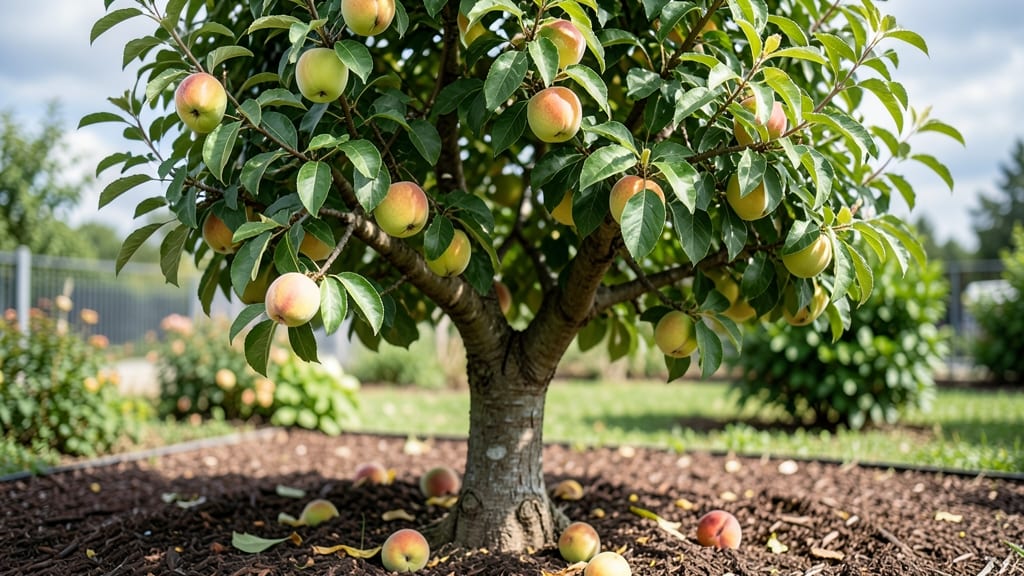
Your peach tree dropping fruit before ripening is heartbreaking after months of waiting. 🌱 I’ve seen this happen with peaches that looked perfect—only to fall like rain when they should’ve been ready for picking.
The good news? Most cases have simple fixes, whether it’s pests, weather, or something as basic as watering habits.
Common culprits include peach tree borers chewing at roots, aphids sucking sap from branches, or brown rot lurking in the fruit. Temperature swings—like late spring frosts or scorching summer heat—can also shock trees into dropping fruit. Even overwatering or underwatering stresses trees enough to trigger premature shedding.
With the right approach, you can save next year’s harvest. Start by inspecting branches for pests, adjusting watering to keep soil consistently moist but not soggy, and thinning fruit early to reduce stress. A few simple steps now mean plump, juicy peaches hanging until they’re truly ripe.
We’ll cover everything from quick fixes to long-term prevention, so you can enjoy that sweet summer harvest without the disappointment. Let’s get your tree back on track!
Root Causes of Premature Fruit Drop
Understanding why your peach tree is shedding fruit before harvest requires peeling back the layers of its biology—think of it like troubleshooting a finicky recipe. 🍑🔍 Some causes are environmental, while others stem from the tree’s own internal signals.
Here’s a breakdown of the top reasons your peach tree might be letting go of its fruit too soon, along with the science behind each one.
Peach trees are sensitive to temperature fluctuations, especially during flowering and early fruit set. When temperatures dip below 50°F (10°C) or spike above 95°F (35°C) during critical growth stages, the tree’s hormonal balance gets disrupted.
- Cold Stress: Chilly nights or late frosts can damage pollen tubes, preventing fertilization.
Even if flowers bloom, unfertilized ovules drop within days. - Heat Shock: High daytime temps (especially combined with low humidity) cause physiological stress, triggering abscission (the natural shedding process) to conserve energy. - Solution: Monitor your local 10-day forecast during bloom.
Use row covers for late frosts or shade cloth in scorching climates to stabilize temps.
Peaches thrive in consistent moisture, but too little or too much water sends the tree into survival mode—dropping fruit to prioritize root health.
- Drought Stress: When roots can’t absorb enough water, the tree abscises (sheds) fruit to reduce water demand. Look for wilting leaves or dry soil 2-3 inches deep. - Overwatering: Soggy soil drowns roots, cutting off nutrient flow.
The tree may drop fruit to prevent further damage (think of it as a last-resort energy shift). - Solution: - Water deeply 1-2 times per week (1-2 inches per session) during dry spells. - Improve drainage with compost or raised beds if your soil is clay-heavy. - Mulch (2-3 inches of wood chips) to retain moisture and regulate soil temp.
Fruit drop is often a starvation signal. Peach trees need balanced nutrients—especially boron, zinc, and nitrogen—to support fruit development.
| Nutrient Deficiency | Symptoms | Quick Fix |
|---|---|---|
| Boron | Small, cracked fruit; "blind" wood | Apply borax (1 tsp/gallon water) as a foliar spray. |
| Zinc | Stunted growth; deformed leaves | Use chelated zinc or zinc sulfate (2 tbsp/gallon). |
| Nitrogen | Pale yellow leaves; slow growth | Side-dress with compost or blood meal in early spring. |
| Potassium | Weak stems; poor fruit set | Use potassium sulfate or wood ash. |
💡 Pro Tip: Test your soil (via a local extension office) before fertilizing—too much nitrogen can also cause premature drop by promoting excessive leaf growth over fruit.
Peaches are self-pollinating but inefficient—they rely on bees, wind, or even birds to transfer pollen. If pollination fails, the tree aborts developing fruit within 2-3 weeks.
- Poor Bee Activity: Cold, rainy, or windy weather can keep pollinators away.
Even if flowers bloom, lack of pollen transfer leads to drop. - Late Blooms + Early Frost: If your tree flowers late in the season, a sudden cold snap can kill pollen before bees arrive. - Solution: - Plant bee-friendly flowers (like lavender or clover) nearby to attract pollinators. - Hand-pollinate by gently shaking branches during bloom (if bees are scarce). - Choose late-blooming peach varieties (e.g., ‘Redhaven’) if your area has early frosts.
Sometimes, the problem isn’t the tree—it’s too much fruit! If your peach tree sets more fruit than it can support, it actively sheds to prevent branch breakage.
- Why It Happens: Peach trees have a finite energy supply.
If you skip thinning, the tree prioritizes fewer, larger fruit over many small ones. - Signs: Branches look bent under weight, and fruit near the tips drops first. - Solution: - Thin fruit when they’re golf-ball sized (leave 6-8 inches between fruits). - Remove suckers and water sprouts to redirect energy to existing fruit.
Hidden pests or pathogens can weaken your tree, causing it to prematurely abort fruit as a defense mechanism.
- Peach Tree Borers: Larvae girdle roots, cutting off water/nutrients.
The tree drops fruit to conserve resources. - Brown Rot (Monilinia): Fungal spores infect blossoms, leading to mummified fruit that falls early. - Aphids/Scale Insects: These sap-suckers stress the tree, reducing its ability to support fruit. - Solution: - Inspect branches for sawdust-like frass (borer sign) or black fungal spots (brown rot). - Apply neem oil (for pests) or copper fungicide (for brown rot) before bloom. - Prune infected branches in dry weather to prevent spread.
Fixing Fruit Drop in Peach Trees
If your peach tree is letting go of its fruit prematurely, don’t panic—there are practical ways to turn things around. Below, we’ve mapped out common causes to easy fixes, along with prevention tips to keep your tree thriving and your harvest intact. Let’s get to work!
Fix: Boost pollination success and improve fruit retention.
- Hand-pollinate early blooms 🐝: If bees are scarce, use a soft paintbrush to transfer pollen from one flower to another on a dry, sunny morning. - Thin fruit strategically 📏: After fruit sets, remove half the peaches when they’re golf-ball sized.
This reduces competition for nutrients, helping the remaining fruit grow bigger and stay on the tree longer. - Use a pollination spray 💧: Lightly mist flowers with water in the early morning to encourage pollen release.
Prevention Tip: 🌡️ Plant two compatible peach varieties nearby to ensure cross-pollination. Avoid late frosts—protect blossoms with frost cloth if temperatures dip below 28°F.
Fix: Shield your tree from harsh conditions and keep it hydrated.
- Mulch heavily 🌿: Apply 3–4 inches of organic mulch (wood chips or straw) around the base (but not touching the trunk) to retain moisture and regulate soil temperature. - Water deeply and consistently 💦: Give your tree 1–1.5 inches of water per week, especially during dry spells.
Use drip irrigation to avoid wetting leaves (which can spread disease). - Provide windbreaks 🌳: If your tree is exposed, plant a hedge or windbreak fence on the windward side to reduce stress.
Prevention Tip: 🌞 Shade cloth can help during extreme heat waves—cover the tree temporarily if temps exceed 95°F.
Fix: Target pests and diseases before they weaken the tree.
| Pest/Disease | Signs | Solution 🛠️ |
|---|---|---|
| Peach Tree Borers | Sawdust-like frass, wilting branches | Prune infested branches and treat with beneficial nematodes or Bt spray. |
| Aphids | Sticky residue, curled leaves | Spray with soapy water or introduce ladybugs. |
| Brown Rot Fungus | Mummified fruit, dark spots | Remove infected fruit immediately and spray with copper fungicide before blooms open. |
Prevention Tip: 🧼 Clean up fallen fruit and debris in autumn to prevent fungal overwintering.
Fix: Prune correctly to balance growth and fruit production.
- Prune in late winter ⏰: Remove dead, crossing, or diseased branches to improve airflow.
Avoid heavy pruning during fruiting season—it stresses the tree. - Thin out dense canopies 🌿: Open the center of the tree to reduce humidity (which spreads disease) and let sunlight reach inner branches. - Avoid topping the tree ❌: Never cut back the main branches harshly—this encourages weak, fruitless growth.
Prevention Tip: 🎯 Prune for an "open vase" shape—this maximizes sunlight exposure and airflow.
Fix: Feed your tree the right nutrients at the right time.
- Test your soil 📊: A simple home soil test kit ($10–$20) can reveal deficiencies.
Peach trees often need more nitrogen in spring and zinc for fruit set. - Apply balanced fertilizer 🌱: - Spring (before blooms): 10-10-10 or alfalfa meal (organic nitrogen). - Fall (after harvest): Zinc sulfate (1 tbsp per tree) or kelp meal for micronutrients. - Use compost tea 🍃: A weekly foliar spray of compost tea can boost overall tree health.
Prevention Tip: 💡 Avoid over-fertilizing—too much nitrogen leads to leafy growth but fewer peaches!
Fix: Improve root health for better fruit retention.
- Aerate compacted soil 🏗️: Use a garden fork to loosen soil around the root zone (avoid digging near the trunk).
- Amend heavy clay soil 🪨: Mix in compost or perlite to improve drainage.
- Check for girdling roots 🌳: If roots circle the trunk, prune them carefully to prevent suffocation.
Prevention Tip: 🌧️ Plant peach trees on a slight mound in clay soil to prevent waterlogging.
- Monitor fruit load 🍑: If your tree drops more than 20% of its fruit, thin aggressively to save the rest.
- Harvest at peak ripeness 🕒: Peaches ripen unevenly—pick when they yield slightly to gentle pressure.
- Keep records 📝: Track pruning, watering, and pest issues yearly to spot patterns.
With these fixes, your peach tree should hold onto its fruit and reward you with a bountiful, delicious harvest next season! 🌟
Frequently asked questions
Why do peach trees drop fruit even when they look healthy?
Even healthy peach trees drop fruit due to natural energy conservation. When temperatures fluctuate (below 50°F or above 95°F), or if the tree is overloaded with too many peaches, it sheds excess fruit to focus energy on fewer, larger ones. This is especially common after heavy blooms when pollination isn't perfect.
Is it too late to save my peaches if they're already dropping?
Not necessarily! If the fruit is still small (golf-ball sized), you can thin the remaining peaches by spacing them 6-8 inches apart to reduce stress on the tree. For larger fruit, focus on improving care—consistent watering, mulching, and pest control—to help the tree recover for next season.
How can I tell if my peach tree is dropping fruit due to pests vs. weather?
Check for pest signs first: Look for sawdust-like frass (peach tree borers), sticky residue (aphids), or black fungal spots (brown rot). If you see these, pests/disease are likely the culprit. If the tree looks otherwise healthy but fruit is dropping after temperature swings or drought, weather is the probable cause.
Will fertilizing my peach tree stop the fruit from dropping?
Not always—too much nitrogen can actually worsen fruit drop by encouraging leafy growth over fruit production. Instead, focus on balanced nutrients, especially zinc and boron, which are critical for fruit development. Always test your soil first to avoid over-fertilizing.
Can I still get peaches next year if my tree drops fruit this year?
This year’s fruit drop is often a one-time stress response. By addressing the root cause (water, pests, thinning, etc.), your tree will rebound stronger next season. Many growers see better fruit retention the year after correcting these issues—just be patient and consistent with care.