
Pruning
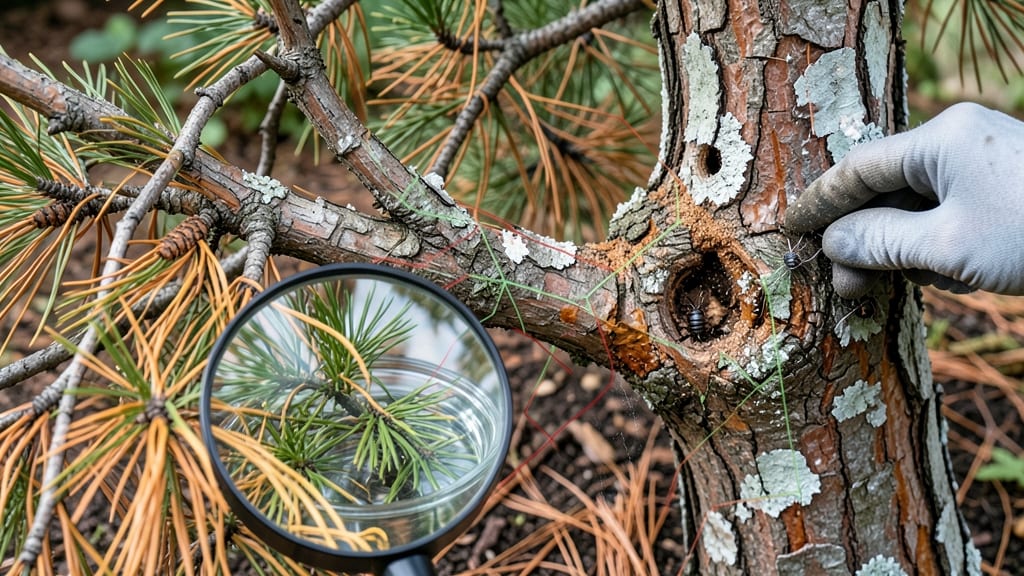
Your pine tree branches dying isn’t a death sentence—it’s a call for action. 🌲 I’ve nursed back more than my share of struggling pines, and the fixes often come down to three key areas: water, pests, and hidden stress signals most gardeners miss.
Start by checking the needles: yellowing on older needles points to drought stress, while rust-colored patches scream fungal infection. I’ve seen pine wilt from overwatering just as easily as from underwatering—so dig into the soil to see if it’s bone-dry or soggy.
The fix isn’t one-size-fits-all, but it always starts with understanding what your tree is actually telling you. Once you pinpoint the problem—whether it’s spider mites, bark beetles, or a root-bound system—you’ll target the solution with confidence.
Pruning dead branches correctly can stop the spread, while organic treatments often bring trees back faster than you’d expect. The best part? Many fixes take less than an hour and cost under $20. Don’t wait until half the tree is gone to act.
Early intervention means the difference between a sad-looking pine and one that thrives for decades. Let’s get your tree back to its full, green glory.
Root Causes Of Branch Decline
Pine tree branches don’t wither away without reason—understanding the why behind their decline is the first step to revival. From hidden pests to environmental stress, multiple factors can turn lush green needles into brown, brittle skeletons.
Below, we break down the most common culprits, backed by science, so you can diagnose and act fast.
Pine trees are resilient, but prolonged drought or extreme heat can push them past their limits. When soil moisture drops below 30-40% of field capacity (a measure of water availability), roots struggle to absorb nutrients and transport water to the canopy.
This triggers a physiological drought—even if the ground isn’t bone-dry.
- How it happens: - Needle scorch: High temperatures (above 90°F/32°C) cause stomata (tiny pores) to close, halting photosynthesis. Needles dry out from the edges inward, turning yellow or brown. - Root desiccation: Fine root tips die off first, reducing the tree’s ability to uptake water.
Older branches, with longer needles, suffer most because they’re farther from the water source. - Soil compaction: Heavy foot traffic or machinery crushes soil pores, limiting oxygen and water flow to roots.
- Actionable fix: - Deep watering: Soak the root zone (12–18 inches deep) once a week during dry spells.
Use a soaker hose or drip irrigation to avoid runoff. - Mulch properly: Apply 3–4 inches of organic mulch (pine straw, wood chips) to retain moisture and regulate soil temperature.
Keep mulch 6 inches away from the trunk to prevent rot. - Avoid summer pruning: Trimming in peak heat stresses the tree further. Wait until early spring or fall.
Pine trees are a buffet for pests and pathogens, and some invaders target branches directly, cutting off their lifeline. The most destructive culprits include:
| Pest/Disease | Symptoms | Why It Kills Branches |
|---|---|---|
| Pine Needle Scale | White, waxy bumps on needles/branches | Sucks sap, causing needle drop and stunted growth. Weakens branches over time. |
| Diplodia Tip Blight | Brown, blighted needle tips | Fungal infection clogs resin ducts, blocking water/nutrient flow. Branches wilt. |
| White Pine Weevil | Sawdust-like frass, dead leader tips | Larvae bore into terminal buds, killing the main branch and stunting new growth. |
| Armillaria Root Rot | Mushrooms at base, brittle wood | Fungus attacks roots and lower branches, cutting off water supply. Tree "starves." |
- Actionable fix: - Inspect branches closely: Look for sawdust-like frass (weevils), black streaks (Diplodia), or white cottony growth (scale). - Prune infected branches: Remove entire affected branches (not just dead tips) 6–12 inches below the damage to stop spread. - Apply systemic fungicides/insecticides: For weevils or blight, use imidacloprid (systemic) or copper fungicide (for Diplodia).
Follow label rates! - Encourage natural predators: Ladybugs and parasitic wasps prey on scale insects. Plant neighboring pollinator-friendly species to attract them.
Pine trees are heavy feeders, especially in poor or depleted soils. When critical nutrients are missing, branches lose vigor, turn yellow, or drop prematurely. The most common deficiencies:
- Nitrogen (N): Symptom – Pale yellow needles (older needles first). Why? Nitrogen fuels chlorophyll production. Without it, photosynthesis grinds to a halt. - Magnesium (Mg): Symptom – Yellowing between needle veins (like a "V" shape). Why? Magnesium is central to chlorophyll.
Deficiency often occurs in sandy or acidic soils. - Potassium (K): Symptom – Brown, crispy needle tips. Why? Potassium regulates water balance. Low K = osmotic stress, causing cells to dehydrate.
- Actionable fix: - Test your soil: Use a DIY soil test kit (or send to a lab) to identify deficiencies.
Pines thrive in acidic soils (pH 4.5–6.0). - Fertilize smartly: - Nitrogen: Apply slow-release granular fertilizer (e.g., 10-10-10) in early spring. - Magnesium: Sprinkle Epsom salt (magnesium sulfate) around the root zone (1 lb per 100 sq ft) in fall. - Potassium: Use wood ash (sparingly—pines hate alkaline soil) or a potassium-rich fertilizer like greensand. - Avoid over-fertilizing: Too much nitrogen can burn roots and attract pests.
Follow package instructions!
Not all branch death is invisible—sometimes, human error or nature’s force seals their fate. Common offenders:
- Storm/snow damage: High winds or ice snap branches, exposing raw wood to fungal infections (e.g., hypoxylon canker).
- Topping or "lion’s tailing": Cutting branches back to a stub removes growth hormones, causing sprout clusters that exhaust the tree.
- Lawnmower/string trimmer wounds: Scrapes on the trunk or roots create entry points for pathogens like Phytophthora.
- Actionable fix:
- Prune correctly: Use clean, sharp tools and make cuts just outside the branch collar (the swollen area where branch meets trunk).
- Seal wounds: For large cuts, apply pruning sealant (or tree wound dressing) to prevent decay.
- Clean up debris: Remove broken branches and sawdust promptly to reduce fungal spores.
- Protect from storms: In high-wind areas, thin the canopy to reduce wind resistance (remove crossing or rubbing branches first).
A tree’s branches are only as healthy as its roots and soil. If the foundation is weak, the whole tree suffers.
- Compacted soil: Roots suffocate, limiting oxygen and water uptake.
Branches show signs of stress 1–2 years after compaction occurs. - Poor drainage: Waterlogged roots (common in clay soil) drown fine roots, causing anaerobic conditions and root rot. - Soil pH imbalance: Pines hate alkaline soil (pH >7.0).
High pH locks out nutrients like iron and manganese, leading to chlorosis (yellowing).
- Actionable fix: - Aerate compacted soil: Use a manual aerator or plant an air-spade to create holes for roots to expand. - Improve drainage: Amend heavy clay with sand or compost (mix in a 50/50 ratio).
For waterlogged spots, raise the planting mound. - Adjust pH: Lower pH with sulfur or peat moss. Test annually—pines prefer pH 4.5–6.0. - Mulch deeply: Pine straw mulch slowly acidifies soil over time. Replenish annually.
Reviving Your Pine Tree: Step-by-Step Fixes
Now that you know the root causes behind your pine tree’s dying branches, it’s time to take action! Below are practical, step-by-step solutions tailored to each issue—plus prevention tips to keep your tree thriving long-term.
Signs: Yellowing needles, soggy soil, or mushrooms growing at the base.
How to Fix It: 🔥 Step 1: Check the Soil Use a trowel to dig 6–8 inches deep. If the soil feels damp or smells musty, drainage is the issue. Pines hate "wet feet"—excess moisture suffocates roots and invites fungal diseases.
🍳 Step 2: Improve Drainage
- Raise the soil level by adding 2–3 inches of gravellly sand or perlite to the root zone.
- Avoid compacted soil—amend with compost or pine bark fines to loosen it.
- Install a French drain if water pools severely (a perforated pipe buried in gravel, sloping away from the tree).
👨🍳 Step 3: Adjust Watering Habits
- Water deeply but infrequently—pines prefer dry spells between soakings.
- Water at the base, not overhead (to prevent needle rot).
- Use a moisture meter to check soil hydration (aim for 40–60% moisture, not soggy).
💡 Pro Tip: If your tree is in a clay-heavy area, consider planting it on a mound next time to encourage runoff.
Signs: Needles turning brown and crispy, brittle branches, or soil pulling away from the pot (if potted).
How to Fix It: 🥘 Step 1: Water Thoroughly
- Slow and deep is key—water until it pours out the drainage holes (for potted trees) or seeps 6–8 inches into the ground.
- Morning watering (before 10 AM) reduces evaporation.
🔪 Step 2: Mulch Like a Pro
- Apply 2–4 inches of organic mulch (pine straw, wood chips) 3 inches away from the trunk to retain moisture.
- Avoid piling mulch against the trunk—this traps moisture and causes rot.
⏰ Step 3: Schedule Regular Check-Ins
- Young pines need water 2–3 times per week in dry spells.
- Mature pines (10+ years) may only need watering every 10–14 days—check soil moisture first.
🌡️ Pro Tip: If your tree is in a windy or sunny spot, increase watering frequency by 20–30%.
Signs: Sawdust-like frass (from bark beetles), needle cast (brown needles in patches), or sticky sap (aphids).
How to Fix It: 🔥 Step 1: Identify the Culprit
- Bark beetles? Look for small holes and sawdust piles under the tree.
- Spider mites? Check for fine webbing on needles.
- Fungal issues? Brown, tar-like spots on needles = needle cast.
🍳 Step 2: Treat Naturally First - Bark beetles: Prune and burn infested branches (do not compost!).
Apply neem oil or diatomaceous earth to the trunk. - Spider mites: Spray with water + dish soap (1 tsp per gallon) or horticultural oil. - Fungal diseases: Remove all infected branches (sterilize pruners with rubbing alcohol) and apply copper fungicide.
👨🍳 Step 3: Prevent Future Infestations
- Keep trees healthy—stressed pines attract pests! Ensure proper water, sunlight, and nutrients.
- Inspect trees monthly, especially in spring and fall (peak pest seasons).
- Encourage natural predators like ladybugs and birds by planting pollinator-friendly shrubs nearby.
💡 Pro Tip: If dealing with bark beetles, wrap the trunk with tree wrap (like Tangle-Foot) to deter them from laying eggs.
Signs: Needles scorched yellow-white, branches bleached or brittle, or one-sided dieback (from wind).
How to Fix It: 🥘 Step 1: Provide Shade & Windbreaks
- Young pines need partial shade (especially in hot climates). Use shade cloth (30–50%) if needed.
- Mature pines can handle sun but may need wind protection—plant a hedge or install a windbreak fence on the exposed side.
🔪 Step 2: Adjust Watering for Extreme Heat
- Deep water 2–3 times per week during heatwaves (90°F+).
- Mulch heavily (4+ inches) to lock in moisture.
- Avoid pruning in summer—wait for early spring or fall to reduce stress.
⏰ Step 3: Gradually Acclimate New Trees
- If you recently planted a pine, harden it off over 2–3 weeks by slowly exposing it to full sun and wind.
🌡️ Pro Tip: Mist needles on extremely hot days (like 100°F+) to prevent dehydration—use a fine spray nozzle in the early morning.
Signs: Yellow needles (chlorosis), stunted growth, or thin, sparse foliage.
How to Fix It: 🔥 Step 1: Test Your Soil
- Use a DIY soil test kit (available at garden centers) to check pH (ideal: 5.0–6.5 for pines) and nutrient levels.
- Pines love acidic soil—if your pH is 7.0+, amend with sulfur or peat moss.
🍳 Step 2: Fertilize Correctly
- Spring is the best time to fertilize (avoid fall—it encourages late growth that won’t harden off).
- Use a slow-release, acidic fertilizer (like 10-10-10 or 8-3-9) or pine-specific granules.
- Follow package rates—over-fertilizing burns roots!
👨🍳 Step 3: Boost with Organic Amendments
- Top-dress with compost (1–2 inches) in early spring.
- Use pine straw mulch—it naturally acidifies soil over time.
- Epsom salt spray (1 tbsp per gallon) can help with magnesium deficiency (yellowing between needles).
💡 Pro Tip: Avoid synthetic fertilizers if your tree is stressed from pests/disease—they can worsen the problem by promoting soft, pest-attracting growth.
✅ Water wisely—deep and infrequent, never soggy. ✅ Mulch properly—2–4 inches, not touching the trunk. ✅ Prune in late winter/early spring—remove dead, crossing, or weak branches. ✅ Monitor for pests—check trunk, needles, and bark monthly. ✅ Test soil every 2–3 years—adjust pH and nutrients as needed. ✅ Plant in the right spot—sunny but not scorching, with good drainage.
By following these targeted fixes, your pine tree should bounce back stronger within 1–2 growing seasons. 🌿 Act fast—the sooner you address the issue, the better the recovery!
Frequently asked questions
My pine tree branches are dying—how do I know if it's a pest problem or drought stress?
Check the needles first: brown, crispy tips suggest drought or heat stress, while sawdust-like frass (tiny wood shavings) or sticky sap signals pests like bark beetles or aphids. Also examine the bark—tiny holes or black streaks point to insect damage. Drought-stressed branches often show symptoms on the outer edges first.
Can I save a pine tree if half its branches are already dead?
Yes, but act fast! Prune dead branches back to live wood (use clean, sharp tools), then focus on water, nutrients, and pest control. Healthy pines can regrow 1–2 feet per year if the root system is intact. For severe cases, a soil test and targeted fertilizer (like iron sulfate for chlorosis) can help revive growth.
What’s the fastest way to tell if my pine tree has root rot?
Dig 6 inches deep around the base—if the roots smell rotten or look mushy and dark, root rot is likely. Check for mushrooms at the base (a sign of Armillaria fungus) or yellowing needles despite regular watering. Fix it by improving drainage and avoiding overhead watering.
Should I prune dying branches now or wait until spring?
Prune dead or diseased branches immediately—they won’t regrow and can spread problems. Wait until late winter/early spring (before new growth starts) to prune healthy branches. Avoid summer pruning, as it stresses the tree during peak heat. Always cut just outside the branch collar for clean wounds.
How often should I water a pine tree with dying branches?
Water deeply but infrequently: 1–2 times per week for young pines in dry spells, or every 10–14 days for mature trees. Check soil moisture—if the top 2 inches are dry, it’s time to water. Use a soaker hose to avoid wetting needles (which causes rot). Overwatering is worse than underwatering for pines!