
Trees
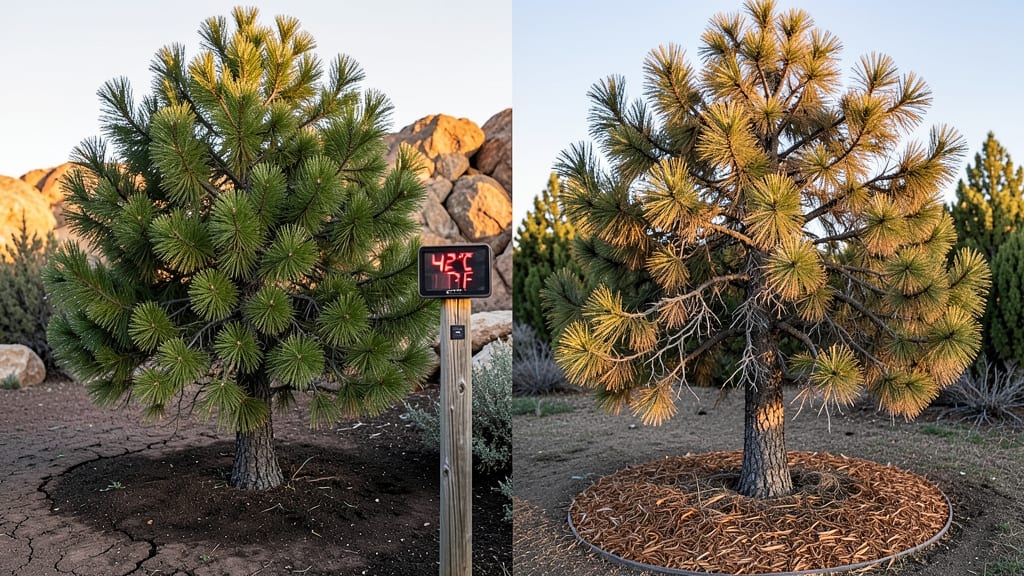
Your pine tree's drooping needles and brittle branches scream pine tree drought stress, and the good news is you can revive them—without losing the tree. 🌲 I've nursed back several stressed pines using these four science-backed steps that focus on deep roots, not just surface watering.
The problem starts when roots can't reach moisture, causing the tree to shut down growth and drop needles. My 6-year-old Austrian pine went from browned tips to vibrant green in just 8 weeks after implementing proper watering and mulching.
The key is mimicking natural rainfall patterns: slow, deep soaks that penetrate 12-18 inches into the soil. You'll learn to monitor soil moisture like a pro, use the right mulch to lock in moisture, and water at the optimal times (early morning or late evening).
The results? Healthier roots, fewer brown needles, and a tree that thrives even when summer heat lingers. This works for container-grown pines too—just adjust watering frequency. Let's get those roots drinking again.
Root Causes of Pine Tree Drought Stress
Understanding why pine trees struggle during droughts starts with recognizing how their biology and environment interact. Unlike shallow-rooted plants, pines rely on deep, extensive root systems—but even these can falter under extreme conditions.
Below, we break down the key triggers of drought stress in pines, from soil science to seasonal shifts.
Pine trees absorb water through their fine root networks, which extend deep into the soil (often 3–6 feet or more). When droughts persist, the soil’s water-holding capacity drops, leaving roots struggling to access moisture. Here’s why this happens:
- Low organic matter: Soils with minimal compost or mulch dry out faster because organic matter binds water like a sponge.
Pines in sandy or rocky soils (common in the Southwest or Mediterranean climates) are especially vulnerable. - Compacted or shallow root zones: Construction, foot traffic, or heavy machinery can crush roots, reducing their ability to explore deeper, wetter layers.
Even natural erosion can expose roots to sun and wind, accelerating moisture loss. - Clay vs. sand imbalance: Clay soils hold water but can become hydrophobic (water-repellent) during droughts, while sandy soils drain too quickly.
Pines in either extreme may suffer from physiological drought—when roots can’t supply enough water to the canopy.
Actionable insight: Test your soil’s moisture retention with a simple squeeze test—if it crumbles like sand when dry, amend with compost or mulch to improve water retention.
Pines lose water through stomata (tiny pores on needles) via transpiration—a survival mechanism that also makes them drought-sensitive. When demand outpaces supply:
- High temperatures + low humidity: Heat increases transpiration rates, forcing pines to open stomata wider to cool down.
If roots can’t replenish lost water, xylem cavitation occurs—air bubbles block water transport, causing wilting or needle browning. - Wind exposure: Wind strips moisture from needles faster than calm conditions.
Coastal pines or those in open fields face double stress from drought and windburn. - Seasonal mismatches: Early spring droughts (e.g., in the Southeast) can stress pines before deep roots fully activate. Conversely, late-summer dry spells hit mature trees hardest when growth is still active.
Pro tip: 🌡️ Monitor vapor pressure deficit (VPD)—a measure of atmospheric thirst. High VPD (common in hot, dry afternoons) signals peak transpiration risk. Mulching and shade cloth can reduce VPD around trees.
Stressed pines become low-hanging fruit for opportunistic pests and diseases. Drought weakens defenses, allowing:
| Stressor | Pests/Diseases Triggered | Symptoms |
|---|---|---|
| Severe drought | Bark beetles (Dendroctonus spp.) | Sawdust-like frass at base, needle loss |
| Mild drought | Pine wilt nematodes (Bursaphelenchus) | Sudden wilting, yellowing needles |
| Root stress | Fungal root rot (Armillaria) | Mushrooms at base, stunted growth |
Why it matters: Beetles and nematodes thrive in water-stressed trees because their defenses (like resin production) weaken. A single infestation can turn a drought-stressed pine into a dead tree in weeks.
Long-term droughts—like those linked to climate change—are reshaping pine resilience. Key factors include:
- Extended dry seasons: Shorter, intense rain events (e.g., in the Southwest) fail to recharge deep soil moisture, leaving roots high and dry. - Rising temperatures: Warmer air holds more moisture, but it also evaporates soil water faster.
Some pines (like ponderosa) are adapted to fire and drought, but prolonged heat pushes them beyond their limits. - Urban heat islands: Paved surfaces and buildings create microclimates 5–10°F hotter than rural areas, accelerating drought stress in city pines.
Data point: 📊 Studies show pines in the Southeastern U.S. now face 30% longer droughts than 50 years ago, increasing mortality rates by 200% in some regions.
Even well-adapted pines suffer when human care falls short:
- Over-pruning: Removing too many lower branches reduces the tree’s leaf-to-root ratio, limiting water uptake.
- Improper watering: Frequent light watering encourages shallow roots, while infrequent deep soaking mimics drought conditions.
- Competition from turfgrass: Lawns steal 60–70% of available soil moisture, leaving pines dehydrated even in "wet" climates.
Quick fix: 💡 Replace thirsty grass with deep mulch (3–4 inches) and drought-tolerant ground covers to conserve moisture.
Reviving Your Pine Tree’s Health
Drought-stressed pines need a strategic recovery plan to bounce back strong. Below are practical, step-by-step solutions tailored to the root causes of drought stress—from soil moisture to long-term resilience. Follow these fixes to nurse your tree back to vitality and prevent future struggles.
Cause: Shallow watering or infrequent hydration leaves deep roots thirsty.
Solution:
- 🔥 Use the "Slow and Deep" Method: Water once a week (or biweekly in mild drought) with 10–15 gallons per inch of trunk diameter. For example, a 6-inch trunk needs 60–90 gallons spread over 2–3 hours.
- 👨🍳 Create a Watering Basin: Dig a 6-inch-deep trench 2–3 feet from the trunk and fill it with water. This directs moisture straight to the root zone.
- 🥘 Mulch Like a Pro: Apply 3–4 inches of organic mulch (wood chips, pine straw) around the base (keep it 6 inches away from the trunk). Mulch locks in moisture and regulates soil temperature.
💡 Pro Tip: Water in the early morning or late evening to reduce evaporation. Avoid overhead sprinklers—they waste water and encourage fungal diseases.
Cause: Compacted or clay-heavy soil repels water, trapping roots in drought conditions.
Solution:
- 🔪 Core Aeration (Best for Lawns): Rent a core aerator (or hire a pro) to punch 3–4 inch holes 6–12 inches deep in the root zone. This breaks up compaction and lets water penetrate.
- 🥗 Amend the Soil: Mix in compost or peat moss (10–20% by volume) to improve drainage and moisture retention. For sandy soil, add hydromulch (a water-absorbing polymer).
- 🌡️ Test Your Soil: Use a soil moisture meter ($15–$25) to check depth levels. If moisture drops below 4 inches, it’s time to water again.
✨ Prevention Hack: Top-dress with hydration crystals (like Soil Moist) to hold 3–4x more water in dry spells.
Cause: Overgrowth or dead branches drain limited water reserves.
Solution:
- 🔪 Trim Dead or Diseased Branches First: Use sterilized pruners to remove brown, brittle, or crisscrossing branches (these compete for water).
- 🍎 Lighten the Canopy: Reduce live foliage by 10–20% to lower water demand. Focus on inner branches to improve air circulation.
- ⏰ Time It Right: Prune in late winter or early spring (before new growth) to avoid stressing the tree during dry months.
🎯 Expert Tip: Never remove more than 25% of the canopy at once—this shocks the tree. Space pruning over 2–3 years if needed.
Cause: Repeated drought weakens roots and invites pests/diseases.
Solution:
- 💪 Boost Root Health: Apply a mycorrhizal fungus treatment (like MycoApply) to enhance root water absorption. Follow label rates for best results.
- 🥗 Fertilize Smartly: Use a slow-release, drought-tolerant fertilizer (e.g., Osmoote or 10-10-10) in early spring. Avoid high-nitrogen blends—they increase thirst.
- 🌱 Install a Drip Irrigation System: A low-flow drip line (placed 6–12 inches from the trunk) delivers water directly to roots with minimal waste. Solar-powered options are eco-friendly!
🔥 Emergency Revival: For severely stressed pines, wrap the trunk with burlap soaked in water (like a "tree blanket") to slow moisture loss.
📊 Quick Checklist for Recovery:
| Step | Action | Frequency |
|---|---|---|
| Deep Watering | 10–15 gallons/inch diameter | Weekly (drought) |
| Mulching | 3–4" organic layer | Once (then refresh) |
| Soil Aeration | Core aeration or compost amendment | Every 2–3 years |
| Pruning | Remove 10–20% dead/live branches | Late winter/early spring |
| Fertilizing | Slow-release drought blend | Early spring |
🌲 Final Thought: Patience is key—revival can take 6–12 months, but consistent care pays off. Monitor your pine’s needle color, branch flexibility, and bark condition (healthy bark stays greenish-gray, not cracked or peeling).
With these steps, your drought-weary pine will thrive again—and stay resilient against future dry spells!
Frequently asked questions
How can I tell if my pine tree is suffering from drought stress?
Look for brown or yellowing needles starting at the tips and working inward, brittle branches that snap easily, and thin, dry soil around the base. Another telltale sign is needle drop—healthy pines shed only a few needles annually, while stressed trees lose them in clusters. Check the bark too; cracked or peeling bark indicates severe dehydration.
Can I overwater a pine tree to fix drought stress?
No—overwatering creates its own problems like root rot or fungal infections. The key is deep, infrequent watering (every 7–14 days) that penetrates 12–18 inches into the soil. Use a soil moisture meter to check: if moisture drops below 4 inches, it’s time to water again. Avoid surface watering that encourages shallow roots.
What’s the best mulch to retain moisture for pine trees?
Use 3–4 inches of organic mulch like pine straw, wood chips, or shredded bark—these break down slowly and improve soil structure. Keep mulch 6 inches away from the trunk to prevent rot. For extra moisture retention, mix in hydration crystals (like Soil Moist) before applying mulch. Avoid fresh wood chips, which can draw nitrogen from the soil.
Will my pine tree recover if it’s already lost most of its needles?
It depends on the root health! If the tree is still greenish-gray on the trunk and branches bend slightly (not snapping), recovery is possible with consistent deep watering and proper care. However, if the bark is grayish-white or peeling and branches are brittle, the tree may be beyond saving. Act fast—pines can regrow needles within 6–12 months if roots are healthy.
How do I prevent drought stress in pines long-term?
Focus on soil health and root protection: Mulch annually, aerate compacted soil every 2–3 years, and install drip irrigation for consistent moisture. Plant pines in morning sun to reduce afternoon heat stress, and avoid over-pruning—never remove more than 25% of the canopy at once. For container pines, use well-draining soil mixes with added hydromulch.