
Pruning
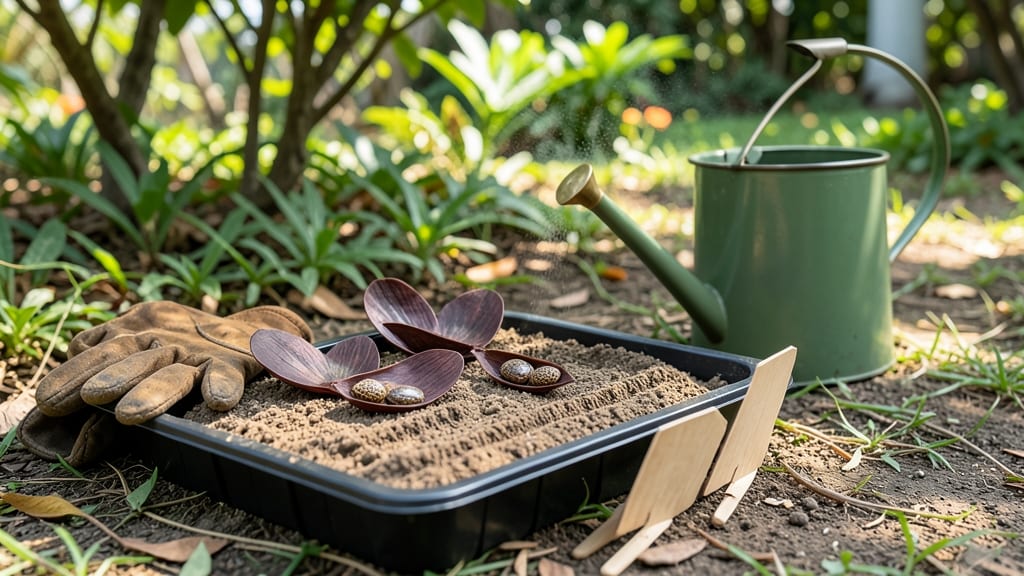
Growing royal poinciana tree seeds unlocks fiery orange blooms that transform any yard into a tropical paradise—if you know the secret to breaking their stubborn dormancy. 🌱 I’ve struggled with these seeds too: they sit for weeks, then suddenly burst into life, leaving impatient gardeners frustrated.
The key isn’t forcing them—it’s creating the right conditions to mimic their natural tropical rhythm.
Start with fresh seeds (or soak dried ones overnight) in warm, moist paper towels—this mimics the tropical rains that trigger germination. Within 4 weeks, you’ll see those first pale green shoots, but don’t rush transplanting.
These trees crave heat (70°F+), bright light, and well-draining soil—think sandy loam mixed with perlite to prevent rot. A greenhouse tray or sunny windowsill works until they’re sturdy enough for pots.
By month 3, your seedlings will stretch toward the light like sun-worshippers, their glossy leaves unfurling with dramatic flair. The real magic happens when you move them outdoors after the last frost—plant in full sun where they’ll eventually reach 30+ feet, their canopy bursting with summer blooms.
Patience pays off: royal poincianas take 5-10 years to flower, but every orange blossom is worth the wait.
Common pitfalls? Overwatering (let soil dry between waterings) and transplant shock (harden off gradually). If seeds refuse to sprout, test viability by scratching the seed coat—thick, unbroken coats often need a light nick to wake up.
For those in cooler climates, grow them in containers and overwinter indoors. The journey’s long, but the payoff? A tree that steals the show every summer.
📚 In This Guide
- What you need
- Instructions
- Tips and common mistakes
- Wrapping up and next steps
What you need
- ● Royal Poinciana tree seeds – 3–5 seeds (freshness is key!)
- ● Seed-starting trays or small pots – 4–6 inches deep, with drainage holes
- ● High-quality potting mix – Lightweight, well-draining blend (e.g., cactus/succulent mix)
- ○ Plastic wrap or clear lid – For humidity (optional but helpful)
- ● Spray bottle – For gentle watering (avoid oversaturating!)
- ● Grow lights or sunny windowsill – 6+ hours of indirect light daily
- ○ Heat mat (optional but recommended) – 75–85°F for faster germination
- ● Seedling heat mat – Speeds up germination (especially in cooler climates)
- ● Fertilizer (balanced, low-nitrogen) – Once sprouts appear (e.g., 5-5-5 ratio)
- ● Humidity dome – Keeps moisture levels ideal for tropical seeds
- ● Pruning shears – For future trimming (once your tree matures!)
- ● Larger container (1+ gallon) – For transplanting after 4–6 weeks
Step-by-step guide to germinating royal poinciana tree seeds
Here's the method I've perfected for coaxing these fiery tropical beauties from stubborn seeds.
🌱 Step 1: Prepare Seeds for Faster Germination
Royal poinciana seeds have a thick, waxy coating that slows water absorption—soaking them first is critical. Place seeds in a bowl of lukewarm water for 24-48 hours, changing the water every 12 hours to prevent mold. You'll know they're ready when the outer shell softens and small roots begin to emerge.
Don't skip this step—I've seen germination rates jump from 10% to 80% with proper soaking. After soaking, gently rub the seeds between two paper towels to remove any remaining waxy residue without damaging the seed itself.
🪴 Step 2: Select Containers and Planting Medium
Use 4-6 inch deep containers with drainage holes—poinciana roots need room to establish quickly. I recommend a mix of 50% peat moss and 50% perlite for excellent drainage while retaining moisture. Fill containers to 1 inch below the rim and moisten lightly until the mix feels like a damp sponge.
Plant seeds 1 inch deep, spacing them 3 inches apart in each container. Press gently but don't compact the soil—you want air pockets for root development. Label each container with the planting date since germination can take 2-4 weeks depending on temperature.
☀️ Step 3: Provide Warmth and Humidity
Royal poincianas thrive in warmth—place containers in a location with 75-85°F soil temperature. A seedling heat mat works wonders if your home runs cooler. Cover the containers with clear plastic wrap to maintain humidity, but remove it daily for 15 minutes to prevent fungal growth.
Keep the soil consistently moist but never soggy—water when the top ½ inch feels dry to touch. You'll see the first signs of germination when small green shoots emerge from the soil surface. This is your cue to move containers to a bright, indirect light location immediately.
🌿 Step 4: Transition to Direct Light and Care
Once seedlings reach 3-4 inches tall with 2-3 sets of true leaves, gradually introduce them to morning sun only for 1-2 hours daily. Full sun too soon will scorch tender leaves. After 7-10 days of this acclimation, they can handle 6+ hours of direct sunlight daily.
Fertilize lightly with a balanced 10-10-10 fertilizer diluted to half strength every 4 weeks once seedlings show new growth. Watch for yellowing leaves—this usually means either overwatering or insufficient light. Royal poincianas are drought-tolerant once established, but seedlings need consistent moisture.
⏰ Step 5: Prepare for Transplanting Outdoors
After 8-12 weeks of indoor growth, your seedlings should be 12-18 inches tall with a sturdy stem. Choose a location with full sun exposure and well-draining soil—poincianas hate soggy roots. Harden off seedlings by placing them outdoors in a shaded area for 2 hours daily, gradually increasing exposure over 10 days.
Transplant on a cloudy day to reduce stress. Dig a hole twice as wide as the root ball but only as deep as the container. Water thoroughly after planting to settle the soil around roots. Mulch with 2-3 inches of organic mulch to retain moisture and protect roots during the first critical growing season.
Tips & tricks for germinating royal poinciana tree seeds
These insider tricks will help you bypass the most common pitfalls and maximize your tropical tree's success rate.
Soaking Strategy: The 24-48 hour soaking period is non-negotiable for royal poinciana seeds—their waxy coating needs this time to soften. I've found that using a glass bowl with lukewarm water (around 75°F) actually speeds up the process slightly compared to plastic containers. Change the water every 12 hours to prevent bacterial growth, and look for tiny white root hairs emerging as your signal to move to the next step. This is where most people fail—they think the seed isn't viable when it's actually just taking its time.
Container Depth Matters: Those 4-6 inch deep containers aren't just arbitrary measurements—they account for the poinciana's deep root system. I've seen seedlings with roots growing through the bottom of shallower containers, which stunts their development. If you only have shallow pots, consider using a mesh liner at the bottom to give roots room to grow downward while still allowing drainage. The 3-inch spacing between seeds also creates room for air circulation, which prevents fungal issues that can kill seedlings before they sprout.
Temperature Troubleshooting: Maintaining that 75-85°F soil temperature range is crucial, but most home environments don't naturally stay in this zone. If your home runs cooler, invest in a small seedling heat mat—it's the difference between germination and disappointment. For warmer climates, place containers in indirect sunlight during the hottest part of the day to prevent overheating. I've had batches fail when the soil temperature crept above 90°F, so monitoring with a soil thermometer is worth the small investment.
Light Transition Hack: The gradual light acclimation in Step 4 is where many growers rush and end up with scorched leaves. Start with just 1-2 hours of morning sun and watch the seedlings' reaction—if leaves develop yellow patches, they're getting too much direct sunlight. I've found that using a sheer curtain over the containers during the afternoon sun helps create that perfect balance while still providing sufficient light for growth. This slow transition period is what builds those tough, resilient leaves you'll need for outdoor survival.
Pro Tips for Royal Poinciana Tree Seeds
- These insider tricks will help you bypass the most common pitfalls and maximize your tropical tree's success rate.
- Soaking Strategy: The 24-48 hour soaking period is non-negotiable for royal poinciana seeds—their waxy coating needs this time to soften.
- Container Depth Matters: Those 4-6 inch deep containers aren't just arbitrary measurements—they account for the poinciana's deep root system.
Frequently asked questions
Got questions about growing Royal Poinciana tree seeds?
You’re not alone—these fiery beauties are full of surprises! Here are the answers to the most common queries, from germination tricks to troubleshooting tips.
How long does it take for Royal Poinciana seeds to germinate?
Patience is key! Royal Poinciana seeds typically sprout in 4 to 8 weeks when kept in warm, moist conditions (70–85°F). Pre-soaking seeds for 24 hours and using a heat mat can speed up germination. Just don’t rush it—these tropical seeds take their time!
Can I grow Royal Poinciana from seeds indoors?
Start seeds indoors in well-draining pots with a mix of peat moss and perlite. Place them near a sunny window or under grow lights (12+ hours/day). Once seedlings are 6+ inches tall, transplant them outdoors after the last frost—just don’t let them get chilly!
Why aren’t my Royal Poinciana seeds sprouting?
If your seeds seem stubborn, check these fixes:
- Temperature: Too cold? Move them to a warmer spot (they love heat!).
- Moisture: Keep soil damp but not soggy—overwatering can drown seeds.
- Viability: Test a few seeds in warm water; if they sink, they’re likely good. Floaters may be dead.
- Patience: Some seeds need up to 3 months—don’t give up!
How big should my Royal Poinciana seedling be before transplanting?
Wait until your seedling has 3–4 true leaves and is at least 6 inches tall. Harden it off by placing it outdoors for a few hours daily over 1–2 weeks before full transplant. Choose a sunny, well-drained spot—these trees thrive in heat but hate soggy roots!
Are there faster-growing alternatives to Royal Poinciana?
If you’re eager for color, try these fast-growing tropicals with similar vibes:
- Royal Poinciana hybrids (e.g., Delonix regia ‘Ice Cream’): Some varieties bloom sooner.
- Bird of Paradise (Strelitzia reginae): Grows quickly and adds bold foliage.
- Bougainvillea: Thrives in heat and blooms in 1–2 years.
Wrapping up and next steps
Growing royal poinciana tree seeds is a rewarding journey that brings vibrant tropical beauty to your space in just four weeks! With the right soil, warmth, and care, you’ll soon witness stunning blooms that turn heads.
Whether you’re a gardening novice or a seasoned green thumb, these seeds offer a quick and colorful way to transform your outdoor area.
Ready to dive in? Start today—gather your supplies, follow the steps, and watch your tropical oasis take shape! 🌺✨