
Size
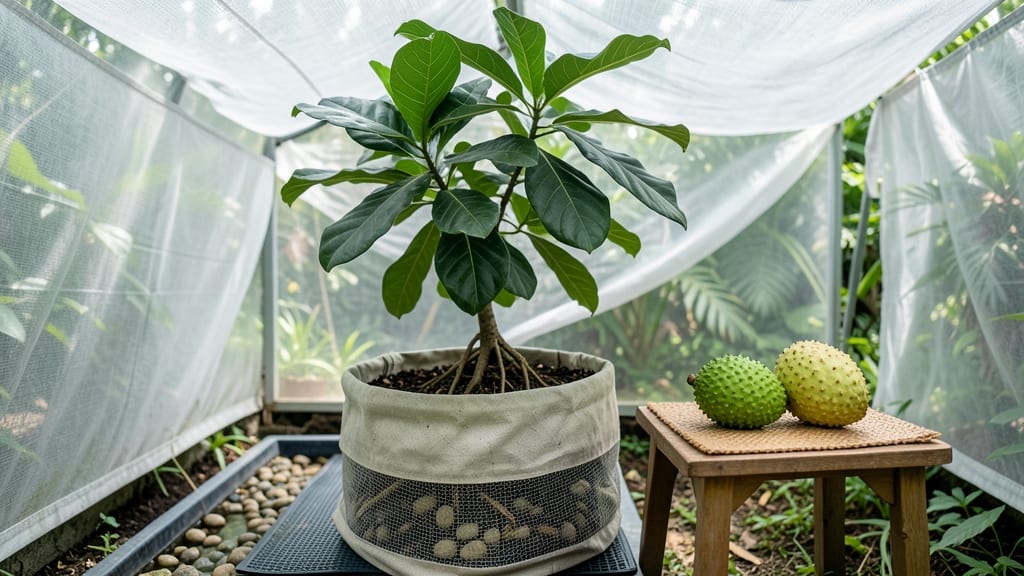
Growing this unique soursop guanabana tree at home means tropical flavors within reach—even if you're not in a jungle. 🌴 The creamy, custard-like fruit tastes like a mix of pineapple, mango, and strawberry, and with the right care, you can grow one in containers or warm climates.
I've grown mine in a large pot for years, and it produces fruit reliably once established.
Start with a seed or grafted tree, as they're frost-sensitive and need 70-85°F temperatures year-round. Well-draining soil rich in organic matter is key—think 50% potting mix, 30% perlite, and 20% compost—and keep it consistently moist but not soggy.
Young trees need 1-2 inches of water weekly, while mature ones tolerate slightly less but still require humidity.
Fruit production takes 3-5 years from seed, but grafted trees can bear in as little as 2 years. The tree grows 20-40 feet tall in ideal conditions, so prune to control size and encourage branching.
Protect from cold snaps—even 32°F can damage leaves—and watch for pests like scale or mealybugs, which thrive in warm climates.
Container growers can move pots indoors during winter, though light becomes critical. With patience and the right conditions, you’ll harvest 4-8 pounds of fruit per season, perfect for smoothies, desserts, or fresh eating. The tropical aroma alone makes it worth the effort.
Root Causes of Soursop Struggles
Growing a soursop (Annona muricata) tree at home can be incredibly rewarding, but like any tropical fruit, it has specific needs that—when unmet—can lead to stunted growth, poor fruiting, or even plant death.
Understanding why these issues arise is the first step to fixing them. Below, we break down the most common culprits and the science behind them.
Soursop trees are tropical natives, meaning they thrive in USDA Hardiness Zones 10–11 (average temperatures 65–85°F / 18–29°C). When exposed to temperatures below 50°F (10°C), their metabolic processes slow dramatically, leading to:
- Leaf Drop & Wilting 🌿→💀 Cold disrupts chlorophyll production, causing leaves to yellow and fall. The plant conserves energy by shedding non-essential foliage.
- Actionable Fix: Use row covers or move potted trees indoors during frost warnings. If outdoors, plant in sheltered microclimates (e.g., near south-facing walls).
- Flower and Fruit Abscission 🌸🍈→❌ Soursop flowers are highly sensitive to temperature fluctuations. A sudden drop below 55°F (13°C) triggers ethylene production, a plant hormone that signals premature fruit drop.
- Science Note: Ethylene also accelerates respiration rates, depleting stored sugars in developing fruit.
- Root Rot from Poor Drainage in Cold Soil 🌱💦 Cold soil reduces oxygen availability in roots, while excess moisture (from overwatering or rain) creates anaerobic conditions, inviting Phytophthora (a deadly fungus). - Pro Tip: Amend soil with perlite or coconut coir to improve aeration.
Avoid watering when soil temps are below 60°F (15°C).
Soursop trees hate soggy roots. Unlike desert plants, they need consistent moisture but not waterlogged soil. Common signs of overwatering:
- Yellowing leaves with brown edges (nutrient leaching from roots).
- Mushy stems or blackened roots (anaerobic bacteria thriving).
- Stunted growth (roots suffocate, limiting nutrient uptake).
Why It Happens:
- Clay or Compacted Soil 🏗️ Clay holds water like a sponge, cutting off oxygen to roots. Soursop roots need well-aerated soil with a pH of 5.5–7.0 for optimal phosphorus and potassium absorption (critical for fruiting).
- Lack of Drainage Holes in Pots 🏺 Containers without drainage force roots to sit in stagnant water, leading to root rot within 2–4 weeks.
- Overzealous Watering 💦🚫 Soursop trees in pots dry out faster than in-ground plants. A common mistake is watering on a fixed schedule instead of checking soil moisture.
- Test: Stick your finger 2 inches into the soil—if it’s dry, water; if damp, wait.
Actionable Fixes:
- Amend soil with 50% native soil + 30% compost + 20% perlite/pumice.
- Water deeply but infrequently (once a week in hot climates, less in cool seasons).
- Use raised beds or fabric pots for better drainage.
Soursop trees love bright, indirect light but burn in harsh afternoon sun. Here’s how sunlight (or lack of it) sabotages growth:
| Issue | Cause | Symptoms | Solution |
|---|---|---|---|
| Sunburn (Leaf Scorch) | Direct 10+ hours of sun in hot climates | White/yellow patches, crispy edges | Dappled shade (30–50% coverage) or morning sun only. |
| Leggy, Weak Growth | <6 hours of light/day | Tall stems, small leaves, no flowers | Move to sunnier spot or supplement with grow lights (12–14 hrs/day). |
| Flower Drop | Too much shade (blocks pollinators) | Buds form but fall off | Ensure 6+ hours of direct sun for pollinators (bees, bats). |
Science Note: Soursop flowers are pollinated by bats and beetles—these creatures avoid shaded areas. Poor light also reduces photosynthesis, starving the plant of energy for fruit development.
Soursop trees are heavy feeders, especially when fruiting. A deficiency in nitrogen (N), phosphorus (P), or potassium (K) shows up in distinct ways:
- Nitrogen (N) Deficiency 🌱💀 - Symptoms: Yellowing older leaves (chlorosis), stunted growth. - Why? Nitrogen is crucial for leafy growth and protein synthesis.
Soil tests often reveal low organic matter in tropical soils. - Fix: Apply compost tea or a balanced fertilizer (10-10-10) every 4–6 weeks during growing season.
- Phosphorus (P) Deficiency 🍃🔥
- Symptoms: Dark green/purple leaves, weak roots, no flowers/fruit.
- Why? Phosphorus triggers flowering and fruiting. Cold or waterlogged soil locks it out of root uptake.
- Fix: Use bone meal or rock phosphate in early spring.
- Potassium (K) Deficiency 💧🌡️
- Symptoms: Yellowing leaf edges, weak stems, fruit drop.
- Why? Potassium regulates water balance and disease resistance. Overwatering flushes it out.
- Fix: Wood ash or potassium sulfate applied twice a year.
Pro Tip: Soil test first! Many "tropical" soils are lacked in micronutrients like magnesium (Mg) or zinc (Zn), which cause interveinal chlorosis (yellowing between veins).
Soursop trees are susceptible to pests and pathogens due to their soft, broad leaves and sap-rich stems. Common culprits:
- Scale Insects & Mealybugs 🐛🍯
- Why? These sap-sucking pests excrete honeydew, attracting sooty mold (a black fungal growth).
- Fix: Neem oil spray (weekly) or introduce ladybugs (natural predators).
- Anthracnose Fungus 🍄💔
- Why? High humidity + poor air circulation = perfect conditions for this leaf-spotting fungus.
- Fix: Prune for airflow, apply copper fungicide, and avoid overhead watering.
- Root-Knot Nematodes 🐛🌱
- Why? These microscopic worms burrow into roots, causing galls (lumpy growths) that strangle nutrient uptake.
- Fix: Solarize soil (cover with plastic for 4–6 weeks) or plant marigolds (natural nematode repellent).
Young soursop trees (<3 years old) often struggle to fruit because:
- They’re still growing leaves/roots, not flowers.
- Improper pruning removes flower buds (hidden in leaf axils).
Why It Happens:
- Over-pruning 🪓❌ Cutting back too aggressively reduces photosynthetic surface area, starving the tree of energy for fruiting.
- Wrong Time to Prune ⏰ Pruning in late winter/early spring (before new growth) is ideal. **Avoid pruning in
Fixing Common Guanabana Tree Growing Challenges
Growing a soursop (guanabana) tree at home can be incredibly rewarding, but like any tropical plant, it comes with its own set of challenges. Whether it’s pests, slow growth, or environmental stress, knowing how to address these issues quickly will keep your tree thriving.
Below are practical, step-by-step solutions for the most common problems—plus prevention tips to keep your guanabana tree healthy long-term.
Pests and diseases can stunt growth or even kill your tree if left unchecked. Here’s how to tackle them effectively:
🔥 Fungal Issues (Powdery Mildew, Root Rot)
Cause: Overwatering, poor drainage, or high humidity. Fix:
- Prune affected leaves immediately with sterilized shears to prevent spread.
- Apply neem oil or copper fungicide (mix 1 tbsp neem oil with 1 quart water + a drop of dish soap as an emulsifier).
Spray every 7–10 days until the issue clears. - Improve airflow by thinning dense foliage or moving the pot to a brighter, less humid spot. - For root rot: Remove the tree from its pot, trim blackened roots with clean scissors, repot in fresh, well-draining soil, and avoid watering until the top 2 inches of soil dry out.
💡 Prevention Tip: Water at the base (not overhead) and ensure pots have drainage holes. Space plants 3–4 feet apart outdoors to reduce humidity buildup.
🐜 Common Pests (Mealybugs, Scale, Aphids)
Cause: Weak trees attract pests, especially in warm, sheltered spots. Fix: - For mealybugs/scale: Wipe infested areas with a 70% rubbing alcohol-soaked cotton ball or spray with soapy water (1 tsp mild dish soap per quart of water).
Repeat every 3–5 days for 2 weeks. - For aphids: Blast them off with a strong stream of water or introduce ladybugs (natural predators). - Severe infestations? Use horticultural oil (apply in the evening to avoid burning leaves).
💡 Prevention Tip: Inspect new plants before bringing them home. Encourage beneficial insects (like lacewings) by planting basil or marigolds nearby.
Slow growth or yellowing leaves? These fixes will get your guanabana tree back on track.
🍂 Yellow Leaves (Nutrient Deficiency or Overwatering)
Cause: Too much water, poor soil, or lack of key nutrients (like nitrogen or magnesium). Fix: - Check the soil: Stick your finger 2 inches deep—if it’s soggy, reduce watering.
If dry, water deeply but only when the topsoil is dry. - Fertilize properly: - For nitrogen deficiency (yellow lower leaves): Use a balanced fertilizer (10-10-10) every 4–6 weeks during growing season. - For magnesium deficiency (yellow patches between veins): Apply Epsom salt (1 tbsp per gallon of water) monthly. - Repot if needed: If roots are circling, move to a larger pot (1–2 sizes up) with well-draining tropical soil mix.
💡 Prevention Tip: Mulch with compost to retain moisture and nutrients without overwatering. Avoid synthetic fertilizers—opt for organic options like fish emulsion.
🌡️ Temperature & Sunlight Struggles
Cause: Guanabana trees hate cold drafts and need bright, indirect light. Fix:
- If leaves brown/curl in cold: Move indoors near a south-facing window or use a grow light (12–14 hours/day).
- If growth stalls in winter: Provide warmth (ideal: 65–85°F).
Avoid placing near AC vents or drafty windows. - For too much direct sun (leaf scorch): Use a sheer curtain to diffuse light or move the tree 5–10 feet back from the window.
💡 Prevention Tip: Acclimate gradually if moving outdoors—start with 2–3 hours of sun/day, then increase slowly.
🌿 Slow Growth or No Fruit
Cause: Immature tree, lack of sunlight, or insufficient nutrients. Fix: - For young trees (under 3 years): Be patient—guanabana trees take 3–5 years to fruit.
Focus on strong growth first. - Boost flowering/fruiting: - Prune lightly in late winter to encourage new growth. - Fertilize with phosphorus-rich food (like bone meal) once a year in early spring. - Hand-pollinate if indoors: Use a soft paintbrush to transfer pollen between flowers (morning is best). - Ensure 12+ hours of light—supplement with grow lights if natural light is insufficient.
💡 Prevention Tip: Plant two trees if possible—cross-pollination increases fruit production!
The right setup makes all the difference for tropical trees.
🪴 Root Bound or Poor Drainage
Cause: Stagnant water or compacted soil. Fix:
- Repot every 2–3 years in spring, choosing a pot only 2–3 inches larger in diameter.
- Use this soil mix:
- 50% peat moss or coconut coir
- 30% perlite or pumice (for drainage)
- 20% compost or worm castings
- Add a layer of orchid bark at the bottom for extra aeration.
💡 Prevention Tip: Test your soil’s pH—guanabana trees prefer slightly acidic (6.0–6.5). Adjust with lime (to raise pH) or sulfur (to lower it) if needed.
🌧️ Overwatering vs. Underwatering
Signs:
- Overwatered: Yellow leaves, mushy stems, roots turning black.
- Underwatered: Crispy edges, soil pulling away from pot sides.
Fix:
- Water only when the top 2 inches of soil are dry (stick your finger in to check!).
- Bottom-watering trick: Place the pot in a tray of water for 10–15 minutes, then drain excess.
- In winter: Reduce watering to every 2–3 weeks.
💡 Prevention Tip: Use a moisture meter—it’s a game-changer for tropical plants!
✅ Rotate your pot every few weeks for even sunlight exposure. ✅ Mist leaves daily in dry climates to mimic humidity. ✅ Watch for fruit drop—this is normal!
Only 1–2 fruits per tree are typical for home growers. ✅ Save seeds from ripe soursops to grow new trees (though grafted trees fruit faster).
With these fixes, your guanabana tree will thrive, grow strong, and—with patience—reward you with sweet, creamy fruit! 🍈✨
Frequently asked questions about growing soursop trees
How long does it take for a soursop tree to bear fruit from seed?
Growing from seed typically takes 3-5 years before you see fruit. Young trees focus on establishing roots and foliage first. For faster results, choose a grafted tree, which can bear fruit in as little as 2 years—just be prepared for higher upfront costs.
Can I grow a soursop tree in a container, and what size pot should I use?
Yes! Soursop trees adapt well to containers when given proper care. Start with a 15-gallon pot for young trees and upgrade to 25-35 gallons as they mature. Use a well-draining mix (50% potting soil, 30% perlite, 20% compost) and ensure the pot has drainage holes to prevent root rot.
Why aren't my soursop tree leaves turning green, and how can I fix it?
Yellowing leaves often signal overwatering or nutrient deficiencies. Check soil moisture—water only when the top 2 inches are dry. For deficiencies, use a balanced fertilizer (10-10-10) every 4-6 weeks during growing season. If leaves show yellow patches between veins, it may be magnesium deficiency—try Epsom salt spray (1 tbsp/gallon) monthly.
What's the best way to protect my soursop tree from cold weather?
Soursop trees cannot tolerate frost—temperatures below 50°F (10°C) can damage them. For potted trees, move them indoors near a south-facing window or use a grow light for 12-14 hours/day. If outdoors, cover with a frost cloth or place near a sunny wall to trap heat. Never let soil temps drop below 60°F (15°C).
How do I know if my soursop tree needs more sunlight?
Leggy growth, small leaves, or no flowers mean your tree needs more light. Move it to a brighter spot or supplement with grow lights. Soursop trees thrive with 6-8 hours of direct sun daily, but avoid harsh afternoon sun in hot climates—use a sheer curtain to diffuse intense rays if needed.