
Size
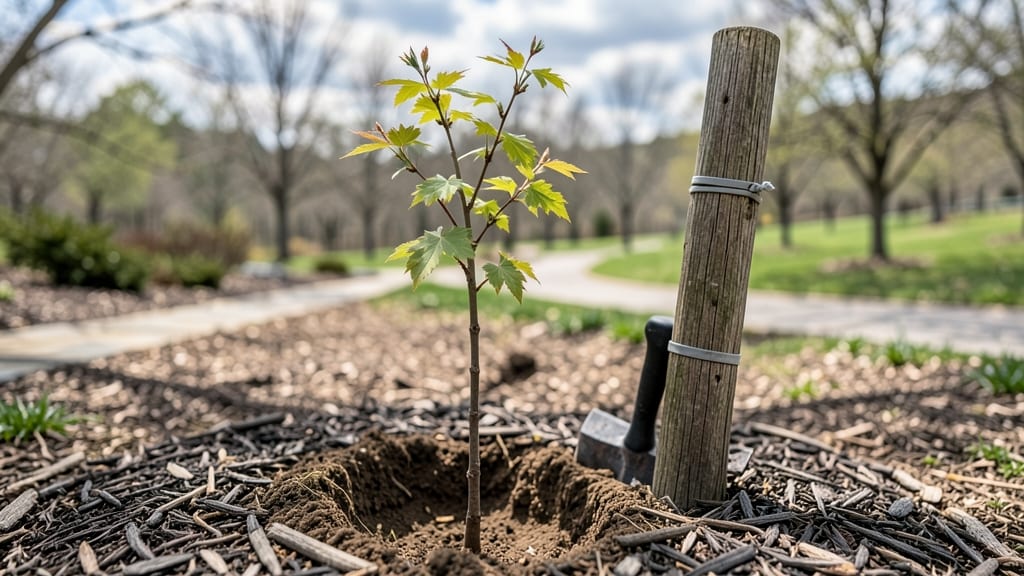
To stake a tree to grow straight, choose the right species, use a 2-inch wooden or metal stake, and secure it loosely with soft ties at a 45-degree angle to prevent trunk damage. Monitor ties monthly and remove stakes after 1-2 years once the trunk stabilizes.
Staking isn't one-size-fits-all—it depends on your tree's natural growth habits. 🌳 Shallow-rooted species like willows or fruit trees often need support to prevent leaning, while deep-rooted oaks or maples rarely require staking.
The key is timing: spring planting lets roots establish before summer winds, while fall staking can stress young trees. I've found that proper staking actually encourages trunk strength by preventing excessive sway, which can weaken the cambium layer over time.
When installing stakes, position them 2-3 inches away from the trunk and bury them one-third of their length underground for stability. Use soft ties like tree straps or wide fabric strips—never wire—to avoid girdling as the trunk thickens.
A common mistake is leaving stakes in too long; after 1-2 years, most trees develop enough rigidity to stand alone. Always check ties monthly, especially after storms, to ensure they remain snug but not restrictive.
💡 In This Article
- When and How to Stake Young Trees by Species
- Step-by-Step Guide to Staking Trees Without Damaging Trunks
When and how to stake young trees by species
The decision to stake a tree starts with understanding its root system. Shallow-rooted trees like willows, birches, and fruit trees (such as apples or pears) spread their roots horizontally near the surface, making them highly susceptible to wind rock.
These species often need staking because their root systems lack the depth to anchor against strong gusts.
In contrast, deep-rooted trees like oaks, maples, and hickories develop extensive vertical roots that naturally stabilize them, requiring little to no support. 🌱 The rule of thumb is that trees with a root system less than 12-18 inches deep typically benefit from staking.
Seasonal timing plays a critical role in successful staking. Planting and staking in early spring allows roots to establish before summer winds, while fall staking can stress young trees by limiting their ability to adapt to winter conditions.
The ideal scenario is to stake immediately after planting in spring, giving roots 6-8 weeks to strengthen before peak wind seasons. For container-grown trees, which often have root-bound systems, staking is especially important to prevent transplant shock and encourage root spread into the surrounding soil.
The science behind proper staking involves preventing excessive trunk movement, which can damage the cambium layer—the growth tissue responsible for thickening the trunk. When a tree sways too much, the cambium cells can tear, creating weak points that invite disease or pest entry.
A well-placed stake limits movement to just the top 12-18 inches of the trunk, allowing the lower portion to develop natural strength. This targeted support mimics how trees naturally bend in the wind, building resilience without artificial rigidity.
Consider these species-specific needs when deciding whether to stake:
- Shallow-rooted trees (willows, birches, fruit trees): Almost always require staking for the first 1-2 years to prevent uprooting.
- Moderate-rooted trees (cherries, dogwoods): May need staking in windy areas or during establishment.
- Deep-rooted trees (oaks, maples, hickories): Rarely require staking unless planted in extremely exposed sites.
For example, a 2-year-old apple tree planted in an open field would benefit from staking to protect its delicate root system, while a 3-year-old red oak in a sheltered yard likely wouldn't need support.
The key is observing how the tree responds to natural winds—if it leans significantly (10-15 degrees), staking is warranted. Over-staking can actually weaken trees by preventing them from developing natural resilience to wind forces.
What most gardeners don't realize is that the right staking technique can actually accelerate trunk thickening. When stakes are positioned at a 45-degree angle and tied loosely, they create a controlled bending motion that stimulates the cambium to produce more wood.
This natural process is why properly staked trees often grow straighter and stronger than unstaked counterparts. The goal isn't to create a rigid support system, but to guide the tree's development while it learns to stand on its own. 🌳