
Pruning
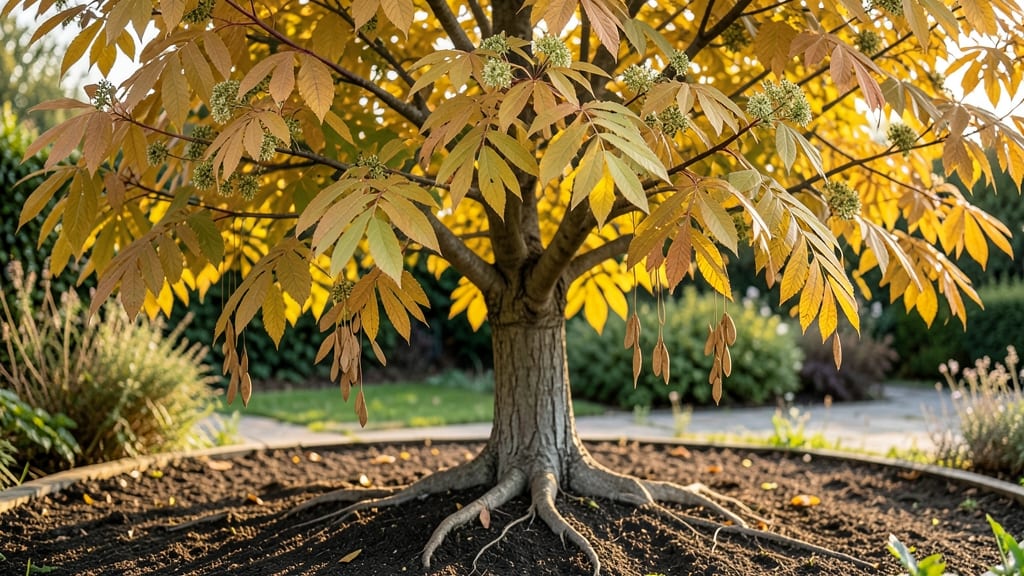
Fall turns the Tree of Heaven into a dramatic showstopper—its leaves blaze golden-yellow before dropping, while its persistent seed clusters add textural interest. 🌿 I’ve pruned these trees for years, and fall is the perfect time to shape them before winter dormancy sets in.
The key? Removing dead wood and thinning crowded branches to prevent disease buildup.
This tree’s disease-resistant nature makes it a tough landscape star, but fall’s damp conditions can invite fungal issues if pruning cuts aren’t clean. Focus on open-air pruning—cut just outside branch collars—and avoid over-trimming, which weakens the canopy. The result? A denser, healthier tree that holds its shape through winter.
By late autumn, you’ll notice fewer seed pods clinging to branches, thanks to strategic pruning. The tree’s fragrant foliage (yes, it smells like burnt rubber!) lingers longer when properly maintained, and its bold structure makes it a standout in mixed landscapes. Just watch for fall webworms—they love this tree.
For best results, time your pruning after leaf drop but before hard frosts. A sharp pair of bypass pruners and a sterilized saw for thicker branches are all you need. This tree rewards patience—its year-round resilience makes it a low-maintenance yet striking addition to any yard.
📚 In This Guide
- What you need
- Instructions
- Tips and common mistakes
- Wrapping up and next steps
What you need
- ● Pruning shears – Bypass pruners (sharp, 6-8" blades) for small branches (1" diameter or less). Quantity: 1 pair.
- ● Loppers – Long-handled (24-36") for medium branches (1.5-3" diameter). Quantity: 1 pair.
- ● Pruning saw – Curved-tooth or folding saw for thick branches (3"+ diameter). Quantity: 1.
- ● Gloves – Heavy-duty, chemical-resistant (Tree of Heaven sap can irritate skin!). Quantity: 1 pair.
- ● Disposable pruning bags – 13-gallon capacity (for debris removal). Quantity: 2-3.
- ● Ladder or extension pole – Sturdy, 10-15 ft tall (for high branches). Quantity: 1.
- ● Rubbing alcohol (70%+) or pruning sealant – For sterilizing tools and sealing large cuts. Quantity: Small bottle.
- ● Work boots or closed-toe shoes – Steel-toe recommended for safety.
- ● Safety glasses – ANSI-rated to protect from debris.
- ● Pole pruners – For hard-to-reach branches without a ladder.
- ● Tree wound dressing – Only for large cuts (>2" diameter) (controversial but useful in some cases).
- ● Spray bottle with soapy water – To clean tools mid-pruning.
- ● Marking twine or flags – To tag branches for removal (helpful for complex pruning).
- ● Respirator mask – If allergic to Tree of Heaven sap or pollen.
Instructions for pruning tree of Heaven in fall
Fall is the perfect time to shape your Tree of Heaven—here’s how to encourage dense growth while keeping it healthy year-round.
✂️ Step 1: Remove Dead or Diseased Branches First
Start by inspecting the tree for any branches that are brown, brittle, or showing signs of disease—these are your top priority. Tree of Heaven is naturally resilient, but deadwood invites pests and weakens the canopy over time. Use sharp, sterilized pruning shears to make clean cuts just outside the branch collar (the swollen area where the branch meets the trunk).
I always work from the bottom up, removing larger branches first. This prevents smaller branches from breaking under the weight of heavier limbs above. If you spot any suckers sprouting from the base or trunk, snip them off at the ground level—they’ll sap energy from your main canopy.
✂️ Step 2: Thin the Canopy for Better Airflow
Tree of Heaven thrives when its branches receive good airflow, which reduces the risk of fungal issues like powdery mildew. Look for areas where branches are crowded or overlapping—these are prime spots for moisture buildup. Aim to remove about 20-30% of the total canopy volume by selectively pruning back the thickest growth.
Focus on removing branches that cross or rub against each other, as these create weak points that can split over time. Make your cuts at a 45-degree angle just above an outward-facing bud to encourage new growth in the right direction. Avoid "topping" the tree by cutting back to stubs—this leads to weak, bushy regrowth.
☀️ Step 3: Shape for Balance and Light Penetration
Now’s the time to refine the tree’s shape for structural integrity and sunlight exposure. Step back and visualize how light filters through the canopy—gaps where dappled shade appears are your targets for pruning. Remove any branches growing inward or downward, as these block light and create dense, shaded pockets where leaves stay damp too long.
For a naturally dense yet open canopy, I prune to create a modified vase shape: wider at the base and gradually narrowing upward. This encourages the tree to fill out at the bottom while allowing light to reach the lower branches. Avoid over-pruning in one area—uneven cuts can leave the tree lopsided and stressed.
⏰ Step 4: Clean Up and Apply Protective Measures
After pruning, rake up all fallen leaves and debris from beneath the tree—this prevents fungal spores from overwintering in the soil. Sterilize your pruning tools with rubbing alcohol or a 10% bleach solution to avoid spreading disease between cuts. If you notice any sap oozing from pruning wounds, apply a thin layer of pruning sealant to larger cuts over ½ inch in diameter—this helps the tree heal faster.
Finish by watering the base of the tree deeply to help it recover from the stress of pruning. Tree of Heaven is drought-tolerant once established, but a good soak after fall pruning encourages root growth before winter dormancy. Mulch lightly around the base with 2-3 inches of organic mulch to insulate roots and retain moisture.
🌿 Step 5: Monitor for New Growth and Adjust as Needed
In early spring, check for any vigorous new shoots that may have sprouted from dormant buds—these are the tree’s way of compensating for pruning. If you notice excessive suckering or overly aggressive regrowth, prune back by one-third to maintain balance. Tree of Heaven responds well to pruning, but it’s better to make gradual adjustments than to overcorrect in a single season.
Here’s the thing—Tree of Heaven is fast-growing, so it can handle more aggressive pruning than many trees. But if you see leaves yellowing or wilting after pruning, you’ve likely removed too much foliage at once. Next time, scale back by 10% and observe the tree’s response before making bigger cuts.
Tips & tricks for perfect fall pruning of tree of Heaven
A few strategic moves will ensure your Tree of Heaven thrives year-round while avoiding common pitfalls that weaken its structure.
Tool Prep is Non-Negotiable: Sterilizing your pruning shears between cuts (using rubbing alcohol or 10% bleach solution) prevents cross-contamination of diseases like anthracnose. I keep a small spray bottle of 70% isopropyl alcohol on hand for quick sterilization between branches—this is especially critical when dealing with Tree of Heaven's dense foliage, which can harbor fungal spores. The ½-inch diameter rule for sealant application applies to any wound larger than a pencil's width; smaller cuts typically heal without treatment.
Visualize the Canopy's Light Path: Step back and observe how sunlight filters through the branches. In Step 3, when shaping for light penetration, look for areas where dappled shade creates a "swiss cheese" pattern—these are your pruning targets. I use a small mirror to check hard-to-see upper branches; the reflection helps identify inward-growing limbs that block light. Remember the modified vase shape goal: wider at the base, narrowing upward to maintain structural integrity while encouraging lower branch fill.
Timing the Watering: After pruning, water deeply but avoid saturating the soil—Tree of Heaven roots need oxygen too. I use the "finger test": push your finger 2-3 inches into the soil; if it feels dry, water until moisture reaches 6 inches down. This deep soak encourages root growth without creating waterlogged conditions that invite root rot. The 2-3 inches of organic mulch should be spread evenly but kept 2-3 inches away from the trunk to prevent moisture buildup against the bark.
Pro Tips for Tree Of Heaven In Fall
- A few strategic moves will ensure your Tree of Heaven thrives year-round while avoiding common pitfalls that weaken its structure.
- Tool Prep is Non-Negotiable: Sterilizing your pruning shears between cuts (using rubbing alcohol or 10% bleach solution) prevents cross-contamination of diseases like anthracnose.
- Visualize the Canopy's Light Path: Step back and observe how sunlight filters through the branches.
Frequently asked questions
Got questions about the Tree of Heaven in fall? You’re not alone! Here are some of the most common queries—plus quick, actionable answers to keep your tree thriving.
When is the best time to prune a Tree of Heaven in the fall?
The ideal window is late fall to early winter (November–December), after the tree has shed most of its leaves but before harsh frosts set in. This timing minimizes stress and reduces disease risk. Avoid heavy pruning too close to winter’s end—wait until dormancy is well-established for best results.
Is it safe to prune a Tree of Heaven in fall if it’s already diseased?
Yes, but with caution! Prune only the affected branches first, using sterilized tools (70% isopropyl alcohol or bleach solution). Remove diseased wood at the first healthy bud to prevent spread. Bag and dispose of infected debris immediately—don’t compost it! Healthy pruning can follow once the tree stabilizes.
What’s the difference between fall pruning and summer pruning for this tree?
Fall pruning focuses on structural shaping and disease prevention, while summer pruning (June–August) targets overgrowth and pest control. In fall, you’ll trim dead/diseased wood and thin the canopy for airflow; in summer, you might remove water sprouts or aggressive suckers. Never do major pruning in spring—it stresses the tree when it’s waking up!
Can I use the same pruning techniques for a young Tree of Heaven as a mature one?
Not quite! Young trees (under 5 years) need light, formative pruning—just remove crossing branches or low-hanging limbs to encourage a strong structure. Mature trees (10+ years) can handle heavier structural pruning, like thinning the canopy or removing large limbs. Always prune no more than 25% of the foliage in one session to avoid shock.
Are there alternatives to pruning if my Tree of Heaven is already too dense?
If pruning feels overwhelming, try these low-effort fixes:
- Thinning from the inside: Remove a few select branches from the center to improve airflow (no need for heavy cuts).
- Mulching: Add 2–3 inches of organic mulch around the base to reduce competition and stress.
- Targeted fertilization: A slow-release, nitrogen-rich fertilizer (like 10-10-10) can boost vitality without overstimulating growth.
- Monitor pests: Dense canopies attract pests—check for spotted lanternflies or aphids and treat early with horticultural oil.
For extreme cases, consult an arborist—they can assess whether partial removal or crown lifting is safer than full pruning.
Wrapping up and next steps
The Tree of Heaven’s golden fall display is a stunning reward for your pruning efforts—but the real magic happens in how you care for it year-round. By mastering seasonal trims, you’ll cultivate a thicker, healthier canopy that resists pests and thrives through winter.
Think of each cut as an investment in next year’s fiery foliage! 🌿✨
Ready to take your skills further? Next up:
- Experiment with topiary shapes for a sculpted look.
- Join a local pruning workshop to refine your technique.
- Share your #TreeOfHeavenFall photos online for inspiration!