
Pruning
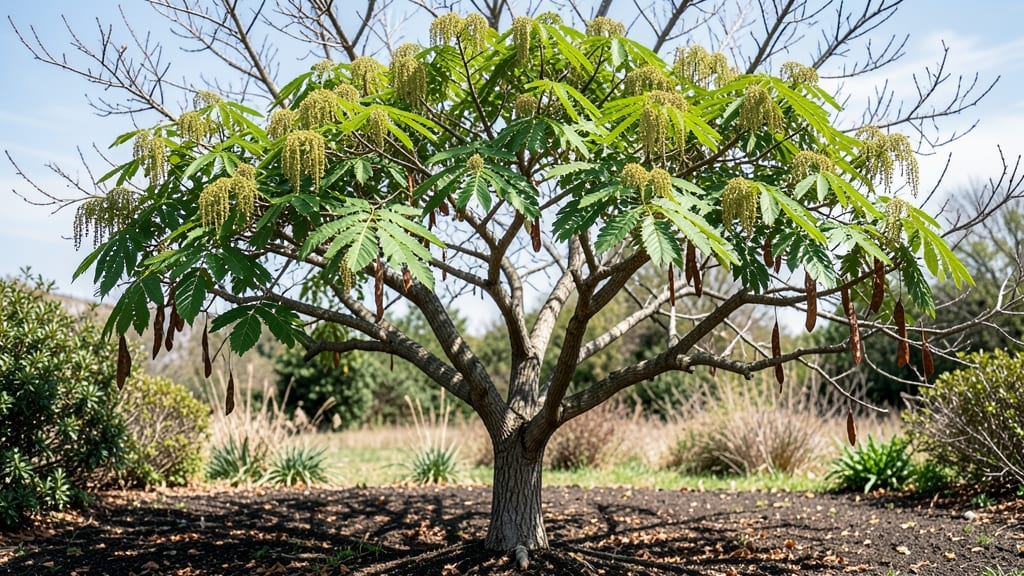
Winter is when Tree of Heaven (Ailanthus altissima) reveals its true nature—dormant but dangerous. 🌳 Pruning now isn’t just about shaping; it’s about stopping its aggressive spread and reviving weak growth before spring. I’ve spent years battling this tree’s invasive tendencies, and these cuts make all the difference.
The key is timing and technique: prune after the first hard frost but before buds swell in early spring. Focus on removing suckers at the base and thinning crowded branches by 25-30% to improve airflow. A sharp pruner and a bucket for clippings are all you’ll need—no fancy tools required.
You’ll see thicker foliage next season and fewer unwanted sprouts pushing through your garden beds. The tree’s energy shifts from spreading to growing stronger, and your landscape stays in control. Just avoid heavy pruning—this tree bounces back fast.
Works for both young trees and established ones, though older specimens may need two years of gradual pruning. In colder zones, wrap cuts with pruning sealant if temperatures dip below 10°F to prevent frost cracks. Here’s how to do it right the first time.
📚 In This Guide
- What you need
- Instructions
- Tips and common mistakes
- Wrapping up and next steps
What you need
- ● Pruning saw: A bow saw or pruning saw with a sharp, fine-toothed blade (8–10 inches long) for cutting thick branches (1–3 inches in diameter).
- ● Loppers: Bypass loppers (20–24 inches) for medium branches (up to 2 inches thick). Safety tip: Choose ones with ratchet mechanisms for easier cutting.
- ● Pruning shears: Sharp, bypass shears (6–8 inches) for smaller branches and twigs (<1 inch thick).
- ● Heavy-duty gloves: Leather or cut-resistant gloves to protect hands from thorns and rough bark.
- ● Safety goggles: To shield eyes from debris while cutting.
- ● Work boots: Sturdy, closed-toe footwear for stability on uneven ground.
- ○ Pruning sealant (optional but recommended): A latex-based or tree wound dressing (e.g., Tanglefoot Tree Wound Pruning Sealer) to prevent disease entry in larger cuts.
- ● Disposable bags or tarp: For collecting and disposing of cuttings (Tree of Heaven is highly invasive—do not compost!).
- ● Ladder (if needed): A stable, extendable ladder (24–32 feet) for reaching high branches. Pro tip: Use a ladder stabilizer for safety.
- ● Rope or harness (for tall trees): A fall-arrest system if pruning trees over 30 feet tall.
- ● Tree pruning spray: A disinfectant spray (e.g., 70% isopropyl alcohol) to sterilize tools between cuts and prevent disease spread.
- ● Marking twine or paint: To tag branches for removal before cutting (useful for large-scale pruning).
- ● Wheelbarrow: For hauling heavy branches to a disposal site.
- ● First-aid kit: In case of minor cuts or scrapes from thorns.
- ● Camera or phone: To document the tree’s structure before and after pruning for reference.
- ● Check the weather forecast: Prune on a dry, calm day to avoid slippery tools or wet cuts.
- ● Wear long sleeves and pants: Tree of Heaven has sharp thorns—protect your skin!
- ● Confirm local invasive species regulations: Some areas require special disposal for Tree of Heaven cuttings.
- ● Have a disposal plan: Contact your local waste management for bulky waste pickup if branches are too large for personal transport.
Instructions for strategic winter pruning of tree of Heaven
Here's how to control its aggressive growth while encouraging healthier spring regrowth.
✂️ Step 1: Identify and Mark Target Branches
Tree of Heaven spreads rapidly through underground roots and aerial limbs, so focus first on removing the most aggressive suckers and crossing branches. I start by examining the entire tree—look for branches growing at sharp angles or rubbing against each other, as these are prime candidates for removal. Use a permanent marker to flag branches thicker than 1 inch in diameter; these will require more careful cutting to prevent bleeding sap.
Next, identify any branches that have died back completely during the previous growing season. These will be brown and brittle rather than green, and they won’t sprout new leaves in spring. Mark these for complete removal at the base. This step ensures you’re not wasting energy on dead wood that won’t contribute to the tree’s revival.
✂️ Step 2: Prepare Tools and Safety Measures
Before making any cuts, gather your tools: a sharp pruning saw for thick branches, bypass pruners for thinner limbs, and gloves rated for thorn protection. Tree of Heaven branches often have small thorns that can puncture skin, so I double-check my gloves fit snugly before starting. Safety glasses are also a must—sap and small debris can fly when cutting.
Next, lay down a tarp or drop cloth beneath the tree to catch falling branches and debris. This makes cleanup easier and protects surrounding plants or lawn areas. If you’re working near power lines or other structures, call your local utility company first—Tree of Heaven can grow surprisingly tall, and branches may extend farther than you expect.
✂️ Step 3: Make Clean Cuts at the Right Angles
For branches thicker than 2 inches, use your pruning saw to make a clean cut just outside the branch collar—the swollen area where the branch meets the trunk. Cut at a 45-degree angle sloping away from the trunk to prevent water from pooling and causing rot. For thinner branches, bypass pruners work best, and you can cut straight across without worrying about the angle.
If you’re removing a large branch, I recommend making a second cut about 12-18 inches out from the trunk to control the branch’s fall. This is especially important if the branch is heavy or located high up. Always look up and down the branch before cutting to ensure no one is in the path of falling debris.
✂️ Step 4: Treat Cuts and Monitor for New Growth
After pruning, apply a tree sealant to cuts larger than 1 inch in diameter to prevent disease and pests from entering the wound. For smaller cuts, the natural seal will form over time, so skip the sealant. I like to apply the sealant while the tree is still dormant—this gives the wound time to heal before the growing season begins.
Once pruning is complete, step back and assess the tree’s shape. You should see an open canopy with better airflow, which reduces the risk of fungal diseases. Watch for new shoots emerging from the base or along the trunk in early spring—these are signs the tree is responding well to the pruning. If you see excessive new growth, it may indicate the tree is still stressed, and you may need to adjust your approach next year.
⏰ Step 5: Schedule Follow-Up Maintenance
Tree of Heaven is persistent, so plan to prune again in late winter or early spring before new growth begins. This second round focuses on removing any water sprouts or suckers that emerge from the roots or trunk. I also recommend applying a root barrier if the tree is spreading aggressively—this can help contain its underground growth over time.
Finally, keep an eye on the tree throughout the growing season. If you notice any branches dying back or new suckers appearing, address them promptly. The key to long-term control is consistency—Tree of Heaven respects persistence, and with regular pruning, you can keep it from taking over your landscape.
Tips & tricks for perfect tree of Heaven winter pruning
Here's what nobody tells you about taming this invasive tree without sacrificing its health.
Branch Identification: When examining branches in Step 1, look for the "thumbprint" test—press your thumb into the bark. Healthy branches will have a slight give, while dead branches feel hard and brittle. I also check for bark peeling or cracks, which often indicate internal rot. These visual cues help you confidently mark branches for removal without second-guessing.
Safety First: In Step 2, never underestimate the height of Tree of Heaven branches—some can reach 20 feet or more. Before making any cuts, I always do a "clearance check" by looking up at the branch path and ensuring no power lines or structures are in the way. If you're unsure, use a pole saw extension or hire a professional for high branches. Remember, safety glasses aren't just for debris—they protect against sap splatter, which can irritate eyes.
Cutting Technique: For the 45-degree angle cuts in Step 3, I recommend using a small level or protractor attached to your pruning saw to ensure consistency. The angle should slope away from the trunk to create a natural water runoff path. For branches between 1-2 inches thick, I find that a slight undercut (cutting just below the branch collar) followed by the angled cut prevents tearing. This two-step approach gives you more control over the cut line.
Monitoring Growth: After pruning, watch for "epicormic buds"—these are small buds that appear along the trunk after heavy pruning. In Step 4, if you see more than 3-4 of these buds sprouting within a few inches of each other, it's a sign the tree is stressed. In this case, I recommend reducing watering slightly and applying a diluted seaweed fertilizer to help the tree recover. These buds often produce weak growth that can be pruned back in the next winter session.
Pro Tips for Tree Of Heaven Winter
- Here's what nobody tells you about taming this invasive tree without sacrificing its health.
- Branch Identification: When examining branches in Step 1, look for the "thumbprint" test—press your thumb into the bark.
- Safety First: In Step 2, never underestimate the height of Tree of Heaven branches—some can reach 20 feet or more.
Frequently asked questions
about Tree of Heaven winter pruning—because even the toughest invaders need a little guidance!When is the best time to prune Tree of Heaven in winter?
The ideal window is late winter (February–early March) before new growth starts. Pruning then minimizes stress on the tree and prevents pests from accessing fresh cuts. Avoid extreme cold snaps—aim for days above freezing. Pro tip: If your region has mild winters, wait until dormancy is complete (no buds swelling).
Will pruning Tree of Heaven in winter kill it?
No—done correctly, winter pruning strengthens the tree by removing weak or diseased branches. However, over-pruning (cutting >30% of foliage) can stress it. Focus on targeted cuts to control spread, not drastic thinning. Always sterilize tools to prevent disease. Warning: Never prune in fall—it invites pests and fungal infections.
How do I stop Tree of Heaven from spreading after pruning?
Pruning alone won’t eradicate roots/suckers. Combine cuts with solarization (covering stumps with plastic) or herbicide (glyphosate) applied to fresh cuts. For large infestations, repeat treatments in spring. Pro tip: Monitor soil for regrowth—new shoots can sprout from roots even after pruning!
Can I prune Tree of Heaven in summer instead?
Summer pruning is riskier—it stresses the tree and attracts pests. If you must prune in summer, do so early (June) and avoid heavy cuts. Winter is always better for aggressive control. Alternative: Light summer trimming (e.g., shaping) is safer than full-scale removal.
What if my Tree of Heaven doesn’t regrow after winter pruning?
Lack of regrowth could mean:
- Over-pruning: Cut back to live buds (green tissue under bark).
- Root damage: If roots are severed (e.g., by construction), the tree may decline.
- Disease: Check for cankers or oozing sap—prune infected branches immediately.
Give it time! Some trees take 1–2 years to recover. If it’s still dormant after spring, consult a local arborist.
Wrapping up and next steps
The Tree of Heaven may seem resilient, but with the right winter pruning techniques, you can gain control over its aggressive growth and even revive its health. By timing your cuts, using sharp tools, and removing suckers strategically, you’ll stop its spread while encouraging stronger, more manageable growth. 🌱
Ready to take action? Grab your pruners and schedule your pruning session on a calm winter day—your yard (and future self) will thank you! For extra support, check out local gardening forums or consult a tree-care professional to tailor the approach to your landscape.