
Plants
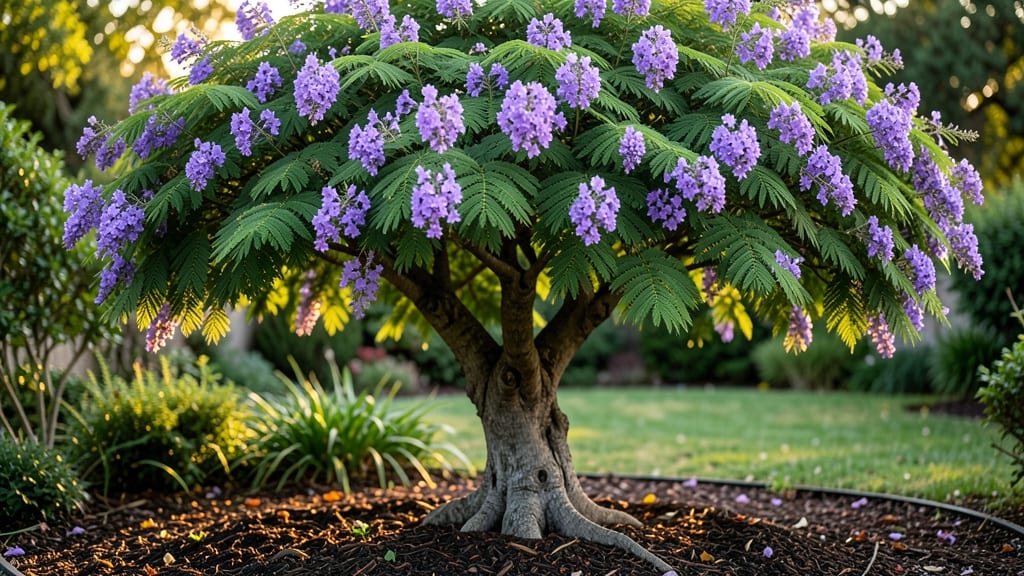
A jacaranda tree looks like a breathtaking springtime spectacle with its lavender-blue, trumpet-shaped blossoms that cascade in dense clusters. The tree features delicate, fern-like foliage and smooth, grayish bark with subtle scaling, all topped by a wide, rounded canopy that can grow 30 to 40 feet tall.
A jacaranda tree's most eye-catching feature is its vibrant, trumpet-shaped flowers that bloom in dense, hanging clusters, creating a stunning visual effect. 🌸 The flowers typically appear in shades of lavender-blue, though some varieties may have lighter or darker hues.
The tree's leaves are compound and feathery, resembling fern fronds, while its bark is smooth with a subtle scaly texture. This combination of features makes the jacaranda instantly recognizable during its peak bloom season.
The jacaranda tree thrives in warm climates, particularly in USDA zones 9-11, where it can reach its full height and lush foliage. It prefers full sun exposure and well-draining soil, making it a popular choice for landscaping in regions with mild winters.
While it's not frost-tolerant, some gardeners successfully grow it in cooler areas by providing extra protection during colder months.
💡 In This Article
- Identifying Jacaranda Tree Leaves, Flowers, and Bark
- Best Seasons and Regions for Jacaranda Tree Growth
Identifying jacaranda tree leaves, flowers, and bark
The jacaranda tree's leaves are its first clue for identification, featuring a striking pinnate compound structure with 50-100 individual leaflets arranged in pairs along a central stem.
Each leaflet measures about 1/2 to 1 inch long and has a delicate, fern-like appearance with a soft, slightly waxy texture. 🌿 Unlike similar trees like the royal poinciana, which has glossy, elongated leaves, jacaranda foliage appears almost lacey when viewed from above, creating a dappled light effect on the ground.
The signature flowers grow in hanging racemes that can reach 1-2 feet in length, with each individual blossom measuring about 1-1.5 inches wide.
What makes them instantly recognizable is their trumpet shape with five slightly ruffled petals and a central cluster of stamens that give them a fuzzy appearance. The color spectrum ranges from pale lavender to deep indigo, though the classic mid-tone violet-blue is most common.
These flowers are fragrant, releasing a light, sweet scent—though not as strong as some other flowering trees.
The bark provides another distinguishing feature, appearing smooth with subtle horizontal ridges that give it a slightly scaly texture. As the tree matures, these ridges become more pronounced, creating a pattern that resembles stacked plates.
Unlike mimosa trees, which have rougher, more textured bark, jacaranda bark remains relatively smooth even in older specimens. The color typically ranges from light gray to silver-brown, adding to the tree's elegant appearance throughout the year.
One of the most fascinating aspects of jacaranda identification is how the tree changes with the seasons. During bloom season, the canopy becomes so dense with flowers that the leaves are barely visible.
After flowering, the tree sheds its blossoms, revealing the bright green foliage that remains until autumn, when the leaves turn a soft yellow before falling. This seasonal transformation is a key characteristic that sets it apart from evergreen trees.
For those unfamiliar with jacaranda trees, comparing them to similar species helps with identification. The royal poinciana, for example, has larger, more vibrant red flowers and broader leaves, while the mimosa features smaller, ball-shaped clusters of flowers.
The jacaranda's combination of delicate foliage, trumpet-shaped flowers, and smooth bark creates a unique silhouette that's hard to confuse with other trees.
If you're trying to identify a jacaranda from a distance, look for these key visual cues: hanging flower clusters, fern-like leaves, and the rounded canopy shape. These features create a distinctive profile that makes the jacaranda one of the most recognizable trees in its native regions. 🌸