
Companion Plants
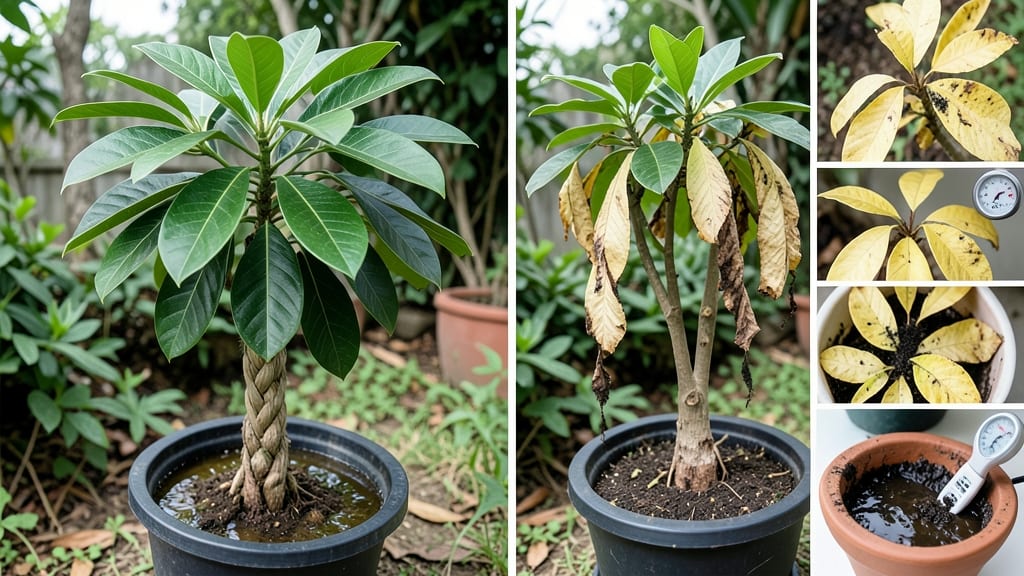
What does an overwatered money tree look like? Those yellow leaves and droopy stems aren’t a mystery—they’re screaming "too much water!" 🌱 Overwatering creates a suffocating root environment, turning lush green foliage into sad, mushy messes. The first clue?
Bright yellow leaves that start at the bottom and creep upward, paired with stems that sag like overcooked noodles. The real damage hides underground: roots turn black and mushy, smelling foul as they rot from lack of oxygen. Meanwhile, the soil stays clingy and waterlogged, refusing to dry between waterings.
This isn’t just wilting—it’s a silent root emergency that spreads fast if ignored. Here’s the fix: pull the plant, trim any blackened roots with clean scissors, and repot in fresh, well-draining soil.
From now on, water only when the top 1-2 inches feel dry—your money tree will bounce back with firm stems and vibrant new growth within weeks. Prevention is simple: bigger pots with drainage holes, a moisture meter, and the "finger test" before watering.
Your plant’s survival depends on breaking the overwatering habit—start today, and watch it thrive!
Why It Happens
Overwatering your money tree (Pachira aquatica) isn’t just a gardening mistake—it’s a silent killer that disrupts its delicate balance.
This tropical beauty thrives in well-draining soil, and when watered too frequently (or not allowed to dry out), its roots suffocate, leading to a cascade of distress signals like yellowing leaves, drooping stems, and even root rot.
Let’s break down the real culprits behind this common issue, so you can fix the problem at its source.
Your money tree’s roots need oxygen to breathe, and when the soil stays soggy, they drown. Here’s why this happens:
- Poor Drainage: If your pot lacks drainage holes or uses dense, water-retentive soil (like pure clay or heavy potting mix), excess water pools at the roots, cutting off airflow. - Overzealous Watering: Watering on a rigid schedule (e.g., every 2–3 days) without checking soil moisture forces roots to sit in wet conditions for too long. - Seasonal Misjudgment: Money trees slow down in winter (dormancy phase) and need far less water.
Yet, many gardeners keep up summer watering habits, leading to overhydration.
💡 Pro Tip: Stick your finger 1–2 inches into the soil—if it’s damp, wait. If it’s dry, water thoroughly until it drains from the bottom.
Not all soils are created equal. Money trees despise compacted or clay-heavy mixes that trap moisture like a sponge. Here’s how soil fails them:
- Lack of Perlite/Pumice: These porous additives improve aeration, but skipping them turns soil into a waterlogged brick. - Peat-Heavy Mixes: While peat holds moisture, it also retains it for days, suffocating roots.
A blend of cactus mix + perlite + orchid bark (50/30/20) works better. - No Organic Matter: Without compost or coco coir, soil breaks down poorly, leading to anaerobic (oxygen-free) zones where roots rot.
✨ Fix It: Repot into a chunky, fast-draining mix with 30% perlite and ensure the pot has drainage holes.
Your money tree’s native habitat is tropical, but that doesn’t mean it loves cold, damp conditions. Here’s how climate backfires:
- Cold Drafts + High Humidity: If your plant sits near a window in winter (where cold air meets humid indoor air), condensation forms on leaves and soil, mimicking a rainforest downpour—but without warmth to evaporate excess moisture.
- No Airflow: Stagnant air in a closed terrarium or tightly grouped plants creates a micro-climate where humidity spikes, slowing evaporation and keeping roots wet.
- Overhead Watering: Splashing water onto leaves (instead of soil) can block stomata (leaf pores), trapping moisture and promoting fungal growth.
🔥 Solution: Move your money tree to a bright, indirect spot (60–75°F) with moderate humidity (40–50%) and avoid misting leaves.
A pot that’s too small or made of the wrong material can turn your money tree into a soggy mess. Here’s how:
- Root-Bound Pots: Small containers fill up with roots quickly, leaving no room for excess water to escape.
The soil stays wet longer, even after watering. - Glazed or Plastic Pots: These materials retain moisture and don’t allow roots to "breathe" as easily as unglazed ceramic or fabric pots. - No Room to Dry: If the pot lacks ventilation (e.g., buried in a decorative cache pot without drainage), water has nowhere to go but into the roots.
🎯 Action Step: Repot into a slightly larger container (1–2 inches wider) with terracotta or fabric for better airflow.
When roots sit in wet conditions, they become a buffet for pests and pathogens. Here’s what lurks in overwatered soil:
- **Fungal Root Rot (Phytophthora, Pythium): Thrives in anaerobic, waterlogged soil, causing roots to turn black, mushy, and foul-smelling.
- Fungal Leaf Spots: Excess moisture on leaves creates dark, crusty patches** (often from Alternaria or Botrytis).
- Scale or Mealybugs: These pests love damp environments and weaken the plant, making it more susceptible to overwatering stress.
🔪 Treatment: Trim infected roots, sterilize soil with hydrogen peroxide (3%), and apply neem oil to leaves to deter pests.
Even with the best intentions, gardeners often misread their money tree’s needs. Common mistakes include:
- Assuming "Wilted = Thirsty": Droopy leaves can mean overwatering or underwatering—check the soil first!
- Skipping the "Soak and Dry" Cycle: Money trees need bottom-watering (soaking until water runs out the bottom) followed by drying 50% of the soil before the next watering.
- Using Tap Water with Chemicals: Fluoride or chlorine in tap water can burn roots over time, making them more vulnerable to rot.
🌡️ Quick Test: Lift the pot—if it’s heavy with water, wait. If it’s light and dry, it’s time to hydrate.
How to Fix Overwatered Money Tree Issues
Now that you’ve spotted the signs of an overwatered Pachira aquatica (money tree), it’s time to turn things around! The good news? Most damage is reversible with the right care. Below, we’ll break down cause-specific fixes—plus prevention tips—to help your plant bounce back and thrive.
Cause: Soggy roots cut off oxygen, leading to nutrient loss and leaf discoloration.
Steps to Revive:
- 🔥 Stop Watering Immediately
- Let the top 2–3 inches of soil dry out completely before watering again. Stick your finger in the soil—if it’s damp past 1 inch, wait longer.
- Pro Tip: 💡 Use a moisture meter for accuracy, especially in humid climates.
- 🍳 Drain Excess Water - If your pot lacks drainage holes, repot the money tree into a container with holes.
Use a well-draining mix (see below). - Emergency Fix: If repotting isn’t possible, place the pot in a tray of water for 10 minutes to flush out excess moisture, then let it drain fully.
- 👨🍳 Adjust Your Watering Routine
- Water every 2–3 weeks in winter, weekly in summer (adjust based on humidity and light).
- Prevention Tip: ✨ Water only when the top 50% of soil is dry—money trees store water in their thick stems, so they’re drought-tolerant!
- 🌡️ Boost Airflow & Light
- Move the plant to bright, indirect light (e.g., near an east-facing window). Avoid dark corners.
- Increase airflow with a small fan (gentle breeze helps roots dry faster).
Cause: Root rot weakens the plant’s structure, causing stems to sag or leaves to curl.
Steps to Revive:
- 🔪 Trim Damaged Foliage (But Not the Stems!)
- Snip off yellow, mushy, or black leaves with clean scissors. Healthy green leaves will regrow from the stem nodes.
- Warning: ⚠️ Never trim more than 20% of the plant at once—this stresses the money tree further.
- 🥘 Repot in Fresh, Dry Soil - Remove the plant from its pot and gently rinse roots with water to check for rot.
Healthy roots are firm and white; rotten roots are brown/mushy. - Repot in: - 60% cactus/succulent mix - 30% perlite or pumice (for drainage) - 10% worm castings (for slow-release nutrients) - Pro Tip: 🌡️ Use a terracotta pot—it dries out faster than plastic.
- 🌱 Encourage New Growth
- After repotting, place the money tree in bright, indirect light and avoid watering for 7–10 days to let roots heal.
- Apply a balanced liquid fertilizer (diluted to ½ strength) after 4 weeks to support recovery.
| Mistake | Fix It | Prevent It |
|---|---|---|
| Overwatering | Let soil dry completely between waterings. | Use a self-watering pot with a moisture sensor or a leca ball indicator. |
| Poor Drainage | Repot in a mix with perlite/pumice. | Always use pots with drainage holes and elevate them on saucers. |
| Low Light | Move to a brighter spot (but avoid direct sun). | Place near a south- or east-facing window or use a grow light. |
| Humidity Traps | Increase airflow with a fan. | Mist leaves 2–3 times a week (but reduce if leaves yellow). |
| Compacted Soil | Loosen soil gently with a chopstick. | Refresh soil every 1–2 years with fresh potting mix. |
💡 Bonus Tip: If your money tree’s stems are soft or hollow, the damage may be irreversible—but new shoots often sprout from the base! Propagate healthy cuttings in water to grow a fresh plant. 🌱
By following these steps, your money tree should regain its vibrant green leaves and upright stems in 4–6 weeks. Stay consistent with care, and your Pachira will be back to its lucky, thriving self! 🍀
Frequently asked questions
How can I tell if my money tree is overwatered vs. underwatered?
Overwatered money trees show bright yellow leaves starting at the bottom, droopy stems, and soil that stays clingy for days. Underwatered plants have crispy brown edges and dry, pulling away from the pot. The key difference? Overwatered soil smells sour, while underwatered soil feels bone-dry.
Can I save a money tree with black, mushy roots?
Yes, but you must act fast! Trim all black/mushy roots with clean scissors, repot in fresh, well-draining soil (60% cactus mix + 30% perlite), and avoid watering for 7-10 days to let roots recover. Healthy roots should be firm and white—discard any that smell foul.
Why do my money tree leaves turn yellow after repotting?
Yellow leaves post-repotting usually mean root shock or overwatering. Let the soil dry completely before watering again, and place the plant in bright, indirect light to reduce stress. If yellowing persists beyond 4 weeks, check for root rot or nutrient deficiencies.
How often should I water my money tree in winter?
In winter, water your money tree only when the top 2-3 inches of soil feel completely dry—typically every 3-4 weeks. Cold weather slows growth, so roots need less moisture. Always use a pot with drainage holes to prevent soggy soil.
What’s the fastest way to fix drooping stems?
For immediate relief, trim 20% of yellow leaves to reduce water loss, then place the plant in bright light with good airflow. Water only when the soil is bone-dry, and avoid fertilizing until new growth appears (usually 2-3 weeks).