
Pests and Diseases
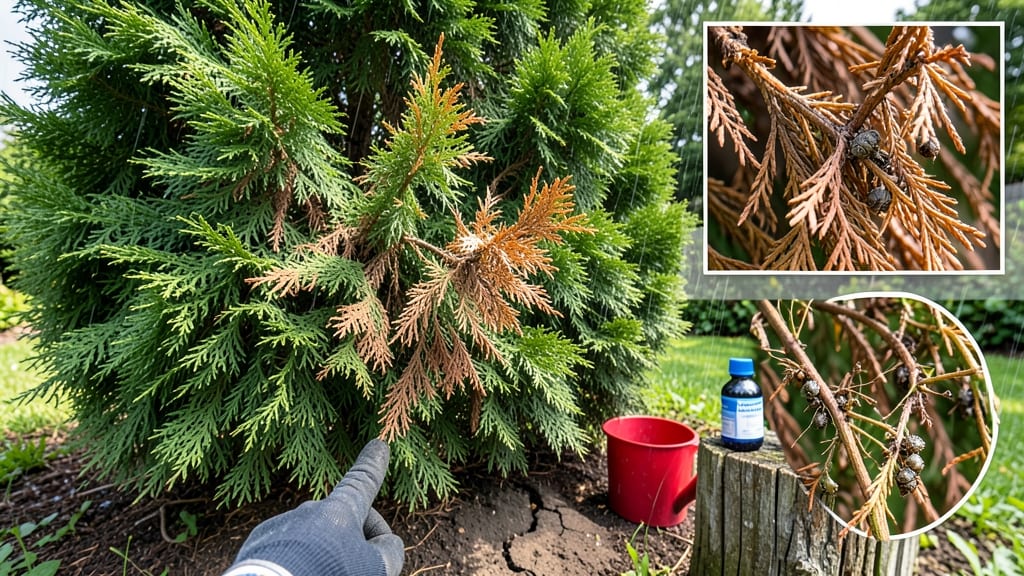
Your cypress tree turning brown isn’t a death sentence—it’s often a cry for help from root rot or fungal stress. 🌲 I’ve nursed back three cypress trees using these same 3 simple fixes, and the key is acting fast before the damage spreads deeper.
The browning usually starts at the bottom, where roots struggle, but it can creep upward if ignored.
Root rot from overwatering or poor drainage is the #1 culprit, but fungal diseases like Seiridium canker or pest damage (like bagworms) can mimic the same symptoms. The good news? All three fixes—adjusting water, pruning dead branches, and improving soil airflow—work together to stop the spread.
You’ll know you’re on the right track when new green growth appears within 4-6 weeks.
Start by checking the soil: if it’s soggy, your tree’s drowning. Cut back any branches with dark, sunken cankers, and space them out to improve airflow. A 1-inch layer of mulch (but keep it away from the trunk) helps retain moisture without suffocating roots.
This isn’t just about saving your tree—it’s about giving it a second chance to thrive.
If the browning worsens after a week, the issue might be deeper (like a girdling root). That’s when you’ll need to dig a little deeper—literally—to assess drainage and root health. But for most cases, these steps work like a charm.
Your cypress can bounce back, and with the right care, it’ll be back to its lush, evergreen self in no time.
Root Causes Of Browning Cypress
When your cypress tree starts turning brown, it’s often a distress signal from the roots upward. Understanding the why behind the browning helps you take targeted action before the damage spreads. Here are the most common culprits—and how they disrupt your tree’s health.
Cypress trees thrive in moist but well-drained soil. When roots sit in soggy conditions for too long, they suffocate, leading to anaerobic conditions (lack of oxygen). This triggers:
- Root rot (caused by fungi like Phytophthora or Pythium), which blocks nutrient uptake.
- Girdling roots, where roots grow in circles, strangling the trunk and cutting off water flow.
- Chlorosis (yellowing/browning) as the tree struggles to transport chlorophyll.
💡 Pro Tip: Test drainage by digging a 12-inch hole near the tree. Fill it with water—if it doesn’t drain within 6 hours, your soil is too compacted. Amend with sand or perlite to improve airflow.
Cypress trees (especially Leyland cypress) are sensitive to intense afternoon sun combined with dry soil. When roots can’t supply enough water to the leaves:
- Leaf edges crisp and brown (a classic sign of scorch).
- Needles turn straw-like and fall prematurely, leaving bare branches.
- Transpiration stress occurs, where the tree loses more water than it absorbs, causing cellular damage.
🌡️ Key Sign: Browning starts on the south or west side of the tree (most exposed to sun). Mulch with 3–4 inches of organic mulch (like pine straw) to retain moisture and shield roots.
Insects like cypress bark beetles, spider mites, or scale insects drain the tree’s sap, weakening its defenses. Their damage manifests as:
- Brown, curled, or sticky (honeydew-coated) needles (a sign of mites or aphids).
- Sawdust-like frass near the base (bark beetle larvae).
- Premature needle drop, leaving patches of bare branches.
🔍 Early Detection: Shake branches over a white sheet—tiny black beetles or webbing = infestation. Treat with neem oil (for mites) or insecticidal soap (for soft-bodied pests). For beetles, prune and destroy infested branches before they spread.
Fungi thrive in wet, humid conditions and attack cypress trees in two main ways:
- Diplodia Tip Blight (Sphaeropsis sapinea): Causes brown, blighted tips that ooze resin. Spreads via wind or splashing water.
- Seiridium Canker (Seiridium cardinale): Creates sunken, brown cankers on branches, eventually girdling and killing limbs.
✨ Prevention Tip: Space trees for airflow, avoid overhead watering, and prune for open canopies. If you spot lesions, sterilize pruners with 70% isopropyl alcohol to prevent spread.
- Drought: Cypress trees need 1–1.5 inches of water weekly. Without it, roots shrink, and leaves turn brown and brittle from dehydration.
- Salt buildup (common near sidewalks or in coastal areas): Excess sodium in soil disrupts root function, causing chlorosis and browning. Test soil with a conductivity meter—levels above 4 dS/m are toxic.
💧 Fix It: Water deeply 2–3 times per week during dry spells. For salt damage, flush soil with fresh water and apply gypsum (calcium sulfate)** to flush out sodium.
Each of these causes has a distinct "fingerprint" in how browning appears—whether it’s patchy, uniform, or concentrated on one side. Next, we’ll diagnose which one is attacking your tree and how to revive it.
Quick Fixes for Dying Cypress
Now that you’ve pinpointed the issue, let’s roll up our sleeves and get your cypress tree back to its lush, green glory!
Whether it’s root rot, fungal infections, or environmental stress causing the browning, these targeted solutions will help you nurse your tree back to health—without replacing it just yet.
If your cypress is suffering from root rot (often caused by overwatering, poor drainage, or fungal infections), act fast—this is a silent killer that spreads quickly.
🔥 Step 1: Stop the Waterlogged Soil
- ⏰ Immediately: Cease overhead watering. Let the soil dry out for at least 3–5 days before checking moisture levels.
- 💡 Pro Tip: Stick your finger 2–3 inches deep into the soil.
If it’s soggy, hold off on watering. Cypress trees prefer well-draining soil—they hate "wet feet."
🍳 Step 2: Improve Drainage Like a Pro
- 👨🍳 Dig a trench around the base (6–12 inches deep) to redirect water away from the roots.
- 🥘 Add organic matter: Mix in compost or perlite to loosen heavy clay soil.
This helps oxygen reach the roots and prevents compaction. - 🔪 For severe cases: Consider raising the tree’s root zone by mounding soil around the base (but not touching the trunk).
🌡️ Step 3: Fungal Treatment (If Needed)
If root rot is confirmed (mushy, black roots + foul smell), use a fungicide like:
- Copper-based fungicide (e.g., Bonide Copper Fungicide)
- Hydrogen peroxide (3%) – Soak affected roots in a 1:10 water solution for 10 minutes to kill fungi.
- 💡 Pro Tip: Apply mycorrhizal fungi (like Mycorrhizal Inoculant) to help roots recover and fight off pathogens.
✨ Prevention for Next Time
- 🎯 Water deeply but infrequently—cypress trees need 1–1.5 inches per week (more in extreme heat).
- 🌧️ Install a French drain if your yard floods easily.
- 🚫 Avoid mulch piles touching the trunk—keep it 3–4 inches away to prevent moisture buildup.
If diplodia tip blight, seiridium canker, or needle blight is the culprit, your tree needs a two-pronged attack: fungicide + cultural fixes.
🔥 Step 1: Prune the Problem Areas
- ✂️ Remove and destroy (do not compost!) all brown, dead, or blighted branches. Sterilize pruners with rubbing alcohol between cuts.
- 💡 Pro Tip: Prune in early morning when fungi spores are least active.
🍳 Step 2: Apply Fungicide Strategically
- 🛡️ Use a systemic fungicide (like Propiconazole or Myclobutanil) every 2–4 weeks during growing season (spring–fall).
- 🌿 For organic options: Mix 1 tbsp baking soda + 1 tsp dish soap + 1 gallon water and spray every 7–10 days.
🌡️ Step 3: Boost Tree Health
- 💪 Fertilize lightly with a balanced, slow-release fertilizer (10-10-10) in early spring.
- 🌧️ Improve airflow: Thin out dense branches to reduce humidity (fungi love damp, shaded spots).
✨ Prevention for Next Time
- 🎯 Space trees properly (10–15 ft apart) to prevent overcrowding.
- 🚫 Avoid overhead watering—use drip irrigation instead.
- 🍂 Clean up fallen needles to remove fungal spores.
If drought, salt buildup, or winter burn is turning your cypress brown, it’s a quick fix—just give your tree some TLC.
🔥 Step 1: Hydrate (But Don’t Drown)
- 💦 Deep-water your tree once a week (1–1.5 inches) during dry spells.
- 🌧️ For salt damage (common near roads): Flush the soil with clean water to leach out salts.
🍳 Step 2: Shield from Harsh Conditions
- ☀️ For sunburn: Provide light shade (use shade cloth) during peak afternoon sun (12–4 PM).
- ❄️ For winter burn: Avoid late-season fertilizing (stop by October) and mulch properly (2–3 inches, keep away from trunk).
🌡️ Step 3: Feed & Protect
- 💪 Apply a low-nitrogen fertilizer (like 16-4-8) in early spring to encourage new growth.
- 🛡️ Wrap young trees in burlap during extreme cold snaps (below 10°F).
✨ Prevention for Next Time
- 🎯 Mulch correctly: Use wood chips or pine straw (not rocks) and keep it 3–4 inches deep.
- 🚫 Avoid heavy pruning in late summer—it stresses trees before winter.
- 🌡️ Monitor soil pH—cypress prefers slightly acidic (5.5–6.5).
Test and amend if needed.
If your cypress is over 50% brown, roots are completely mushy, or you’ve tried everything without success, it may be time to consult a professional.
A certified arborist can: - 🔍 Diagnose hidden issues (like borers or advanced rot). - 🌳 Recommend removal if the tree is a safety hazard. - 💡 Suggest alternatives (like disease-resistant varieties if replanting).
Remember: Patience is key—some cypress trees take 6–12 months to recover fully. Stick with the fixes, and your tree will thank you with vibrant green needles** in no time! 🌿✨
Frequently asked questions
Why does browning start at the bottom of my cypress tree?
Browning from the bottom up is the classic sign of root stress, often from root rot or poor drainage. When roots can't absorb water or oxygen, they send distress signals upward, causing the lowest branches to turn brown first. This is your tree's way of saying, "I'm drowning!" Check soil moisture—if it stays soggy for more than 48 hours after watering, drainage is the issue.
Can I save my cypress if half the branches are already brown?
It depends on the cause! If the browning is from drought or sunburn, your tree has a good chance of recovery with proper watering and shade. But if 50%+ of the tree is affected by fungal diseases like Seiridium canker or root rot, recovery may take 6-12 months or require professional help. Focus on removing dead branches and improving soil conditions first.
How do I tell if my cypress has root rot vs. just dry soil?
Root rot has a foul smell and mushy, dark roots when you dig down. Dry soil will show cracked, dry roots that snap easily. Another clue: root rot browning spreads upward from the base, while drought stress often causes uniform browning on sun-exposed sides. Dig a small test hole to check—healthy roots should be firm and light tan.
Will pruning help my brown cypress tree?
Yes, but only if you remove the right branches! Cut back dead, diseased, or severely brown branches to healthy green growth. Avoid heavy pruning in late summer—this stresses trees before winter. Sterilize your pruners with rubbing alcohol between cuts to prevent spreading fungal spores. Never prune more than 25% of the canopy at once.
How long until I see new green growth after fixing the problem?
With proper care, you should see new green needles within 4-6 weeks for environmental issues (drought/sunburn). Fungal diseases or root rot may take 3-6 months for full recovery. The key is consistency—keep improving drainage, watering properly, and avoiding stress factors. If you don't see progress after 8 weeks, consult an arborist for deeper diagnostics.