
Pruning
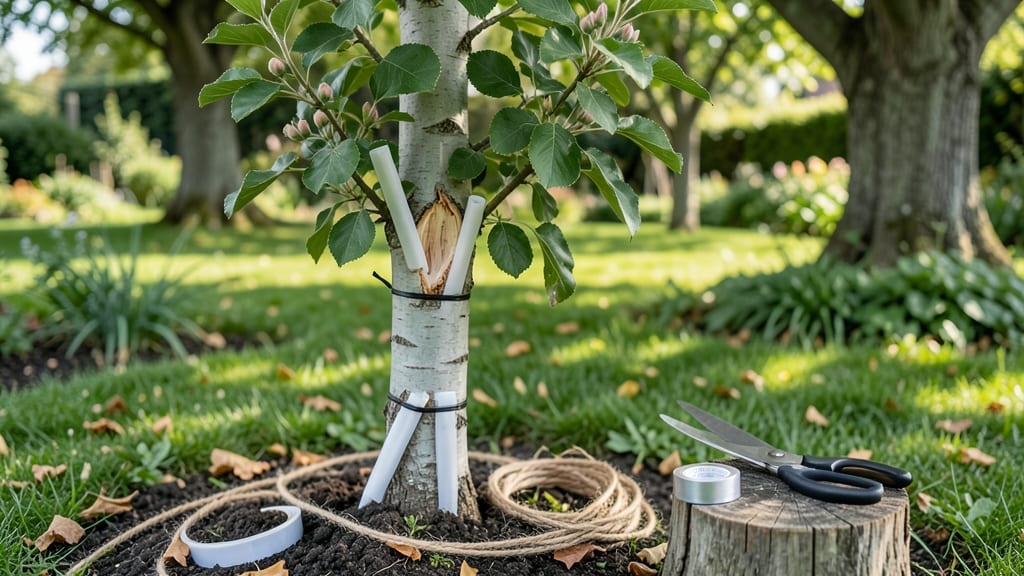
A young tree snapped in half isn’t always a death sentence—it’s a call to action. 🌳 I’ve nursed back broken branches that looked hopeless, and with the right moves, your tree can recover stronger than ever.
The key is acting fast to stabilize the damage while giving the tree time to heal naturally.
The first step is assessing the break: look for clean snaps (good) versus jagged tears (worse), and check if the trunk is still attached to the root system. If the top half is heavy, prop it up with stakes and soft ties immediately to prevent further damage.
Most trees can recover if the cambium layer (that green ring under the bark) is intact—don’t give up on it yet.
With proper pruning to remove dead wood, strategic bracing, and seasonal care, your tree can regrow new branches from the trunk or even the broken top. I’ve seen oaks and maples bounce back with surprising resilience—sometimes even stronger than before. The worst mistake? Waiting too long to act.
This works best in spring or early summer when trees are actively growing, but even winter damage can be addressed with the right approach.
Whether you’re dealing with a storm break or a curious kid’s climbing mishap, the principles stay the same: stabilize, prune, and give nature time to do its magic.
Root Causes Of Tree Breakage
A young tree may seem sturdy, but its delicate balance between growth and structural integrity makes it vulnerable to sudden snapping. Understanding the why behind these failures helps you prevent them—and save your tree. Below, we break down the most common culprits, from hidden flaws to environmental pressures.
Not all wood is created equal. Young trees often develop structural weaknesses in their trunks due to:
- Rapid, uneven growth: When a tree grows too quickly—especially in response to ideal conditions like excess water or fertilizer—its wood may form weak, immature cells that lack the strength to support its weight. Think of it like a skyscraper built with wet cement: it looks solid but can’t hold up under stress.
- Co-dominant stems: Many young trees sprout two or more main trunks (called "co-dominants") that compete for dominance. These stems often grow at awkward angles, creating V-shaped crotches where bark splits and wood weakens over time. This is a top cause of snapping in species like maples, oaks, and willows.
- Inadequate bark thickness: Thin bark offers little protection against compression forces (like heavy snow or wind). In species like birch or poplar, this can lead to sudden trunk failure even under moderate stress.
💡 Pro Tip: If you’re planting a young tree, choose single-stemmed cultivars (e.g., 'Fastigiata' columnar trees) or prune co-dominant stems early to encourage a stronger central leader. Use the three-cut method to avoid bark tearing when removing competing branches.
Trees don’t exist in a vacuum—they’re constantly battling external forces that test their limits. Here’s how nature can turn your young tree into a snap hazard:
| Force | How It Breaks Trees | At-Risk Species |
|---|---|---|
| Wind 🌬️ | Wind exerts tensile stress (pulling) on one side of the trunk while compressing the other. In shallow-rooted trees, this creates a torque effect—like twisting a pencil until it snaps. Even 50 mph winds can topple a 5-year-old tree with weak roots. | Willow, silver maple, cottonwood |
| Ice/Snow Load ❄️ | Heavy ice or wet snow adds 10–20 lbs per square foot to branches, causing them to lever against the trunk. This creates shear forces at weak branch unions, often snapping the trunk near the ground. | Pine, spruce, birch |
| Soil Erosion/Flooding 🌊 | Waterlogged soil reduces oxygen to roots, weakening their grip. Meanwhile, root rot (from fungi like Phytophthora) turns roots to mush, making the tree top-heavy and unstable. | Oak, ash, sycamore |
| Extreme Temperature Swings ❄️☀️ | Freeze-thaw cycles cause internal wood cracks (called shakes). In young trees, these cracks can spiral upward unnoticed until a gust of wind finishes the job. | Cherry, apple, pear |
🌡️ Actionable Fix: To harden your tree against wind/ice:
- Install tree ties or cables (not wire!) to support heavy branches in ice-prone areas.
- Plant windbreak shrubs (like arborvitae) on the prevailing wind side to reduce exposure.
- Improve drainage with raised beds or gravel if your soil stays soggy.
Sometimes, the problem isn’t nature—it’s us. Poor planting, pruning, or maintenance can turn a healthy tree into a time bomb. Here’s how:
- Improper staking: Leaving a tree staked for more than 1–2 years weakens its trunk by preventing natural stem sway, which strengthens wood fibers. Over-staking can also girdle the trunk if ties are too tight.
- Top-heavy pruning: Removing too many upper branches at once shifts the tree’s center of gravity downward, making it more prone to snapping in storms. Never remove >25% of foliage in one season.
- Soil compaction: Heavy foot traffic or machinery around the base crushes roots, reducing their ability to anchor the tree. Compacted soil also restricts water uptake, weakening the trunk.
- Over-fertilizing: Excess nitrogen promotes leafy growth over wood strength, creating hollow or pithy centers in the trunk. This is especially risky in fast-growing trees like poplar or eucalyptus.
✨ Expert Trick: If you must prune a young tree, follow the 3D rule:
- Dead branches (remove first—they’re weightless but harbor disease).
- Diseased or damaged branches (cut at the branch collar).
- Crossing or rubbing branches (prune to avoid future weak crotches).
Avoid the 4th D: Don’t over-prune! Stick to selective, strategic cuts to maintain structural balance.
Reviving a Broken Tree Safely
When a young tree snaps in half, panic isn’t the best first response—action is. The good news? With the right approach, you can stabilize the damage, promote healing, and even save the tree’s growth potential.
Below, we break down practical, step-by-step solutions tailored to the most common causes of tree snaps, plus prevention tips to keep your tree strong for years to come.
Fix: Emergency Stabilization & Pruning
- Assess the Damage First 👀
- Check if the tree is still alive by scraping a small section of bark. If green underneath, it’s viable.
- Look for pith (the soft center) exposed at the break—if it’s white or moist, the tree may recover with care.
- Stabilize the Broken Sections 🪵 - Use tree repair clips (metal or plastic) or burlap wraps to gently bind the two halves.
Avoid tight straps that can girdle the trunk. - For larger breaks, splice the ends with a tree fork or wooden dowel coated in tree wound sealant (like Tanglefoot Tree Wound Pruning Seal).
- Prune Damaged Branches ⏱️
- Remove any dead, hanging, or crossing branches to reduce weight and improve airflow.
- Cut just outside the branch collar (the swollen area where the branch meets the trunk) to prevent further damage.
- Fertilize & Water Deeply 💧
- Apply a balanced fertilizer (10-10-10) around the root zone to boost recovery.
- Water deeply 2-3 times per week (unless rain is consistent) to encourage root growth.
💡 Pro Tip: If the break is clean and the tree is young, it may heal naturally over 1-2 years. Monitor for fungal growth (black mold) or pests—treat with copper fungicide if needed.
Fix: Supportive Pruning & Soil Care
- Reinforce the Trunk 🛠️
- Install a tree stake (only if necessary) to prevent further leaning. Use soft ties (like rubber straps) to avoid trunk damage.
- For multi-trunk trees, prune to one dominant leader to reduce stress on weak forks.
- Improve Soil & Root Health 🌱
- Aerate compacted soil around the base with a garden fork to encourage root expansion.
- Add compost or mulch (2-3 inches deep) to retain moisture and prevent temperature fluctuations.
- Prune for Balance ✂️
- Remove water sprouts (fast-growing vertical shoots) and suckers (shoots from the base).
- Thin the canopy by 20-30% to reduce wind resistance.
💡 Pro Tip: If the tree was planted too deeply, the trunk may weaken. Gently expose the root flare (where roots meet the trunk) and add soil only if needed.
Fix: Rejuvenation Pruning & Treatment
- Stop Pruning for Now ⏸️
- Avoid heavy pruning for at least 6 months to let the tree recover.
- Focus on sanitary pruning—remove only dead, diseased, or broken branches.
- Treat Fungal Infections 🍄
- If the break shows black streaks or mold, spray with a copper fungicide (like Bordeaux mixture).
- For bacterial infections, prune infected areas 6 inches below the damage and disinfect tools with 70% alcohol.
- Boost Immunity with Mycorrhizal Fungi 🍄
- Apply mycorrhizal inoculant to the soil to strengthen root health and disease resistance.
💡 Pro Tip: If the tree was over-pruned before the snap, avoid aggressive cuts—light pruning is better for recovery.
- Choose the Right Tree 🌳 – Opt for fast-growing, flexible species like willows, silver birch, or hackberry for young landscapes.
- Plant Deeply but Correctly 🕳️ – The root flare (where roots meet the trunk) should be above ground level.
- Mulch Properly 🌿 – Keep mulch 2-4 inches deep and 6 inches away from the trunk to prevent rot.
- Water Deeply & Infrequently 💦 – Encourages deep root growth rather than shallow, weak roots.
- Avoid Top-Heavy Pruning ❌ – Never cut more than 25% of the canopy in one season.
Final Thought: A snapped tree isn’t always a death sentence—with patience, proper care, and smart pruning, many can bounce back stronger than before. Start with stabilization, then focus on long-term health, and your tree may surprise you with resilience! 🌟
Frequently asked questions
Can a snapped young tree still grow back?
Many young trees can recover if the cambium layer (the green growth layer under the bark) is intact. For clean breaks, the tree may form a callus over time and regrow branches from the trunk or even the broken top. If the break is jagged or exposed pith, recovery is less likely—but don’t give up yet. Stabilize the break first and monitor for new growth.
How long does it take for a broken tree to heal?
Healing time varies by species and break severity, but most trees show signs of recovery within 6-12 months with proper care. Deciduous trees (like maples or oaks) often heal faster in spring/summer when they’re actively growing. Evergreens (like pines) may take 1-2 years. Patience is key—avoid heavy pruning during this time to reduce stress.
What’s the best way to stabilize a snapped tree?
Use tree repair clips or burlap wraps to gently bind the broken sections without crushing the trunk. For larger breaks, splice the ends with a wooden dowel coated in tree wound sealant. Avoid wire or tight straps—they can girdle the trunk. If the top is heavy, prop it with stakes at a slight angle to reduce strain on the break.
Should I remove a snapped tree if it’s not healing?
Consider removal only if the tree is dead (no green under bark), heavily diseased, or poses a safety hazard. If the trunk is split all the way through or the roots are damaged, removal may be the safest option. For borderline cases, consult an arborist—they can assess structural integrity and recommend the best course of action.
Can I prevent future snapping in young trees?
Yes! Start by choosing single-stemmed cultivars and avoid planting in exposed, windy areas. Prune to remove co-dominant stems early, and never stake a tree for more than 1-2 years. Improve soil drainage, mulch properly, and avoid over-fertilizing. Regular inspections for weak branches or cracks can catch issues before they become emergencies.