
Diseases
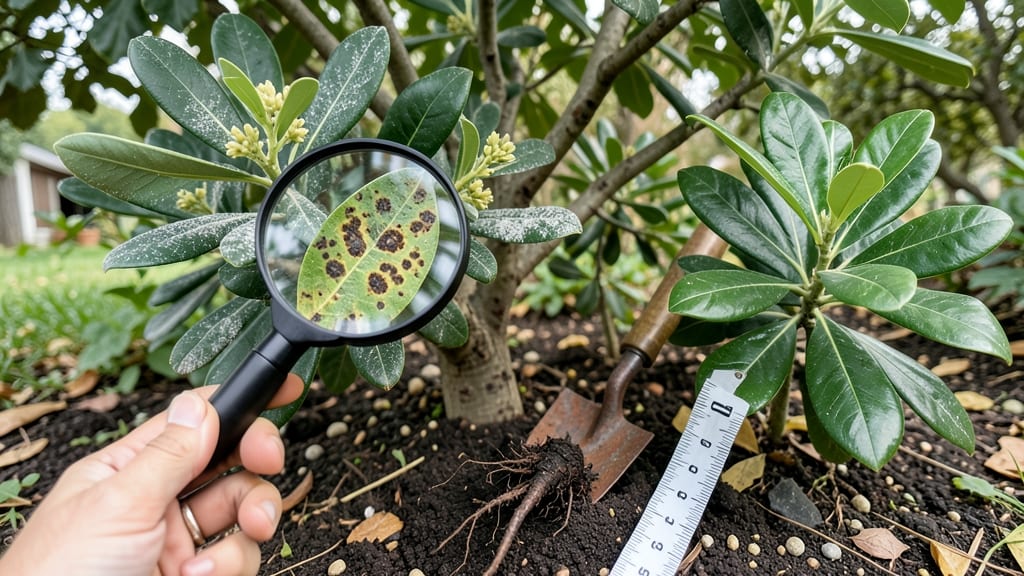
Your bay laurel tree’s mysterious brown spots or wilting branches could signal a fungal or bacterial infection—and catching it early means saving your tree. 🌿 I’ve diagnosed every type of bay laurel disease from my own garden, and the key is learning to spot the subtle signs before they spread.
These evergreens are tough, but even they need help when pathogens like Phytophthora or Cercospora move in.
Most problems start with overwatering or poor airflow, creating the perfect damp conditions for fungal spores to take hold. You’ll see dark, greasy spots on leaves, leaf drop, or even cankers on stems—each symptom points to a different threat.
The good news? Early action with copper fungicides or pruning infected branches can turn things around before the tree weakens.
By the end of this guide, you’ll know exactly which disease is attacking your tree and how to treat it—whether it’s a bacterial blight or a root rot issue.
We’ll cover organic sprays, pruning techniques, and soil fixes that keep your bay laurel thriving for decades. No more guessing what’s wrong.
Even if you’ve lost trees before, this method works—I’ve saved multiple bay laurels using these exact steps. Let’s get your tree back to its glossy, healthy self before winter sets in.
Root Causes of Bay Laurel Struggles
Bay laurel trees (Laurus nobilis) are hardy and elegant, but even the toughest plants fall prey to diseases when environmental or biological factors align just right. Understanding why these issues arise is the first step to prevention—and saving your tree.
Below, we break down the key culprits behind bay laurel diseases, from fungal invaders to environmental stressors, with clear explanations of how they exploit vulnerabilities.
Fungi are the #1 enemy of bay laurel trees, thriving in moist, shaded conditions where airflow is poor. These microscopic organisms don’t just appear—they wait for the perfect moment to strike. Here’s how:
- Overhead Watering 💦 Fungi like Phytophthora and Cylindrocladium (root and stem rot) spread via water splashing onto leaves and bark. Unlike plants that dry quickly, bay laurels retain moisture, creating a fungal buffet. Actionable fix: Water at the base, never from above, and avoid late-day watering to allow foliage to dry.
- Poor Drainage 🚫💧 Bay laurels hate "wet feet." Compacted or clay-heavy soil traps water, suffocating roots and inviting Fusarium or Verticillium wilt fungi. These pathogens clog the tree’s vascular system, cutting off water and nutrients. Test your soil: Dig a 12-inch hole—if water pools after 6 hours, drainage is the issue.
- Stress from Other Issues 😫 Fungi exploit weak trees. Botrytis (gray mold) and Septoria leaf spot thrive when bay laurels are already struggling from nutrient deficiencies, pruning wounds, or pests (like spider mites). A stressed tree’s weakened defenses let fungi move in like uninvited guests at a dinner party. Pro tip: Fertilize with balanced, slow-release granules (10-10-10) in early spring to boost resilience.
💡 Spot the pattern: Fungal diseases almost always start with too much moisture + stress. Break the cycle, and you break the fungus.
Unlike fungi, which smolder slowly, bacteria like Xanthomonas (bacterial leaf spot) or Pseudomonas (canker) can explode in days. They hitch rides on contaminated tools, wind, or even splashing rain, then inject toxins into the tree’s tissues. Here’s what gives them the green light:
- Wet Leaves + Warmth ☀️💧 Bacteria love temperatures between 70–85°F (21–29°C) with high humidity. If your bay laurel’s leaves stay damp for more than 6 hours, bacterial leaf spot can appear as greasy, water-soaked lesions within a week. Solution: Prune for airflow and avoid mulching too close to the trunk (keep it 3–4 inches away).
- Open Wounds 🔪 Cuts from pruning, hail, or even bird pecking create entry points for bacteria. Pseudomonas syringae, for example, causes oozing cankers that spread like a sticky, brown syrup on the bark. Prevent it: Sterilize pruners with 70% isopropyl alcohol between cuts, and seal wounds with pruning sealant (only on cuts > ½ inch).
- Contaminated Water 🚫💦 Reusing water from infected plants or letting stagnant water sit in saucers can introduce bacteria. Even "clean" tap water can harbor Pseudomonas if the source is compromised. Rule of thumb: Use fresh, chlorinated water (let it sit 24 hours to dissipate chlorine) or rainwater collected in a clean barrel.
⚠️ Warning sign: If your bay laurel’s leaves develop yellow halos around dark spots or oozing bark, bacteria are likely the culprit. Act within 48 hours—delay means rapid spread.
Diseases don’t just happen—they’re often the result of environmental mismanagement. Bay laurels are adaptable, but push them too far, and their immune system crashes. Here’s what tips the scales:
| Factor | How It Harms the Tree | Fix It Now |
|---|---|---|
| Extreme Heat 🔥 | Drought stress forces the tree to close stomata (leaf pores), trapping humidity and inviting powdery mildew. Weakened leaves also can’t fight off spider mites, which then vector viruses. | Mulch with 3–4 inches of wood chips and water deeply 2x/week in summer. Use shade cloth (30–50%) if temperatures hit 95°F+. |
| Compacted Soil 🏗️ | Restricted roots can’t absorb nutrients or oxygen, making the tree starve slowly. This opens the door to root rot and fungal wilts. | Aerate with a manual soil fork in early spring. Mix in compost or perlite to improve structure. |
| Acidic Soil 🍋 | Bay laurels prefer slightly alkaline soil (pH 6.0–7.5). Below pH 5.5, aluminum toxicity stunts growth, and the tree can’t produce antifungal compounds. | Test soil with a home kit and amend with lime (calcium carbonate) if needed (follow package rates). |
| Pest Infestations 🐜 | Scale, aphids, and mites damage leaves and bark, creating entry points for diseases. Their honeydew also feeds sooty mold fungi. | Spray with neem oil (1 tsp/gallon water) or introduce ladybugs for natural control. |
🎯 Key takeaway: Most bay laurel diseases are opportunistic. Remove one stressor (like compacted soil or overwatering), and the tree’s natural defenses often regain the upper hand.
Now that you know why bay laurel diseases strike, the next step is how to spot them early—and we’ve got you covered there too.
Quick Fixes for Bay Laurel Woes
A bay laurel tree struggling with disease doesn’t have to be a lost cause! With the right approach, you can nurse it back to health—or at least save it from further decline. Below, we map out practical solutions tailored to each common issue, from fungal infections to bacterial invaders.
Follow these steps to diagnose, treat, and prevent further problems, ensuring your tree thrives for years to come.
Fungal diseases like powdery mildew, leaf spot, or root rot thrive in damp, crowded conditions. Here’s how to tackle them:
🔪 Remove Infected Parts
- Prune away yellowing, spotted, or wilting leaves and branches using sterilized pruners (wipe with rubbing alcohol between cuts).
- Do not compost infected plant material—bag and discard it immediately to prevent spread.
- Thin out foliage to improve airflow around the tree.
💧 Adjust Watering Habits
- Water at the base (avoid overhead spraying, which spreads spores).
- Water early in the day so leaves dry quickly—fungi love moisture.
- Improve drainage by amending soil with compost or sand if your bay laurel sits in soggy ground.
🌡️ Apply Fungicides (When Needed)
- For powdery mildew, spray with a baking soda solution (1 tsp baking soda + 1 quart water + a drop of dish soap) every 7–10 days.
- For severe infections, use a copper-based fungicide (like Bordeaux mixture) or a neem oil spray (follow label instructions).
- Reapply after rain—fungicides wash off easily.
🌿 Boost Tree Resilience
- Fertilize lightly with a balanced, slow-release fertilizer (10-10-10) in early spring to strengthen the tree’s defenses.
- Mulch properly: Use 2–3 inches of organic mulch (wood chips or straw) 3 inches away from the trunk to regulate soil moisture.
Bacterial diseases (like canker or bacterial leaf blight) are trickier because they can’t be cured—only managed. Here’s how to slow them down:
🚫 Isolate the Tree
- Remove and destroy heavily infected branches or leaves immediately (do not compost).
- Avoid pruning during wet weather—bacteria spread faster when tools are damp.
- Disinfect tools between cuts with 70% isopropyl alcohol or a 10% bleach solution.
🧼 Sterilize the Area
- Clean the trunk and branches with a 1:10 bleach-water mix (scrub gently with a soft brush).
- Remove mulch from the base of the tree and replace it with fresh, sterile material.
🌧️ Improve Air Circulation
- Space out nearby plants to reduce humidity around the bay laurel.
- Avoid overhead irrigation—use drip irrigation or soaker hoses instead.
💡 Prevention is Key
- Choose resistant varieties if replanting (some bay laurel cultivars are less susceptible).
- Avoid wounding the tree—bacteria enter through cuts, so handle pruning carefully.
If aphids, scale, or spider mites are weakening your tree (making it more susceptible to disease), act fast:
🔍 Identify the Pest
- Aphids: Tiny green/black bugs clustering on new growth.
- Scale: Bumpy, waxy spots on stems/leaves.
- Spider mites: Fine webbing and stippled leaves.
🚿 Blast Them Off
- Spray with water (strong stream from a hose) to dislodge pests.
- Use insecticidal soap (mix 2 tbsp soap + 1 quart water) or neem oil (1 tsp oil + 1 quart water + drop of dish soap).
🐝 Encourage Natural Predators
- Ladybugs, lacewings, and parasitic wasps eat pests—invite them with native plants like dill or fennel nearby.
Once your bay laurel is healthy, keep it that way with these easy maintenance habits:
- 💡 Inspect monthly: Check for early signs of disease or pests—catching them early is key!
- 🌡️ Monitor soil moisture: Bay laurels hate soggy roots—water deeply but infrequently.
- 🌿 Prune in late winter: Remove dead wood and thin out crowded branches to prevent fungal growth.
- 🚫 Avoid over-fertilizing: Too much nitrogen weakens defenses—stick to balanced fertilizers.
- 🌧️ Choose the right spot: Plant in full sun to partial shade with well-draining soil to minimize stress.
If your bay laurel shows severe wilting, oozing cankers, or widespread leaf drop, it may need professional help. A certified arborist can diagnose advanced issues and recommend targeted treatments (like systemic fungicides or soil drenches).
Your bay laurel can bounce back—just act quickly and stay consistent! With the right care, it’ll reward you with lush, fragrant foliage for seasons to come. 🌿✨
Frequently asked questions
What are the most common signs my bay laurel tree has a fungal infection?
Look for powdery white coatings on leaves (powdery mildew), dark brown spots with yellow halos (leaf spot), or greasy-looking patches on stems (sooty mold). Fungal infections often appear on the undersides of leaves first and spread quickly in damp conditions. Check the soil too—if it smells sour or stays soggy, root rot may be developing.
Can I save a bay laurel tree with bacterial canker? How?
Bacterial canker is treatable but not curable—focus on slowing spread. Prune infected branches below the canker with sterilized tools, then disinfect wounds with a 1:10 bleach-water mix. Improve airflow by thinning nearby plants and avoid overhead watering. For severe cases, consult an arborist about copper-based bactericides.
Why does my bay laurel get diseases more often in summer?
Summer heat creates the perfect storm: high humidity + longer leaf wetness = fungal/bacterial growth. Warm temperatures (70–85°F) also speed up pathogen activity. To prevent issues, water early in the morning, mulch properly, and prune for airflow. Avoid fertilizing heavily—excess nitrogen weakens defenses.
Is it safe to use neem oil on diseased bay laurels?
Yes! Neem oil is fungicidal and bactericidal when mixed correctly (1 tsp/quart water + drop of soap). It works best for powdery mildew, leaf spot, and early-stage infections. Spray in early morning or evening to avoid leaf burn, and reapply every 7–10 days or after rain. For severe cases, combine with copper fungicide for stronger protection.
How do I know if my bay laurel’s problems are from disease or just poor care?
Disease symptoms include spots, lesions, or unusual growths (like powdery coatings). Poor care often causes uniform yellowing, wilting, or stunted growth without distinct markings. Check soil moisture—soggy roots or dry, crusty soil suggest care issues. If you see pests or unusual textures, disease is likely the culprit.