
Pruning
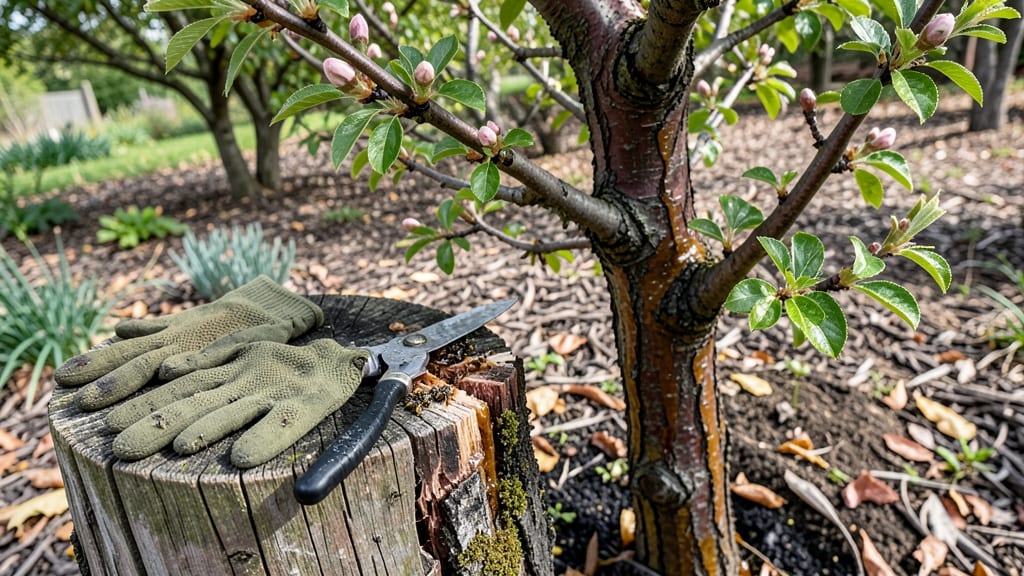
Your cherry tree’s weeping sap leaking isn’t just messy—it’s a cry for help. 🌳 That sticky drizzle from pruning cuts or pest damage weakens the tree and invites rot or disease if ignored.
The good news? With the right steps, you can seal those wounds and restore health before winter sets in.
Most sap leaks stem from improper pruning (cuts too close to branches) or insect damage like borers. Even environmental stress—like sudden drought or frost cracks—can trigger it.
The key is acting fast: clean wounds with pruning shears, apply wound dressing, and monitor for signs of infection like oozing or fungal growth.
You’ll transform that sad, sticky mess into a strong, stable tree in just a few hours. Start by sterilizing tools, shaping cuts properly, and sealing them with pruning sealant. Within weeks, new growth will signal the tree’s recovery—and you’ll prevent future leaks with smarter pruning habits.
Works for sweet, tart, and ornamental cherries alike. Here’s how to stop the flow and save your tree before it’s too late.
Root Causes Of Sap Leaks
Understanding why your cherry tree is weeping sap is the first step toward fixing the issue. Sap leaks in cherry trees—whether sweet-tart or sticky—are rarely random. They’re almost always a response to stress, damage, or natural biological processes.
Below, we break down the key triggers behind this sticky situation, so you can identify the problem and act accordingly.
---
Cherry trees, like many deciduous trees, have a natural sap flow system that helps regulate temperature, nutrient transport, and even defense mechanisms. This isn’t necessarily a problem—it’s just how some trees operate!
- Pressure Buildup: In early spring or after winter dormancy, trees experience root pressure, which pushes sap upward through the xylem (the tree’s plumbing system).
If the bark is damaged or weak, sap can escape. - Guttation vs. Bleeding: What you’re seeing might be guttation (water droplets exuding from leaf edges) or bleeding (sap oozing from wounds).
Both are more common in young trees or those recovering from stress. - Species Traits: Some cherry varieties (like Prunus avium, the sweet cherry) are more prone to sap bleeding than others due to their growth habits and bark structure.
💡 Pro Tip: If the sap is clear or light-colored and only appears in small droplets, it’s likely natural—and not an emergency. Monitor for changes in volume or color (dark, thick sap may signal trouble).
---
Any disruption to the bark or vascular system can trigger uncontrolled sap leakage. Think of it like popping a pimple—once the seal is broken, fluid escapes.
- Pruning Wounds: If you’ve recently pruned your cherry tree, aggressive cuts (especially those left jagged or too close to branches) create open wounds.
Sap leaks here are the tree’s way of sealing the injury—but if the wound is large, it can’t keep up. - Animal or Pest Activity: Squirrels, deer, or even sap-sucking insects (like aphids or scale insects) can chew or pierce the bark, leading to leaks.
Look for small holes, chewed edges, or insect frass (poop) near the sap. - Mechanical Injury: Lawnmowers, string trimmers, or even hitting the trunk with a car can create deep gashes. Sap leaks here are a warning sign—the tree is vulnerable to disease or decay.
⚠️ Warning Sign: If sap is dark, thick, or oozing in large amounts, the wound may be infected. Check for mushrooms at the base, discolored bark, or a foul odor—these could mean bacterial canker or fungal rot.
---
Cherry trees are resilient, but extreme conditions can push them past their limits, leading to sap leakage as a stress response.
- Temperature Fluctuations: Rapid freeze-thaw cycles (common in early spring) can cause bark splitting or internal pressure buildup, forcing sap out through weak points. - Drought or Overwatering: Both extremes stress the tree. Drought weakens the xylem, while overwatering can lead to root rot, disrupting sap flow.
Leaks may appear as the tree tries to flush out toxins. - Wind or Hail Damage: Strong winds can rub branches against the trunk, creating friction wounds, while hail can puncture the bark, leading to sap leaks.
🌡️ Quick Check: If your tree is leaking sap after a recent storm or temperature swing, it’s likely an environmental reaction. Mulch the base to insulate roots and avoid overwatering.
--- Some sap leaks aren’t just a nuisance—they’re a red flag for deeper issues.
- Bacterial Canker: A common cherry tree killer, this disease clogs the vascular system, causing dark, oozing sap and sunken, dead patches on the bark.
It’s often spread by rain or tools. - Silver Leaf Fungus: This fungal infection discolors leaves and causes silvery sheen on wood, leading to sap leaks as the tree fights the pathogen. - Borers or Beetles: Wood-boring insects (like shothole borers) create tunnels under the bark.
Sap leaks here are the tree’s failed attempt to starve out the invaders.
🔍 Inspection Tip: Scrape a small section of bark near the leak. If you see black, stringy fungal growth or larvae, you’ve got a pest or disease problem—act fast with pruning and treatment.
--- Sometimes, well-intentioned care backfires. Fertilizers and pesticides, when applied incorrectly, can burn the bark or disrupt nutrient flow, leading to sap leaks.
- Salt Burn: Over-fertilizing (especially with high-nitrogen or synthetic fertilizers) can raise soil salinity, causing root stress and sap leakage as the tree tries to expel toxins. - Herbicide Drift: If nearby weeds were sprayed with glyphosate or other herbicides, the wind can carry residue to your cherry tree, damaging the bark and triggering leaks. - Improper Pruning Sealants: Using too much wound paint can suffocate the tree by preventing natural healing.
A little sealant is fine, but overdoing it can trap moisture, leading to rot and sap leaks.
✨ Prevention Hack: Always water deeply after fertilizing to dilute salts, and avoid pruning during wet weather to prevent sealant buildup.
Quick Fixes for Sap Flow Problems
When your cherry tree starts oozing sap like a syrup factory gone rogue, it’s time to act—but don’t panic! 🌳💦 The good news? Most causes have simple, effective fixes.
Below, we’ll break down the most common triggers and match them with practical, step-by-step solutions to stop the leak and keep your tree thriving. We’ve also included prevention tips to avoid future sticky surprises.
---
Cause: Rough cuts or improper pruning expose the tree’s vascular system, causing sap to gush out like a fresh wound.
How to Stop It: 1. 🔥 Clean Up the Mess Use a sharp pruning saw or shears (sterilized with rubbing alcohol) to trim away any ragged edges or dead wood. Smooth cuts heal faster and reduce sap flow.
2. 🍳 Seal the Deal (Temporarily) If the sap is still dripping after pruning, apply pruning sealant (like Tanglefoot Tree Wound Pruning Seal) to the cut. This creates a barrier while the tree seals itself naturally.
3. 👨🍳 Give It Time to Heal Avoid pruning during active sap flow seasons (late winter to early spring). Let wounds callus over—usually within 2–4 weeks—before making new cuts.
💡 Pro Tip: If the wound is larger than 2 inches in diameter, don’t seal it! Small wounds heal best on their own. Larger cuts should be pruned back to a branch collar (the swollen area where the branch meets the trunk) to encourage natural healing.
---
Cause: Boring insects (like emerald ash borers or bark beetles) or fungal infections create entry points, forcing sap to escape.
How to Treat It: 1. 🔪 Identify the Culprit - Pests? Look for sawdust-like frass, holes, or tunnels in the bark. - Disease? Check for oozing cankers, discolored bark, or fungal growth (like powdery mildew).
2. 🎯 Target the Problem - For pests: Apply insecticidal soap or neem oil to suffocate larvae. For severe infestations, consult a local arborist about systemic treatments (e.g., imidacloprid). - For disease: Prune infected branches 6–12 inches below the visible damage.
Sterilize tools between cuts with bleach (1 part bleach to 9 parts water).
3. ✨ Boost Tree Immunity - Water deeply (1–2 inches per week) to help the tree fight off stress. - Fertilize lightly with a balanced, slow-release fertilizer (10-10-10) in early spring to support recovery.
💡 Pro Tip: If sap is thick, dark, and smells foul, it could signal bacterial infection (like bacterial canker). Remove the affected branch immediately and dispose of it in a sealed bag—don’t compost!
---
Cause: Extreme cold, drought, or sudden temperature swings can shock the tree, causing sap bleeding (especially in young or weak trees).
How to Prevent It: 1. 🌡️ Protect Against Temperature Shocks - Mulch the base of the tree with 2–4 inches of wood chips (keep mulch 6 inches away from the trunk). - Water deeply before freezes to help the tree withstand cold snaps.
2. 💧 Hydrate Like a Pro - Drought-stressed trees bleed more sap. Water slowly and deeply (1–2 inches per week) using a soaker hose to avoid wetting the bark. - Avoid overhead watering—it can promote fungal growth.
3. 🌿 Provide Shade in Extreme Heat - If your tree is in a hot, sunny spot, consider partial shade (e.g., a lightweight shade cloth) during peak summer months to reduce stress.
💡 Pro Tip: If sap bleeding happens every year at the same time, your tree might be nutrient-deficient. Test the soil and amend with compost or a slow-release fertilizer to build resilience.
---
Want to keep your cherry tree sap-free?
Follow these easy maintenance habits: - ✅ Prune in late winter/early spring (when the tree is dormant but pests are inactive). - ✅ Use sharp, clean tools—dull blades tear bark, inviting infections. - ✅ Monitor for pests/disease monthly, especially after rainy seasons. - ✅ Avoid over-fertilizing—too much nitrogen can weaken the tree’s defenses. - ✅ Plant in the right spot—cherry trees thrive in full sun with well-draining soil.
--- Final Thought: Most sap leaks are fixable with the right care! Start with the cause-specific solution above, and your cherry tree will be back to blooming beautifully in no time. 🌸🍒
Frequently asked questions
Is leaking sap always a sign of trouble in my cherry tree?
Not necessarily! Clear or light-colored sap in small droplets is often normal, especially in young trees or during spring when root pressure builds. However, if the sap is dark, thick, or oozing heavily, it could signal infection or pest damage. Always check for other symptoms like discolored bark or fungal growth.
How long does it take for pruning wounds to stop leaking sap?
Most small pruning wounds seal naturally within 2-4 weeks if made properly. Larger cuts may take longer, especially in active sap flow seasons (late winter to early spring). Apply pruning sealant temporarily if needed, but avoid over-sealing—small wounds heal best on their own.
Can I use regular paint or glue to stop the sap leak?
No! Regular paint or household glue can suffocate the tree and trap moisture, leading to rot. Always use a tree-specific pruning sealant (like Tanglefoot) designed for bark wounds. These products create a breathable barrier while allowing natural healing.
What's the best time of year to prune my cherry tree to prevent sap leaks?
Prune during late winter or early spring (before buds swell) when the tree is dormant but pests are inactive. Avoid pruning during active sap flow seasons (like early spring) or in wet weather, as these conditions increase sap leakage and infection risks.
How can I tell if my tree's sap leak is from pests vs. disease?
Check for these clues: Pests often leave small holes, sawdust-like frass, or chewed bark edges. Disease usually causes oozing cankers, discolored bark, or fungal growth (like powdery mildew). If you're unsure, scrape a small section of bark near the leak—larvae or black fungal strands confirm the cause.