
Trees
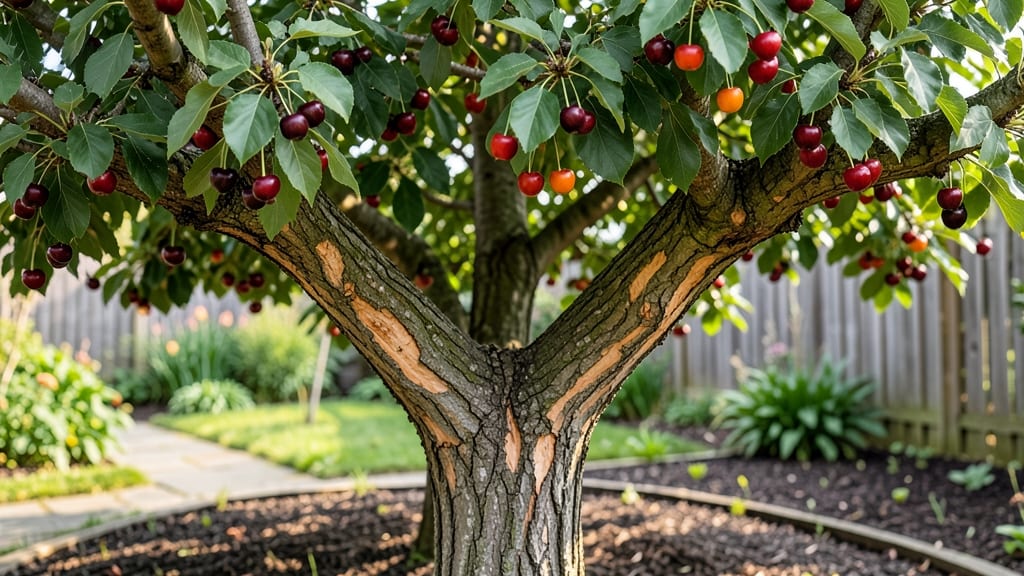
That deep, jagged split in your cherry tree trunk isn’t just unsightly—it’s a cry for help. 🌳 Split bark on cherry trees often signals stress from rapid temperature swings, drought, or even physical damage, and if ignored, it can invite disease or weaken the tree’s structure.
I’ve seen splits turn into full-blown wounds that take years to heal, so acting fast is key.
The good news? Most splits can be managed with simple fixes—like sealing the wound with tree wound dressing or wrapping it with protective tape to shield it from pests and moisture loss.
Pruning damaged branches and improving soil moisture can also ease the tree’s stress. The goal isn’t just to patch the split but to help your tree recover its strength.
By the time you’re done, your cherry tree will look healthier and be better equipped to handle future stress. The right care now means fewer headaches (and fewer splits) down the road. Let’s get that trunk back in fighting shape—before winter or pests make things worse.
If the split is deep, wide, or oozing sap, it’s time to call in a professional. Not all splits are equal, and some need expert attention to avoid long-term damage. But for most gardeners, a little elbow grease and the right supplies make all the difference.
Root Causes Of Bark Splitting
Understanding why your cherry tree’s bark splits is the first step to preventing further damage—and saving your tree. These cracks aren’t just cosmetic; they expose the tree to pests, disease, and even structural failure. Let’s break down the key culprits behind this issue, backed by science and actionable insights.
Cherry trees are resilient, but sudden environmental shocks can push their limits. Rapid temperature swings, freeze-thaw cycles, or intense winds create internal pressure that bark can’t always handle.
- Freeze-Thaw Damage: Water trapped in bark cells expands when frozen, then contracts when thawed. Over time, this weakens the bark’s integrity, leading to longitudinal splits (vertical cracks). - Wind Stress: High winds exert lateral force on the trunk, especially if the tree is shallow-rooted.
The bark may split along the grain (parallel to the trunk) as the wood fibers stretch beyond their limits. - Drought Followed by Rain: Prolonged dry spells cause the bark to dry out and shrink. A sudden soak can make it swell unevenly, creating horizontal cracks near the base.
Pro Tip: 🌡️ Monitor your tree during spring thaw and late winter storms—these are peak risk periods. Mulch around the base to insulate roots and reduce temperature fluctuations.
Cherry trees grow quickly, but uneven expansion can outpace the bark’s ability to stretch. Similarly, older trees with hardened, brittle bark are more prone to splitting.
- Juvenile Trees: Young cherry trees (especially grafted varieties) may experience vertical splits as the trunk grows taller than the bark can accommodate.
This is common in sweet cherry (Prunus avium) and sour cherry (Prunus cerasus). - Mature Trees: As trees age, their bark becomes less flexible.
Combined with wood rot (often from past injuries), the trunk may develop deep fissures that worsen over time. - Graft Union Stress: If your tree was grafted, the junction where the scion meets the rootstock can be a weak point. Poor healing or uneven growth here increases split risk.
Action Step: 📏 If your tree is splitting due to growth, prune to reduce canopy weight (less foliage = less stress on the trunk). For older trees, avoid heavy pruning—it accelerates stress.
Pests and pathogens weaken the bark from the inside out, making splits more likely. Look for these red flags:
| Culprit | How It Causes Splits | Signs to Watch For |
|---|---|---|
| Wood-Rotting Fungi (e.g., Armillaria, Fomes) | Decays the vascular cambium (the layer under bark), reducing structural support. | Conk fungi at the base, oozing sap, soft rot. |
| Bark Beetles | Larvae tunnel under the bark, creating galleries that weaken it. | Sawdust-like frass, small exit holes. |
| Borers (e.g., Sirex woodwasps) | Lay eggs in cracks; larvae burrow deeper, causing internal cracks to spread. | D-shaped exit holes, sawdust piles. |
Emergency Fix: 🔪 If you spot active infestations, prune infected branches 12+ inches below the damage (to remove larvae). For fungi, apply a copper-based fungicide to prevent spread.
Human error is a major contributor to bark splits. Even well-meaning actions can harm your tree:
- Lawnmower or String Trimmer Injuries: Girdling (removing a ring of bark) or deep cuts strangle the tree over time, leading to vertical splits as the trunk struggles to transport water.
- Improper Pruning: Topping (cutting back to a stub) or over-pruning creates weak branch collars that split under wind or snow load.
- Mechanical Stress: Leaning a ladder or tying trees to stakes too tightly can cause compression cracks on one side of the trunk.
Prevention Tip: ✂️ Always prune just outside the branch collar (the swollen area where the branch meets the trunk). Use sharp, clean tools to avoid tearing bark.
Water is a double-edged sword for cherry trees. Drought and overwatering both contribute to bark splitting:
- Drought Stress: When roots can’t supply enough moisture, the xylem (water-conducting tissue) shrinks, pulling the bark taut. This leads to fine, hairline cracks that deepen over time. - Overwatering: Waterlogged soil causes anaerobic conditions, where roots suffocate.
The tree then overcompensates by growing weakly, with bark that’s prone to splitting. - Sudden Water Changes: Flooding after drought or irrigation spikes can cause bark to swell unevenly, creating horizontal cracks near the soil line.
Solution: 💧 Deep watering (1–2x per week in dry spells) is better than frequent shallow watering. Ensure proper drainage—cherry trees hate soggy roots.
If your cherry tree was grafted, the rootstock and scion must be compatible. Mismatches lead to structural weaknesses, including bark splits.
- Incompatible Rootstock: Some rootstocks (like Mahaleb cherry) grow faster than the scion, causing uneven trunk expansion and splits.
- Weak Graft Union: If the graft didn’t heal properly, the junction may bulge or crack under stress.
- Viral or Bacterial Infections: Diseases like little cherry disease weaken the graft, making the tree more susceptible to splits.
What to Do: 🌱 If your tree shows graft failure signs (e.g., two distinct trunks, poor growth), consult an arborist—they may recommend re-grafting or removing the tree if it’s beyond saving.
Fixing and Preventing Tree Trunk Damage
A split or cracked cherry tree trunk can feel like a heartbreaking setback, but with the right steps, you can often save your tree—and even strengthen its resilience for the future.
Below, we’ll break down practical, step-by-step solutions tailored to the most common causes of split bark, along with prevention tips to keep your tree healthy long-term.
If you’ve just noticed a recent split or crack in your cherry tree’s bark, act fast to minimize damage and reduce the risk of disease or pests.
🌳 Step 1: Assess the Severity
Before jumping into fixes, determine how bad the split is:
- Minor cracks (thin, superficial): Often just cosmetic but may need sealing.
- Deep splits (exposing wood or sap): Require urgent attention to prevent rot or pest entry.
- Large, jagged tears (especially near the base): May signal structural instability—consult an arborist.
> 💡 Pro Tip: If the split is oozing sap or has a foul smell, it’s a sign of internal damage. Handle with gloves and clean tools to avoid spreading pathogens.
🛠️ Step 2: Clean the Wound
- Remove loose bark or debris with a sterilized pruning saw or knife (rub with rubbing alcohol first).
- Trim rough edges to create a clean, smooth surface—this helps the tree seal itself better.
- Avoid over-trimming; only remove what’s absolutely necessary to prevent further stress.
> ⚠️ Warning: Never use a chainsaw for small trees—it can cause more damage. A handsaw or pruning saw is safer.
🛡️ Step 3: Seal the Split (If Needed)
For deep or exposed cracks, sealing can help prevent moisture loss and pest entry: 1. Apply tree wound dressing (like Tanglefoot Tree Wound Pruning Sealer or Ortho Fruit Tree Sealant). These products create a protective barrier.
- Alternative DIY option: Mix equal parts beeswax and pine tar, melt them together, and brush the mixture over the wound. (Test a small area first to ensure it doesn’t harm the bark.)
- Avoid heavy-duty caulks or cement—they can suffocate the tree and trap moisture, leading to rot.
> 🌡️ Heat Hack: If sealing feels messy, warm the wound dressing slightly (not boiling) to make it easier to apply.
🌱 Step 4: Support the Tree (If Unstable)
If the split has caused the trunk to lean or wobble:
- Install a tree stake or brace on the undamaged side of the trunk to provide temporary support.
- Use wide straps or nylon webbing (never wire) to secure the stake without crushing the bark.
- Check monthly and adjust as the tree stabilizes—most cherry trees recover well with proper support.
If the crack has been there for months or years, or if you see discoloration, fungus, or insects, the approach changes.
🔥 Step 1: Sterilize the Area
- Scrape out any decaying tissue with a sterile knife, cutting at a 45-degree angle to encourage healing.
- Disinfect tools between cuts to prevent spreading disease.
🌿 Step 2: Promote Natural Healing
Cherry trees have amazing self-sealing abilities—give them the best chance:
- Reduce stress by watering deeply but infrequently (overwatering weakens wood).
- Avoid heavy pruning near the wound—focus on removing dead or diseased branches elsewhere.
- Apply a thin layer of mulch (2–3 inches) around the base (but not touching the trunk) to improve root health.
> ✨ Science-Backed Tip: Studies show that minimally pruned wounds heal faster because the tree’s natural defenses (like callus tissue) work best with less interference.
The best “fix” is prevention. Here’s how to protect your tree from future splits:
🌧️ Protect Against Extreme Weather
- Stake young trees during high winds or storms (remove stakes once the tree is established).
- Prune in late winter/early spring to reduce weight before summer storms.
- Avoid heavy pruning in fall—new growth is more vulnerable to winter damage.
💧 Water Wisely
- Deep watering (1–2 times per week) encourages strong root growth, which stabilizes the trunk.
- Avoid soggy soil—poor drainage can weaken wood and make it prone to splitting.
🍃 Mulch Like a Pro
- Use wood chips or shredded bark (3–4 inches deep) to retain moisture and regulate soil temperature.
- Keep mulch 6 inches away from the trunk to prevent rot.
🐛 Pest and Disease Defense
- Inspect for borers or beetles (common in stressed trees)—treat with neem oil or insecticidal soap if needed.
- Remove fallen fruit promptly to reduce fungal risks (like brown rot).
Some splits are beyond DIY fixes. Seek professional help if: ✅ The crack extends more than 1/3 of the trunk’s circumference. ✅ The tree is leaning dangerously or has multiple large splits. ✅ You suspect internal rot (hollow sounds when tapped).
Final Thought: A split in your cherry tree’s bark doesn’t mean the end—with quick action and smart care, many trees bounce back stronger than ever. Start with first aid, then focus on prevention, and your tree will thank you with years of beautiful blooms and fruit! 🌸🍒
Frequently asked questions about cherry tree split bark
Why does my cherry tree develop split bark in winter?
Winter splits usually happen from freeze-thaw cycles. When water in the bark freezes and expands, then thaws and contracts, it creates pressure that causes cracks. Young trees or those with thin bark are especially vulnerable. Mulching around the base helps insulate roots and reduces temperature stress.
Can I seal a split in my cherry tree trunk?
Yes! For deep cracks, use a tree wound dressing or a mix of beeswax and pine tar to protect against pests and moisture loss. Avoid heavy caulks—they trap moisture and can cause rot. For minor cracks, sealing may not be necessary as the tree often heals naturally.
How do I know if my cherry tree's split is serious?
Watch for these red flags: oozing sap, fungus growth, or insect activity (like sawdust-like frass). If the split is wider than 1/3 of the trunk's circumference or the tree is leaning dangerously, call an arborist. Small, dry cracks are usually less concerning.
Will pruning help prevent future bark splits?
Prune to reduce canopy weight (especially before winter storms) and avoid topping (cutting branches back to stubs). Always cut just outside the branch collar to prevent tearing. Light pruning in late winter helps the tree handle stress better.
How long does it take for a cherry tree to heal a split?
Minor cracks often seal within 1-2 growing seasons as the tree produces callus tissue. Deeper wounds may take 3-5 years or longer, depending on the tree's health and care. Consistent watering and avoiding stress help speed up recovery.