
Trees
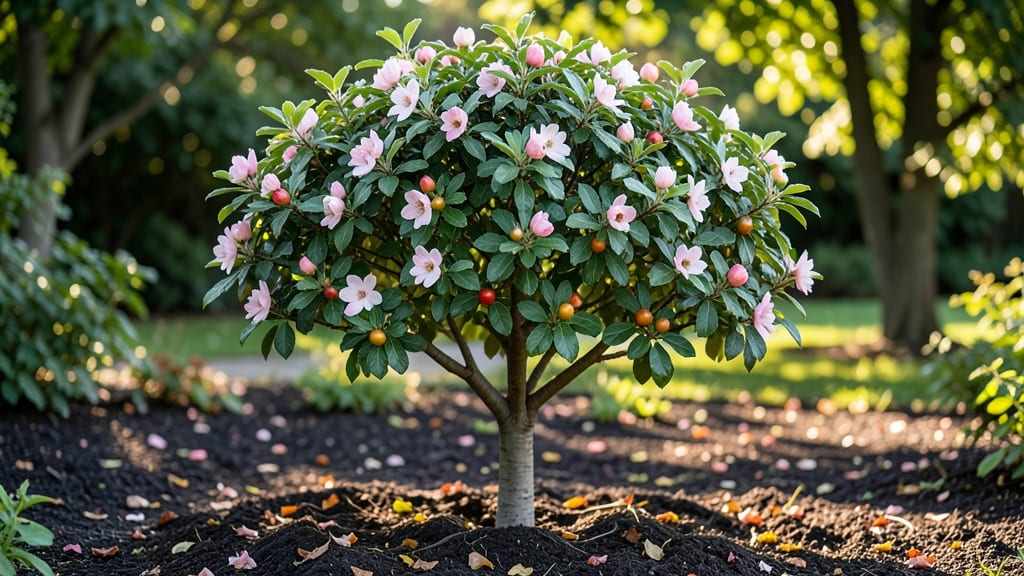
A non-fruit-bearing crabapple tree likely struggles with pollination gaps, inadequate sunlight exposure, or being too young to produce, but nutrient deficiencies, diseases like fire blight, or improper pruning can also halt fruit development. Pinpointing the exact issue is key to reviving your tree's fruiting potential.
A non-fruit-bearing crabapple tree's fruit production depends on precise conditions—think of it like a delicate balance between biology and environment. 🌳 Without proper cross-pollination (many varieties need another compatible tree nearby), flowers simply won't develop into fruit.
Even if your tree has perfect blooms, insufficient sunlight (less than 6 hours daily) can stunt growth and prevent fruiting entirely. Younger trees often take 3-5 years before bearing fruit, so patience is crucial.
The soil plays an equally vital role: compacted or nutrient-poor soil starves roots, while diseases like fire blight (a bacterial infection) can kill blossoms before they mature.
Here's what I've learned from years of tree care: the most overlooked factor is often pruning. Over-pruning in late winter removes next year's flower buds, while improper cuts stress the tree.
A simple soil test ($20 at garden centers) can reveal if your tree needs phosphorus or potassium—essential for fruit production. For disease prevention, I recommend copper fungicide sprays in early spring, just as buds swell.
💡 In This Article
- Why Your Crabapple Tree Isn’t Producing Fruit
- Step-by-Step Fixes for a Fruitless Crabapple Tree
Why your crabapple tree isn’t producing fruit
Crabapple trees rely on a complex interplay of biology and environment to fruit successfully. The most critical factor is often pollination, as many varieties require cross-pollination between two compatible trees. Without this, flowers drop without setting fruit.
For example, 'Adirondack' crabapples need another tree within 50 feet for optimal pollination, while self-pollinating varieties like 'Dolgo' can fruit alone. Even with proper pollination, insufficient sunlight (6 hours daily) triggers a survival response that prioritizes leaf growth over fruit production.
The tree's age plays a surprising role too. Most crabapples enter their fruiting stage between 3-5 years, but some dwarf varieties may take 5-7 years. During these early years, the tree focuses on root and canopy expansion rather than reproduction.
Nutrient deficiencies further complicate fruiting—phosphorus (for root development) and potassium (for flower formation) are particularly critical. A soil test revealing low phosphorus (20 ppm) can explain why blooms fail to develop into fruit.
Diseases often go unnoticed until they're severe. Fire blight, caused by the bacterium Erwinia amylovora, creates blackened, oozing cankers that kill blossoms before fruiting. Apple scab, a fungal disease, distorts leaves and flowers, reducing fruit set by 40-60%.
Both diseases thrive in wet conditions, so proper spacing (15-20 feet between trees) improves airflow and reduces infection risks. The visual clues are telling: look for curled leaves with olive-colored spots (scab) or wilting blackened branches (fire blight).
Pruning mistakes create another hidden barrier. Removing too many branches in late winter (February-March) removes next year's flower buds, which form on second-year wood. Over-pruning also stresses the tree, diverting energy away from fruit development.
Even well-intentioned summer pruning can harm fruiting potential by removing potential bloom sites. The solution? Prune in late winter (just before buds swell) and limit cuts to 20-25% of the canopy annually.
Seasonal timing matters too. Crabapples need chilling hours (300-600 hours below 45°F) to break dormancy properly. In warmer climates, insufficient chilling can prevent normal blooming. This explains why some southern-grown crabapples fruit poorly despite perfect care.
The fix? Choose cold-hardy varieties like 'Sargent' or 'Malus 'Evereste' that thrive with 300-400 chilling hours.
What most gardeners overlook is the root zone environment. Compacted soil restricts root growth, while improper drainage causes oxygen deprivation. A simple test: dig a 12-inch deep hole—if water pools after 30 minutes, drainage is poor.
Amending with organic matter (compost or aged manure) improves both drainage and nutrient availability. The result? Healthier roots that support better flowering and fruiting.