
Trees
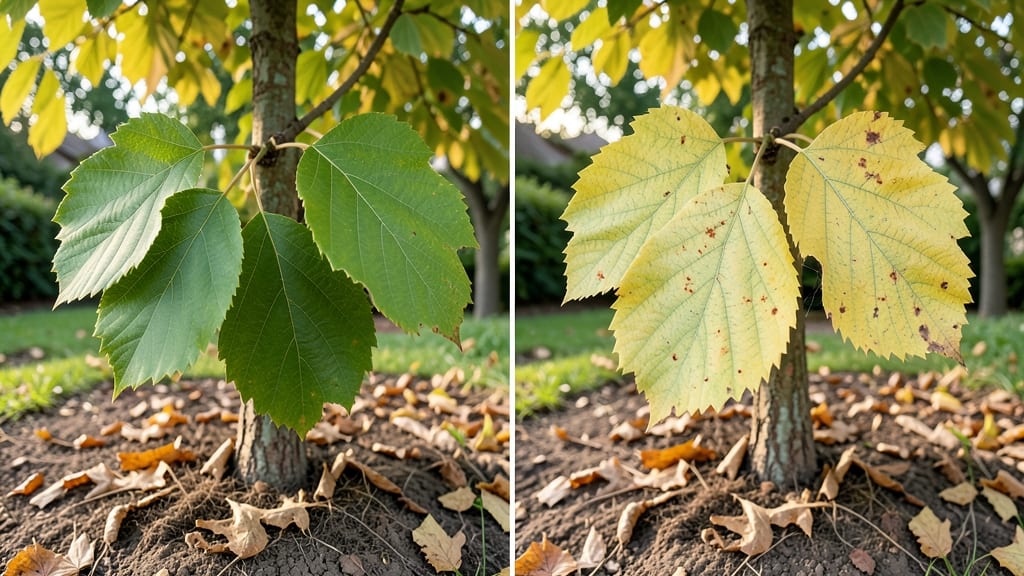
Yellow leaves on an elm tree usually indicate stress from overwatering, nutrient deficiencies, fungal diseases, or environmental stressors like excessive heat or poor soil drainage. Check for patterns—whether leaves yellow evenly, develop spots, or show wilting—to determine the exact issue and apply targeted solutions.
When your elm tree's leaves start turning yellow, it's rarely a single issue—it's often a mix of factors. 🌳 The key is observing details like whether the yellowing starts at the edges (common with nutrient deficiencies) or appears as irregular patches (suggesting fungal infections).
I've seen cases where homeowners assumed overwatering was the problem, only to discover the real culprit was compacted soil preventing proper root growth. Testing your soil's pH and nutrient levels can reveal hidden issues that simple water adjustments won't fix.
Don't overlook seasonal changes—elm trees naturally shed some leaves in fall, but persistent yellowing throughout the growing season demands attention. For fungal problems, look for dark spots on the undersides of leaves or powdery growth on branches.
These signs often appear after prolonged wet conditions, so improving airflow through proper pruning can make a big difference.
💡 In This Article
- Diagnosing Elm Tree Leaf Discoloration Patterns
- Step-by-Step Elm Tree Care Fixes for Yellowing Leaves
Diagnosing elm tree leaf discoloration patterns
Elm trees exhibit yellow leaves through distinct patterns that reveal the underlying cause. When yellowing appears first on older leaves at the tree's base and progresses upward, it often signals nutrient deficiencies—particularly iron or nitrogen shortages.
These deficiencies manifest as a uniform yellowing between leaf veins, a condition called chlorosis. In contrast, fungal infections like anthracnose or powdery mildew create irregular yellow patches with dark spots or white powdery growth, often concentrated on younger leaves.
The location of yellowing provides critical clues: Edge browning suggests overwatering or salt buildup, while vein yellowing with green patches typically indicates magnesium deficiency. Examine leaf undersides for fungal spores or webbing from spider mites—common in stressed trees.
Root health matters too: Gently lift a small section of bark near the base to check for cankers or oozing sap, which could indicate Dutch elm disease, a vascular fungus that blocks water transport and causes sudden yellowing.
Seasonal timing helps differentiate natural processes from problems. Elm trees may drop yellow leaves in fall as part of their normal cycle, but persistent yellowing during growing seasons (spring through summer) demands action.
For example, heat stress causes rapid yellowing during droughts, while compacted soil restricts root oxygen, leading to gradual yellowing over weeks. Pay attention to the tree's overall vigor—healthy elms have firm, green leaves with minimal yellowing, while stressed trees may show wilting or stunted growth alongside discoloration.
Advanced diagnostics involve soil testing. A pH below 6.0 or above 7.5 can lock out essential nutrients, causing yellowing even with adequate fertilization. For instance, iron chlorosis thrives in alkaline soils (pH >7.0), where iron becomes unavailable to roots.
Conduct a simple at-home soil test kit or send a sample to a local extension service for precise nutrient analysis—this data will guide your treatment plan with surgical precision.
Don't overlook environmental factors like air pollution or herbicide drift, which can cause sudden yellowing without other symptoms. Trees near highways often show tip burn from ozone exposure, while lawn chemicals may create yellow patches in specific zones.
If you suspect chemical exposure, rinse affected leaves with water and monitor for improvement over 2-3 weeks. 🌿
For a comprehensive diagnosis, combine visual inspection with environmental context. Note when symptoms appeared, recent weather patterns, and any changes in care routine. Was there a sudden shift to heavy watering?
Did you recently apply fertilizer? These details help narrow down whether the issue is physiological (water-related), nutritional, pathological (disease), or environmental.