
How To
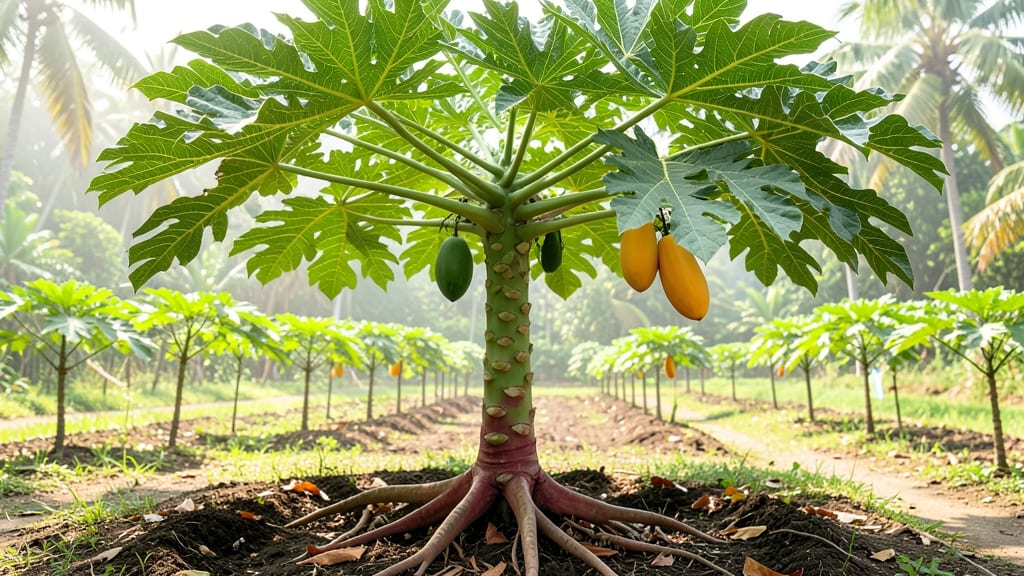
A papaya tree can grow anywhere from 10 to 30 feet tall, depending on the variety and growing conditions—some even stretch taller than a two-story building!
If you’ve ever dreamed of growing your own tropical fruit but worried about space, papaya trees might surprise you—some tower over 30 feet while others stay compact enough for containers!
This tropical 🍈 thrives in warm climates like USDA Zones 10-11, where it can reach its full height in just a few years. But even in smaller spaces, the right variety can keep growth manageable.
Below, I’ll break down the height ranges of popular types, how to control growth, and which varieties are best for small gardens or even indoor pots.


Papaya tree height by variety: from dwarf to giant sizes
If you’re planning to grow a papaya tree but unsure how much space it’ll need, the variety you choose makes all the difference. Some tropical giants reach 30 feet tall, while others stay manageable in containers. The right selection can transform your backyard—or even a balcony—into a fruit-bearing paradise!
Papaya trees are fast growers, with some varieties adding 3-5 feet per year under ideal conditions. Their mature height depends on genetics, pruning, and growing conditions. For example, the 'Solo' variety often tops out at 20-25 feet, while 'SunUp' papayas typically stay between 10-15 feet.
Let’s break down the height ranges for popular varieties so you can pick the perfect fit for your space.
| Variety | Mature Height | Growth Rate | Best For |
|---|---|---|---|
| 'Tainong No. 1' | 10–15 ft | 3–5 ft/year | Containers, small yards |
| 'SunUp' | 10–15 ft | 2–4 ft/year | Home gardens, urban spaces |
| 'Solo' | 20–25 ft | 4–6 ft/year | Large yards, tropical climates |
| 'Red Maradol' | 15–20 ft | 3–5 ft/year | Warm climates, fruit production |
| 'Pattabhi' | 8–12 ft | 2–3 ft/year | Containers, balconies |
While 'Solo' and 'Red Maradol' varieties dominate in height, don’t overlook dwarf-like options such as 'Pattabhi' or 'Tainong No. 1'. These stay under 12 feet, making them ideal for container growing or small urban gardens.
Even in pots, they thrive with proper care and can produce fruit just like their taller counterparts!
One common misconception is that all papaya trees grow into towering giants. In reality, pruning and training play huge roles in controlling height. Regular pruning of lower branches can keep a tree more compact, while staking young trees encourages upward growth.
For example, if you’re growing 'SunUp' in a 5-gallon container, pruning side shoots and limiting root space will naturally restrict height.
Climate also affects height—tropical regions like USDA Zones 10-11 see faster, taller growth compared to subtropical zones. In cooler areas, papayas may stay shorter or grow more slowly.
If you’re in Zone 9 or below, consider growing them in large containers that you can move indoors during winter or use a greenhouse to extend the growing season.
For first-time growers, I recommend starting with 'SunUp' or 'Pattabhi' varieties. They’re forgiving, productive, and easier to manage in smaller spaces. Plus, their faster growth rates mean you’ll see fruit in as little as 6-9 months, depending on conditions.
If you’re aiming for a tropical fruit tree that doubles as a privacy screen, 'Solo' or 'Red Maradol' will deliver both height and harvest!
Remember, even the tallest papaya trees can be shaped with proper pruning techniques. By removing suckers (shoots at the base) and thinning crowded branches, you can encourage a stronger central leader and reduce overall height.
This is especially useful if you’re growing near power lines or in tight spaces where vertical growth is a concern.
Whether you’re dreaming of a 30-foot tropical giant or a compact container papaya, the key is choosing the right variety for your space. With the right variety and care, you’ll enjoy fresh, homegrown papayas year after year—no matter how tall (or short) your tree grows!
Factors that influence papaya tree height (and how to control it)
Understanding what makes a papaya tree grow tall or stay compact is key to planning your garden layout. These tropical trees can reach 10 to 30 feet tall, but their final height depends on several factors you can control.
From sunlight exposure to pruning techniques, each element plays a role in shaping your tree's stature. Let’s explore the biggest influences and how to manage them for your space.
First, genetics set the baseline. Some papaya varieties naturally grow taller, like the 'Solo' variety, which can exceed 20 feet, while others remain more manageable. However, even within the same variety, environmental factors can push a tree toward either end of the height spectrum.
For example, a 'SunUp' papaya might stay around 10-15 feet in ideal conditions but could stretch taller if given extra space and nutrients.
⚠️ callout warning
Without control, papaya trees can reach 30 feet or more in tropical climates. In containers or with aggressive pruning, you can keep them under 10 feet. Always account for root depth (3-5 feet) and canopy spread (10-15 feet), as these affect space needs.
🌱 Pro Tip: Use dwarfing rootstock (if available) to limit height by up to 30%.
One of the most critical factors is sunlight exposure. Papaya trees thrive in full sun (6+ hours daily), and more sunlight often leads to faster, taller growth. If your tree isn’t getting enough light, it may grow leggy and weak, reaching for the sun.
To control height, consider partial shade during peak summer hours, especially in hot climates like USDA Zones 10-11. This slows vertical growth while maintaining fruit production.
Your soil type and nutrient levels also impact height. Well-draining, fertile soil with a slightly acidic pH (5.5-6.5) encourages robust growth. Over-fertilizing with nitrogen can lead to excessive foliage and height, while a balanced 10-10-10 NPK fertilizer promotes steady, manageable growth.
Amend heavy clay soil with compost to prevent root stress, which can stunt height or cause uneven growth patterns.
Pruning is your best tool for controlling height. Regularly trim the central leader (main stem) to encourage bushier growth and redirect energy to fruit production. Use clean, sharp pruners to cut just above a leaf node, and avoid removing more than 20-30% of the canopy at once.
For container-grown papayas, prune more aggressively to keep the tree under 6-8 feet, but be prepared for smaller fruit yields.
Finally, climate and temperature play a role. Papayas grow best in warm, humid conditions (70-85°F). In cooler climates, growth slows, and trees may stay shorter. If you’re growing papayas in containers, move them indoors during winter or use a greenhouse to maintain consistent warmth.
Cold snaps can stress the tree, leading to stunted growth or even death, so always protect young plants from unexpected chills.
By mastering these factors—sunlight, soil, pruning, and climate—you can grow a papaya tree that fits your space perfectly, whether you want a towering tropical centerpiece or a compact container-friendly fruit producer.
Start with the right variety, monitor growth closely, and adjust as needed to keep your tree in check! 🌿