
How To
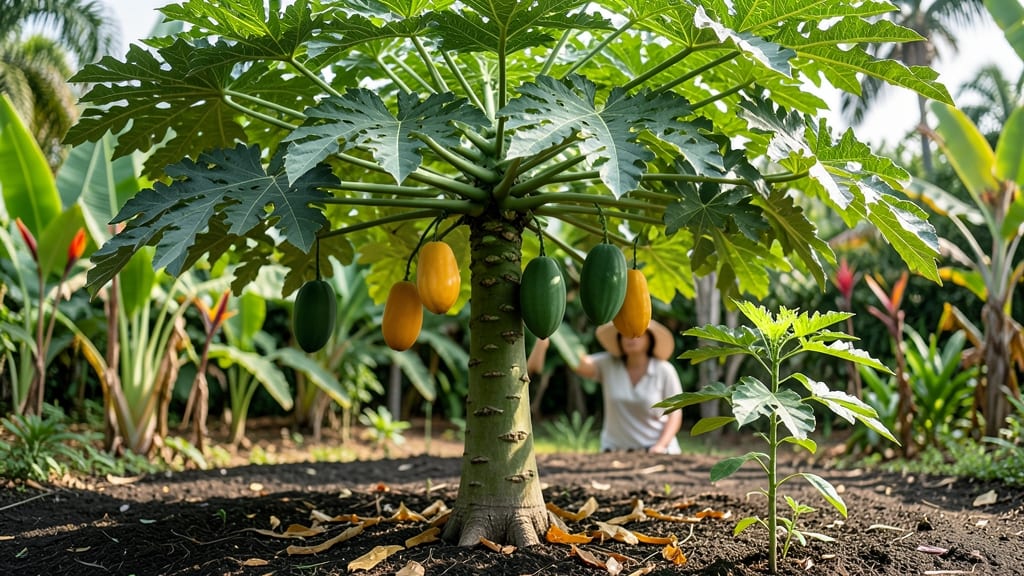
A papaya tree can grow 10 to 30 feet tall—taller than your two-story house—if given the right conditions, but many gardeners never see that potential because they don’t know how to maximize its growth.
If you're dreaming of tropical fruit without the tropical climate, papaya trees could be your answer—but first, you need to know how big they really get. These fast-growing giants can reach surprising heights, but their growth depends on variety, care, and patience.
Some varieties, like the ‘SunUp’, stay compact at just 6 to 10 feet, while others, like the ‘Red Maradol’, shoot up to 20 feet or more.
The key to unlocking their full height—or keeping them manageable—lies in understanding their growth stages, pruning techniques, and the best care practices for your climate.
In this guide, I’ll break down the fastest-growing varieties, month-by-month height milestones, and pro tips to control their size—so you can enjoy those sweet, orange fruits without losing your backyard to a jungle.


Papaya tree height by variety: fastest-growing types and their maximum heights
Choosing a papaya variety isn't just about flavor—it's about space! Some papaya trees grow taller than a two-story house, while others stay compact enough for container gardening. The SunUp variety, for example, tops out at just 6-10 feet, making it perfect for small yards or patios.
Meanwhile, standard varieties like Red Maradol can soar to 20+ feet if given the right conditions.
If you're short on space but still want tropical fruit, dwarf varieties are your best bet. They mature faster—often in 6-9 months—and produce fruit at a more manageable height.
For those with room to spare, standard varieties offer bigger yields but require pruning and support stakes to manage their rapid growth.
Here’s how different papaya varieties compare in terms of height and growth speed:
The SunUp variety is my top recommendation for beginners because it’s fast-growing and low-maintenance. It reaches harvestable size in just 6-9 months, and its compact stature makes it ideal for container gardening in USDA Zones 10-12.
If you’re in a cooler zone, grow it in a large pot and move it indoors during winter.
For those with more space, Red Maradol is a showstopper. Its deep red-orange fruit is sweeter and more flavorful, but the tree itself can become a space hog.
If you plant it in your yard, give it at least 10 feet of clearance on all sides to prevent shading out other plants.
Pruning plays a huge role in controlling height. Regular pruning of lower branches encourages upward growth, which is great for standard varieties but can be overkill for dwarf types.
For container-grown papayas, I recommend topping the tree at 5-6 feet to keep it manageable while still promoting fruit production.
One common mistake is assuming all papaya trees grow the same way. Solo varieties, for example, are self-pollinating and produce fruit faster than standard types, which often require cross-pollination. This means you can grow a Solo papaya in a small space and still get a reliable harvest.
If you’re growing papayas in containers, choose a variety like Kapoho Solo, which stays under 15 feet tall. Use a 15-gallon pot minimum and ensure it has drainage holes to prevent root rot.
Place the pot in full sun and water deeply every 3-4 days during the growing season.
For maximum height control, combine pruning with staking. Install a bamboo stake or trellis when the tree is young to guide its growth. This not only limits height but also improves air circulation, reducing the risk of fungal diseases like powdery mildew.
Remember, papaya trees thrive in warm climates with high humidity. If you live in a cooler zone, opt for dwarf varieties or grow your tree in a greenhouse to extend the growing season.
With the right variety and care, you can enjoy homegrown papayas in as little as 6 months—no tropical vacation required!
Papaya tree growth timeline: month-by-month height progression and care tips
Watch your papaya tree transform from a tiny seedling to a towering tropical fruit producer in just 12–18 months with the right care. Understanding its month-by-month growth helps you adjust sunlight, watering, and pruning to maximize height and fruit yield.
Without proper guidance, even fast-growing varieties like 'SunUp' can become leggy or stunted.
Papaya trees start small—just 1–2 inches tall when sprouted—but their vertical growth accelerates dramatically after the first month. By 6 months, they can reach 3–5 feet, and within a year, some varieties top 10 feet.
The key to unlocking this rapid growth lies in consistent care, especially during critical stages like transplanting and flowering.
- Month 1: Seedling (1–2 inches) – Focus on humidity and gentle watering to prevent damping-off.
- Month 2–3: 6–12 inches – Transplant outdoors after last frost; provide full sun and sturdy stakes.
- Month 4–6: 3–5 feet – Begin light pruning to encourage bushier growth; fertilize with balanced NPK.
- Month 7–9: 6–10 feet – Watch for flower buds; hand-pollinate if indoors or in low-wind areas.
- Month 10–12: 10–15 feet – Fruit sets; reduce pruning to avoid stress; mulch heavily to retain moisture.
- Month 13–18: 15–30 feet (mature) – Prune selectively to shape; harvest fruit when fully colored and slightly soft.
During the first 30 days, your papaya seedling will focus on root development rather than height. Keep soil moist but not soggy, and place it under grow lights if natural sunlight is limited.
Once true leaves appear (not the initial seed leaves), it’s ready for transplanting into a larger pot or garden bed.
Between months 2 and 4, your papaya tree enters its fastest vertical growth phase. This is when staking becomes critical—without support, winds or heavy fruit can snap young stems.
Use bamboo stakes tied loosely with soft twine to avoid damaging the bark. Also, introduce a balanced fertilizer (like 10-10-10) every 6–8 weeks to fuel this growth spurt.
By month 6, your tree will likely hit the 3–5 foot mark, signaling it’s time to focus on fruit production. Reduce nitrogen-heavy fertilizers to shift energy from leaves to flowers.
If growing indoors, supplement with a grow light to mimic 12+ hours of daylight, which triggers flowering in tropical plants.
As your papaya tree approaches maturity (12–18 months), its height can exceed 20 feet in ideal conditions. At this stage, prune selectively to remove dead or crossing branches, but avoid heavy cuts that reduce fruit-bearing capacity.
Mulch with 3–4 inches of organic matter to conserve water and regulate soil temperature.
Remember, dwarf varieties like 'SunUp' max out at 6–10 feet, making them perfect for containers or small gardens. Even these compact trees need full sun and consistent care—skipping these steps can stunt growth by up to 50%.
With patience and attention, your papaya tree will reward you with harvest-ready fruit in as little as 9 months!