
Trees
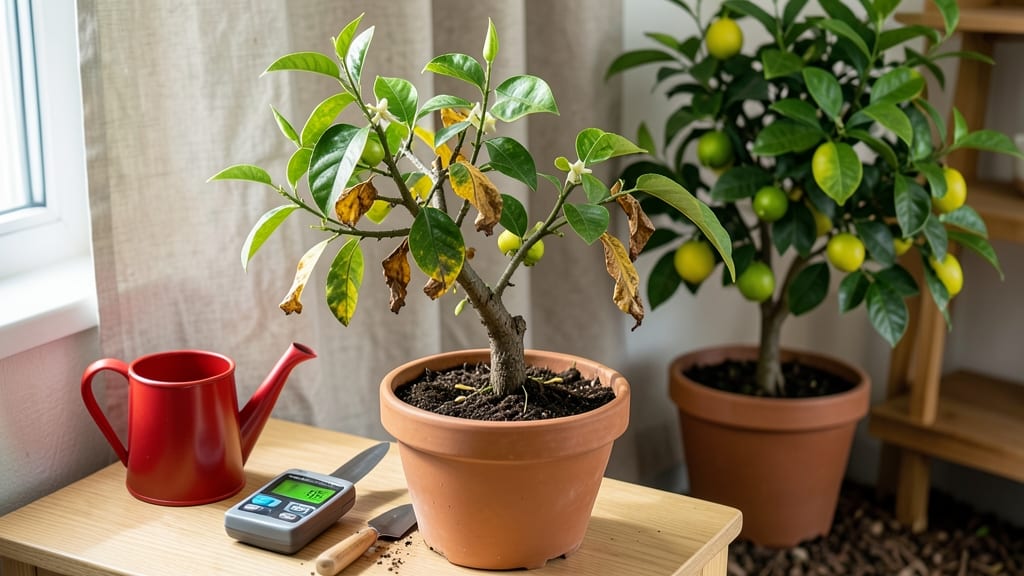
Your indoor lemon tree losing leaves is almost always a root health crisis in disguise—🌱 and the good news is, you can fix it without losing the tree.
I’ve nursed back three lemon trees from this exact problem, and the secret lies in adjusting water, soil, and light in ways that mimic their natural Mediterranean environment. The first clue is in the leaves: yellowing means overwatering, while brown, crispy edges signal underwatering.
Both create stress that forces the tree to drop foliage. The root zone needs to breathe—soil that stays soggy or bone-dry sends the tree into survival mode. A quick soil check (stick your finger in—if it’s wet past 2 inches, hold off) reveals the real issue.
By the end of these steps, you’ll see fresh green leaves within 4-6 weeks, and the tree will start producing those fragrant white blooms again. The key is consistency: water when the top inch is dry, use well-draining soil, and give it bright, indirect light.
No more guesswork—just healthy roots and happy growth.
Start with a soil reset: lemon trees hate soggy feet, so if your pot lacks drainage holes, transfer it to one with them. Mix in perlite or coarse sand to improve aeration—this alone stops root rot in its tracks.
For underwatering, soak the pot thoroughly until water runs out the bottom, then let it dry slightly between waterings. Think of it like a Mediterranean rainstorm: deep but infrequent.
Light is the final piece of the puzzle—citrus trees crave bright light, but direct sun scorches leaves. A south-facing window or grow light 12 inches away keeps them thriving. If your tree’s leaves are pale or sparse, it’s begging for more light.
Move it closer to the window (but not in the hot sun) and watch the difference in 2-3 weeks.
Once you’ve got the basics down, monitor for pests (like spider mites) and adjust fertilizing—too much can burn roots. With these tweaks, your lemon tree won’t just stop losing leaves; it’ll start putting energy back into growth.
The first sign? New leaves that stay bright green and glossy instead of wilting. Stick with it, and you’ll have a thriving tree in no time.
Root Causes Behind Your Tree’s Stress
When your indoor lemon tree starts shedding leaves, it’s often a cry for help—its roots are the first to sense trouble. Understanding the why behind the leaf loss is half the battle.
Below, we break down the most common triggers, backed by science, so you can diagnose and fix the issue before it’s too late.
Lemon trees (Citrus × limon) thrive in well-draining soil, and when roots sit in soggy conditions, they suffocate. Overwatering is the #1 killer of indoor citrus trees because it leads to:
- Root rot (Phytophthora or Pythium fungi): These pathogens thrive in waterlogged soil, clogging root cells and cutting off nutrient flow. Symptoms: Yellowing leaves, mushy stems, and a foul smell at the base.
- Oxygen deprivation: Roots need aeration to respire. Compacted or waterlogged soil forces them to "drown," triggering leaf drop as the tree conserves energy.
- Nutrient leaching: Excess water flushes away essential minerals like nitrogen and potassium, starving the tree even if you’re fertilizing.
Actionable fix: Let the top 2–3 inches of soil dry out between waterings. Use a pot with drainage holes and a mix of 50% cactus/succulent soil + 30% perlite + 20% compost. If rot is suspected, repot in fresh, sterile soil and trim blackened roots with sterilized scissors.
Lemon trees are tropical but hate sudden changes. Drafts from AC vents, cold windows, or heaters can cause:
- Transpiration stress: Leaves lose moisture faster than roots can absorb water, leading to wilting and drop.
- Root temperature swings: Roots prefer 65–75°F (18–24°C). Below 50°F (10°C), root activity slows, halting nutrient uptake.
- Cold damage: Prolonged exposure to temps under 40°F (4°C) can kill roots, causing leaf loss within days.
Actionable fix:
- Keep your tree 3–5 feet from windows (especially in winter) and away from heating/cooling sources.
- Use a heat mat (set to 70°F) under pots in winter if your home is drafty.
- Group plants together to create a microclimate that stabilizes humidity and temperature.
Leaves dropping can signal either a lack of nutrients or a toxic overload. Here’s how to tell them apart:
| Symptom | Likely Cause | Fix |
|---|---|---|
| Yellowing between leaf veins (chlorosis) | Nitrogen or iron deficiency (common in alkaline soil) | Apply chelated iron or a balanced citrus fertilizer (10-10-10) every 6–8 weeks in growing season. |
| Brown, crispy leaf edges | Over-fertilization (salt burn) or magnesium deficiency | Flush soil with water to remove salts. Add Epsom salt (1 tbsp/gallon of water) monthly for magnesium. |
| Purple-streaked new leaves | Phosphorus deficiency (often from overwatering) | Use a high-phosphorus fertilizer (e.g., 5-10-5) and reduce watering. |
Pro tip: 🌡️ Test your soil’s pH—lemon trees prefer 6.0–7.0. If it’s higher, mix in sulfur or peat moss to lower pH and boost iron availability.
Hidden beneath the soil, pests and diseases can wreak havoc on roots before you notice. Watch for:
- Root aphids or scale: These sap-suckers weaken roots, causing stunted growth and leaf drop. Signs: Sticky residue ("honeydew") on pot rims or white cottony masses on roots.
- Fungal infections (Fusarium or Verticillium wilt): These block water/nutrient transport, turning leaves yellow then brown. Signs: Wilting despite moist soil, vascular discoloration when you cut a stem.
- Nematodes: Microscopic worms that burrow into roots, causing galls (lumpy growths) and poor absorption.
Actionable fix:
- Inspect roots when repotting—rinse off soil and soak in neem oil solution (1 tsp oil + 1 tsp mild soap per quart of water) for 10 minutes to kill pests.
- For fungus, treat with copper fungicide or repot in sterilized soil (bake soil at 200°F for 30 mins to kill pathogens).
- Prevent nematodes with marigold companion planting (their roots release nematicidal compounds).
Even healthy lemon trees can drop leaves after repotting or when roots outgrow their container. Why?
- Root circling: Roots grow in tight loops around the pot, strangling themselves and limiting water/nutrient uptake.
- Disturbed root zone: During repotting, you may have damaged fine root hairs (which absorb 90% of water/nutrients).
- Size mismatch: A pot that’s too large holds excess moisture, while one too small causes roots to compete aggressively.
Actionable fix:
- Repot every 2–3 years in a container just 1–2 inches larger in diameter.
- When repotting, tease out circling roots gently and trim any that look mushy or black.
- Use fast-draining soil and avoid fertilizing for 4–6 weeks post-repot to reduce stress.
Revive Your Lemon Tree’s Health
Now that you know the likely culprits behind your indoor lemon tree’s leaf loss, it’s time to take action! 🌱💧 With the right care, your tree can bounce back—sometimes even faster than you think.
Below are practical, step-by-step solutions tailored to each common cause, plus prevention tips to keep your citrus companion thriving long-term.
If your lemon tree is drowning in excess moisture, stop watering immediately and follow these steps:
- 🌧️ Let the Soil Dry Out - Remove the tree from its pot and gently uproot it (if needed) to check for waterlogged soil.
If the roots smell sour or feel mushy, overwatering is the issue. - Place the tree in a shady, well-ventilated spot for 2–3 days to allow excess moisture to evaporate.
- 🪴 Repot in Fresh, Well-Draining Soil
- Use a terracotta pot (if possible) and a citrus-specific potting mix blended with perlite or sand (20% perlite/sand to 80% soil).
- Before repotting, rinse the roots with lukewarm water to remove salt buildup from overwatering.
- 💧 Adjust Your Watering Routine
- Water only when the top 1–2 inches of soil are dry (stick your finger in to test).
- Bottom-watering (placing the pot in a tray of water for 10–15 minutes) reduces root rot risk.
- Pro Tip: 💡 Use a moisture meter to avoid guesswork—citrus trees hate soggy feet!
Prevention:
- Never let your tree sit in saucers of water—empty excess within 30 minutes.
- Avoid misting leaves—this increases humidity around the roots, trapping moisture.
If your lemon tree’s leaves are crispy and falling off, it’s begging for hydration. Here’s how to fix it:
- 💦 Deep Watering Sessions
- Water thoroughly until it drains from the bottom of the pot (discard the excess).
- Repeat every 5–7 days (adjust based on humidity—less in winter, more in summer).
- 🌡️ Check Soil Temperature
- Cold water can shock roots. Use room-temperature water (especially in winter).
- If your home is dry, group plants together to raise humidity naturally.
- 🌿 Trim Damaged Leaves
- Snip off brown, crispy leaves with clean scissors to redirect energy to healthy growth.
- Pro Tip: ✨ If new growth is slow, try a balanced citrus fertilizer (20-20-20) diluted to half-strength.
Prevention:
- Monitor soil moisture—stick your finger in weekly to gauge dryness.
- Mulch the soil with a thin layer of sand or gravel to retain moisture.
Lemon trees hate sudden temperature swings or cold drafts. Here’s how to stabilize their environment:
- 🏡 Move to a Consistent Spot
- Keep your tree away from windows, doors, or AC vents (especially in winter).
- Ideal temps: 60–75°F (15–24°C)—no lower than 50°F (10°C).
- 🔥 Shield from Cold Drafts
- If near a window, use a sheer curtain to buffer temperature shifts.
- Avoid placing near heaters—dry air + heat = stressed leaves.
- 🌿 Gradual Acclimation for Outdoors
- If you move it outside in summer, harden it off over 1–2 weeks by slowly increasing sun exposure.
Prevention:
- Use a thermometer near your tree to track temps.
- Rotate the pot weekly so all sides get even light (prevents lopsided growth from one-sided warmth).
Yellowing leaves or slow growth? Your lemon tree might be starving for nutrients. Try this:
- 📊 Test the Soil
- Use a citrus-specific soil test kit (available at garden centers). Low nitrogen (N), phosphorus (P), or potassium (K) are common culprits.
- 💪 Fertilize Correctly
- Spring/Summer: Use a balanced citrus fertilizer (like 8-3-9) every 4–6 weeks.
- Fall/Winter: Reduce to once every 8–10 weeks (growth slows).
- Pro Tip: 🌡️ Dilute fertilizer to half-strength—too much burns roots!
- 🍎 Boost with Organic Amendments
- Mix compost or worm castings into the soil for slow-release nutrients.
- Epsom salt (magnesium sulfate) can help if leaves are yellow with green veins (magnesium deficiency).
Prevention:
- Fertilize on a schedule—don’t skip months!
- Flush the soil every 3 months with water to prevent salt buildup.
If bugs (like spider mites or scale) or fungal issues (like root rot) are to blame:
- 🔍 Identify the Problem
- Pests: Check undersides of leaves for webs, tiny bugs, or sticky residue (aphids/scale).
- Fungus: Mushy stems or black spots on leaves = overwatering + poor airflow.
- 🧼 Treat Pests Naturally
- Neem oil spray (1 tsp neem oil + 1 tsp mild soap + 1 quart water)—spray every 5–7 days until pests vanish.
- Insecticidal soap for soft-bodied bugs (aphids, mites).
- 🌿 Prune & Isolate
- Remove heavily infested leaves and dispose of them (don’t compost!).
- Quarantine the tree until pests are gone to avoid spreading.
Prevention:
- Inspect new plants before bringing them home.
- Wipe leaves weekly with a damp cloth to remove dust (pests love grime!).
Once your lemon tree recovers, maintain these habits to prevent future leaf loss: ✅ Light: 6–8 hours of bright, indirect sunlight daily (south-facing window or grow lights). ✅ Humidity: Use a pebble tray with water or a humidifier if your home is dry. ✅ Pruning: Trim dead or crowded branches in early spring to encourage airflow. ✅ Repot Annually: Move to a slightly larger pot in spring to prevent root-bound stress.
Final Thought: 🌟 With patience and the right adjustments, your lemon tree can not only stop losing leaves but also reward you with fragrant blooms and juicy fruit! Start with one fix at a time, and soon you’ll have a lush, happy indoor citrus tree.
Frequently asked questions
Why are my indoor lemon tree leaves turning yellow BEFORE falling off?
Yellowing leaves between veins usually signals overwatering or nutrient deficiency. Check the soil—if it’s soggy past 2 inches, you’re drowning the roots. For yellowing with green veins, test soil pH (ideal: 6.0-7.0) and add chelated iron or Epsom salt (1 tbsp/gallon) for magnesium. Water only when topsoil is dry.
Can I save my lemon tree if the leaves are already falling heavily?
Yes! Act fast by repotting in fresh, well-draining soil (50% citrus mix + 30% perlite) and adjusting watering. Trim 1/3 of damaged leaves to redirect energy. Place in bright, indirect light (6-8 hours/day) and avoid drafts. With consistent care, new growth appears in 4-6 weeks.
How often should I water my indoor lemon tree to prevent leaf loss?
Water when the top 1-2 inches of soil are dry—stick your finger in to test. In summer, this may be every 5-7 days; in winter, stretch to 10-14 days. Terracotta pots dry faster than plastic. Bottom-watering (placing pot in a tray for 15 mins) prevents overwatering.
Are my lemon tree’s crispy brown leaves a sign of pests or underwatering?
Crispy edges usually mean underwatering, but check for pests first—look for webs (spider mites) or sticky residue (aphids). If no bugs, soak the pot thoroughly until water drains out. For severe cases, trim damaged leaves and increase humidity with a pebble tray.
Will my lemon tree grow back leaves after dropping them all?
Lemon trees are resilient. Focus on root health first: repot if needed, adjust watering, and ensure bright light. New leaves typically emerge from buds near the stem. Avoid fertilizing for 4-6 weeks post-stress to let roots recover. Patience is key—healthy regrowth starts in 3-4 weeks.