
Pests and Diseases
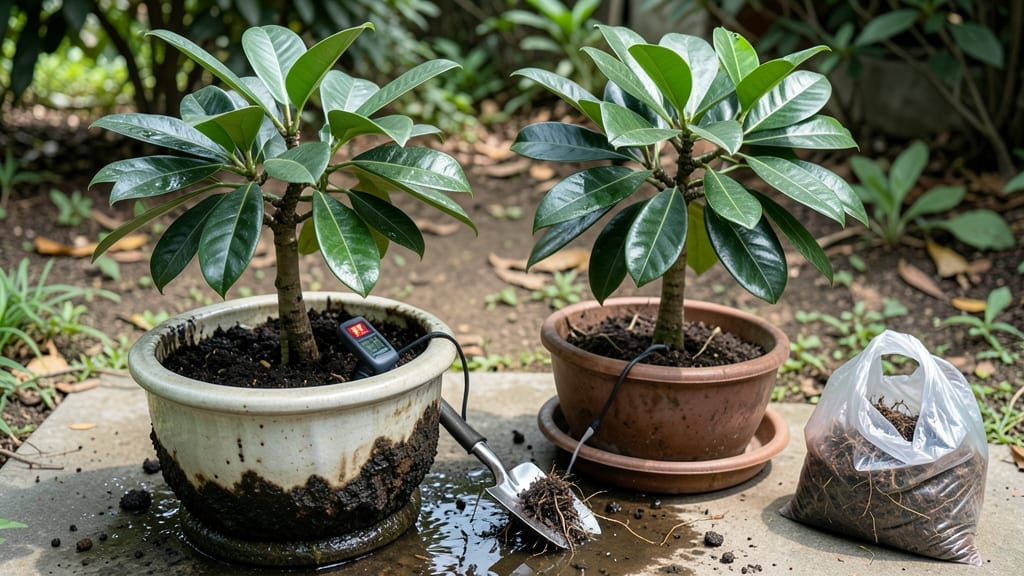
Your overwatered money tree’s root rot is turning its leaves limp and filling the soil with a foul stench—that’s a crisis, but not a death sentence. 🌱 I’ve nursed enough drowning Pachira aquatica back from the brink to know the exact 3-step fix—starting with cutting back on water and giving those roots some air.
The key is acting fast before the rot spreads to the stem.
First, check the soil: if it’s soggy and smells like a swamp, your plant’s been drowning. Repot into fresh, well-draining mix (cactus soil works great) and trim any mushy, black roots with sterilized scissors.
This isn’t just a one-time rescue—you’ll need to adjust your watering to “only when the top inch is bone dry.”
Within weeks, you’ll see new growth pushing through those crispy leaves as the rot clears. The leaves will firm up, regain their glossy finish, and—if you’re lucky—those signature braided stems will thicken again. The secret? Less water, better drainage, and a little patience while the roots recover.
Long-term, keep your money tree in bright, indirect light and water only when the soil is truly dry. A pot with drainage holes isn’t optional—it’s non-negotiable. With these tweaks, your Pachira will bounce back stronger than ever, proving that even the most neglected plants can make a comeback.
Root Rot’s Silent Triggers
Root rot in money trees (like the popular Pachira aquatica) thrives in one thing: too much moisture. But why does overwatering lead to this sneaky killer? Let’s break down the science—and the mistakes—behind it.
Money trees are tropical plants, meaning they love humidity but hate soggy roots. When you water too frequently—or let your plant sit in waterlogged soil—several problems cascade:
- Oxygen deprivation: Roots need air to breathe. Water fills soil pores, suffocating roots and blocking oxygen uptake. Without oxygen, cells can’t produce energy efficiently, leading to anaerobic conditions—a breeding ground for harmful microbes.
- Fungal feast: Fungi like Phytophthora and Pythium thrive in wet, warm soil. These pathogens attack root tissues, clogging xylem vessels (the plant’s "straws" for water transport) and cutting off nutrients.
- Bacterial blooms: Bacteria such as Erwinia or Pseudomonas multiply in saturated soil, producing toxins that rot roots from the inside out.
Pro tip: 🌡️ Stick your finger 2 inches into the soil—if it’s damp, wait. Money trees prefer soil that’s dry to the touch between waterings.
Even if you water sparingly, a pot without drainage holes is a death sentence. Here’s why:
| Problem | What Happens |
|---|---|
| Water pooling at the bottom | Roots at the base drown first, while upper roots stay dry—creating a "two-tiered" plant where the lower half rots while the top wilts from thirst. |
| Compacted or heavy soil | Clay or dense potting mixes don’t drain well, trapping water. Roots can’t expand properly, leading to circulatory failure (yes, plants have a "heart" in their roots!). |
| No aeration | Without airflow, beneficial microbes that break down excess water can’t do their job, and harmful pathogens dominate. |
Fix it: Use a well-draining mix (cactus soil + perlite) and always repot into containers with drainage holes. 🔥 No exceptions.
Money trees are tropical—but that doesn’t mean they’re built for swampy conditions. When humidity and temperature clash with your watering habits, root rot accelerates:
- High humidity + cool temps: Cool air slows evaporation, keeping soil wet longer. Add humidity (like from a humidifier or pebble tray), and you’ve created a root rot greenhouse.
- Low humidity + heat: While this might seem safer, plants often overcompensate by drinking more water to stay hydrated—leading to overwatering cycles.
- Seasonal shifts: Winter’s cooler air reduces transpiration (water loss through leaves), so your plant needs less water—but many keep watering on summer schedules.
Adjust for the season: 🌡️ In winter, reduce watering by 30–50%. In summer, water only when the top 1–2 inches of soil are bone-dry.
A stressed root system is a weak root system. If your money tree’s roots are:
- Crowded: Roots circling the pot (root-bound) can’t absorb water efficiently, leading to localized waterlogging.
- Physically damaged: Rough repotting or pruning roots without sterilizing tools can introduce pathogens.
- Underfed: Nutrient-deficient roots are more susceptible to rot because they lack the energy to fight off invaders.
Solution: Repot every 2–3 years in fresh, sterile soil. If roots are circling, trim them gently with sterilized scissors. 💡 Think of it like a haircut—healthy roots grow better!
Reviving Your Money Tree: Step-by-Step Fixes
Root rot in your money tree (🌱) doesn’t mean it’s a lost cause—with the right care, you can nurse it back to health! The key is acting fast and addressing the root of the problem (pun intended).
Below is a clear, actionable plan to diagnose, treat, and prevent further damage. Let’s get your plant thriving again!
Before diving into fixes, determine how severe the root rot is. Here’s how:
- Check the roots: Gently remove your money tree from its pot and inspect the roots.
Healthy roots are firm, white, or light tan. Bad signs: - Dark, mushy, or black roots (🚨 these are rotting). - A foul, sour smell (like wet socks or decay). - Roots that crumble easily when touched.
- Grade the rot:
- Mild: Only a few roots are affected, and most are still firm.
- Moderate: About half the roots are soft or discolored.
- Severe: Most roots are rotted, and the plant is wilting or yellowing.
> 💡 Pro Tip: If the rot is severe, don’t panic—your plant can still recover with aggressive treatment. Just act now!
Time to give your money tree a fresh start by removing the damaged parts.
- Tools needed: Sterilized pruning shears or scissors, hydrogen peroxide (3%), and a clean towel. - How to trim: 1. Wash your hands and sterilize your tools with rubbing alcohol. 2. Snip off the bad roots using clean cuts.
Aim to remove all black, mushy, or soft roots—leave only the firm, healthy ones. 3. Dip the cuts in hydrogen peroxide (3%) for 5–10 minutes to disinfect and prevent further infection.
> ✨ Prevention Tip: Never reuse soil or pots from a rotted plant—fungus or bacteria can linger. Disinfect containers with a 10% bleach solution (1 part bleach to 9 parts water) before repotting.
Now that the rot is gone, it’s time to give your money tree a clean, healthy home.
- Choose the right pot:
- Pick a clean pot with drainage holes (if possible). Terracotta pots are ideal—they breathe better than plastic.
- Size matters: The pot should be slightly larger than the root ball (about 1–2 inches wider).
- Use the right soil mix: - Avoid heavy, water-retentive soils (like pure potting mix).
Instead, create a well-draining blend: - 50% cactus/succulent mix (or perlite/pumice for drainage). - 30% regular potting soil (for nutrients). - 20% orchid bark or coconut coir (for aeration). - Optional: Add a handful of activated charcoal to prevent future fungal growth.
- Repotting steps: 1. Fill the bottom of the pot with a 1-inch layer of fresh potting mix. 2. Place the trimmed plant in the pot and fill around the roots with the new soil mix, pressing gently.
- Water lightly (just enough to moisten the soil, not soak it).
> 🌡️ Temperature Tip: If your home is cool (below 60°F/15°C), wait a few days before repotting to avoid shocking the plant further.
Overwatering is the #1 cause of root rot—so let’s fix that!
- Watering rules for recovery: - Wait 3–5 days before watering again after repotting. Let the soil dry out completely between waterings. - Stick your finger 1–2 inches into the soil—if it’s dry, water; if it’s damp, wait. - Use the “drench and dry” method: 1.
Water thoroughly until it drains from the bottom. 2. Wait until the top 1–2 inches of soil are dry before watering again.
- Signs you’re overwatering:
- Yellowing leaves (especially lower ones).
- Wilting despite damp soil.
- Fungal growth on the soil surface.
> 🎯 Long-Term Fix: Set a reminder for watering (e.g., every 7–10 days in summer, every 2–3 weeks in winter). Money trees are drought-tolerant—better to underwater slightly than drown them!
A happy money tree needs the right environment to bounce back.
- Light:
- Place your plant in bright, indirect light (e.g., near an east or north-facing window).
- Avoid direct sunlight, which can scorch leaves, or deep shade, which slows recovery.
- Humidity: - Money trees love moderate humidity (40–60%).
If your air is dry (common in winter or with AC/heat), try: - Mist the leaves lightly 1–2 times a week. - Place the pot on a pebble tray with water (ensure the pot isn’t sitting in water). - Group plants together to create a microclimate.
> 💡 Recovery Hack: If your plant is severely stressed, a lukewarm shower (once a month) can help wash away dust and stress. Cover the soil with plastic to protect it!
Once your money tree is on the mend, follow these habits to keep it healthy long-term:
- ✅ Pot with drainage holes: Never skip this—it’s non-negotiable! - ✅ Well-draining soil: Stick to the mix above or buy a succulent/cactus blend. - ✅ Water wisely: When in doubt, underwater—money trees store water in their stems. - ✅ Avoid saucers full of water: Empty saucers after watering to prevent soggy roots. - ✅ Rotate the pot: Every few months to ensure even light exposure. - ✅ Fertilize lightly: Use a balanced, diluted fertilizer (half-strength) every 2–3 months in spring/summer.
Skip fertilizer in fall/winter.
Your money tree is resilient—with these steps, it’ll be back to its lush, lucky self in no time! 🌿✨ Stay patient, and soon you’ll be admiring those vibrant green leaves again.
Frequently asked questions
How can I tell if my money tree has root rot from overwatering?
Look for these key signs: black, mushy roots that crumble when touched, a foul-smelling soil (like wet socks), and leaves that yellow or wilt despite damp soil. Healthy roots should be firm and light tan—if most are brown and slimy, you’ve got root rot.
Can I save my money tree if most of the roots are rotted?
Yes, but act fast! Trim all black/mushy roots with sterilized scissors, repot in fresh, well-draining soil, and adjust your watering habits. Even severely affected plants can recover if you remove the rot completely and prevent further moisture buildup.
What’s the best soil mix to prevent root rot in money trees?
Use a blend of 50% cactus/succulent mix, 30% regular potting soil, and 20% perlite or orchid bark. This creates airflow while retaining enough moisture. Avoid heavy garden soil—it traps water and suffocates roots.
How often should I water my money tree after treating root rot?
Wait 3–5 days after repotting, then water only when the top 1–2 inches of soil are bone dry. In summer, this might be every 7–10 days; in winter, every 2–3 weeks. Money trees store water in their stems—better to underwater slightly!
Will my money tree grow back after losing most of its leaves?
Once you’ve treated the root rot and adjusted care, new leaves will emerge from the stem. Prune any remaining yellow/brown leaves to redirect energy to fresh growth. Keep the plant in bright, indirect light and maintain consistent moisture levels.