
Pruning
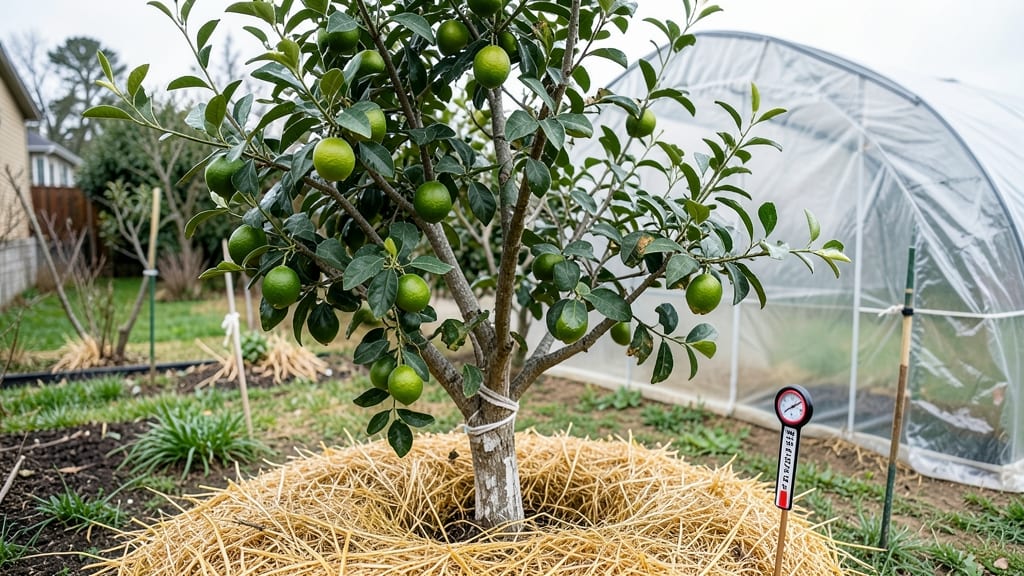
Understanding lemon tree low temperature limits is key to survival: these subtropical plants usually suffer damage when temperatures fall below 30°F (-1°C), though established trees can briefly handle down to 25°F (-4°C). Young trees, seedlings, and fruit-bearing branches are far more vulnerable, often showing signs of frost injury at 28°F (-2°C). Immediate protective measures like frost cloth, mulch, or moving potted trees indoors become essential as winter approaches.
Lemon trees are tropical at heart, so their cold hardiness depends heavily on maturity and preparation. 🌱 The real danger isn't just the temperature reading—it's how quickly the cold hits and whether the tree has protective layers.
For instance, a mature tree with thick bark might survive a 25°F (-4°C) night if it's been gradually acclimated, while a young tree could suffer leaf burn at 32°F (0°C) if the frost comes suddenly.
The roots are particularly vulnerable, which is why mulching 4-6 inches deep in late fall creates an insulating barrier that can make all the difference during a cold snap.
What's fascinating is how different parts of the tree react: leaves often show frost damage first, turning black and crispy, while the wood itself may only show signs of stress later in the season.
This delayed reaction is why many growers recommend pruning back any visibly damaged branches in early spring—even if the tree looks fine above ground, the internal damage might already be setting in. The key takeaway?
Monitoring your local frost dates and preparing your lemon tree at least 6 weeks before the first expected freeze gives it the best chance to weather the cold safely.
💡 In This Article
- How Cold Weather Damages Lemon Trees at the Cellular Level
- Protecting Lemon Trees from Frost: Step-by-Step Cold Weather Care
How cold weather damages lemon trees at the cellular level
The real damage to lemon trees begins at the microscopic level when temperatures dip below 32°F (0°C). Inside the plant cells, water starts to freeze, forming sharp ice crystals that puncture cell membranes—think of it like tiny shards of glass tearing through delicate tissue.
This disrupts the cell's ability to maintain proper pressure, causing a condition called cytoplasmic dehydration, where the cell contents shrink away from the walls. 🌡️ The first visible signs appear on leaves, which are the most exposed part of the tree, showing brown or blackened patches as cells collapse from internal damage.
Photosynthesis gets shut down quickly in cold conditions. The enzymes responsible for converting sunlight into energy—like RuBisCO—become inactive below 45°F (7°C), and the chloroplasts (the plant's energy factories) start to degrade when temperatures fall below 30°F (-1°C).
This is why lemon trees grown in colder climates often produce smaller, fewer fruits—they're essentially starving from reduced energy production.
The bark and woody stems have slightly better cold tolerance due to their thicker, denser structure, but prolonged exposure below 25°F (-4°C) can still cause internal damage that weakens the tree's structural integrity.
Root systems are the most vulnerable component. Lemon tree roots begin suffering damage at 35°F (2°C) because they can't absorb water efficiently in cold soil. The soil itself acts as a heat sink, drawing warmth from the roots and accelerating the cooling process.
This is why proper mulching—adding a 4-6 inch layer of organic material like straw or wood chips—creates an insulating blanket that maintains root-zone temperatures 5-10°F warmer than the surrounding air.
Without this protection, roots can blacken and die back, leaving the tree unable to support itself even if the above-ground parts appear intact.
What makes lemon trees particularly sensitive is their subtropical origin. Unlike hardy citrus varieties like trifoliate orange (which can tolerate 15°F (-9°C) with proper care), standard lemon trees lack natural cold resistance mechanisms.
Their leaves contain high levels of malate, an organic acid that helps regulate water balance in warm conditions but becomes ineffective when temperatures drop, leading to rapid desiccation.
This is why you'll often see lemon trees in colder regions growing in containers—they can be moved indoors during winter, giving their roots complete protection from freezing temperatures.
Interestingly, the damage threshold varies significantly by tree maturity. Mature trees with thick bark can sometimes survive brief exposures to 25°F (-4°C) because their vascular cambium (the growth layer) is better protected.
However, young trees and new growth are far more fragile—even a light frost at 28°F (-2°C) can cause terminal bud damage, stunting future growth. The fruit itself is particularly vulnerable, often developing chilling injury that causes pitting or discoloration even if the tree survives the cold.
Understanding these cellular mechanisms helps explain why lemon trees require such careful winter preparation. The key is preventing that initial ice crystal formation—whether through insulation, gradual acclimation, or physical protection.
When you see those first brown spots on leaves after a cold snap, remember: the damage likely began days earlier at the microscopic level, where the battle for your tree's survival was already underway. 🌿