
Pruning
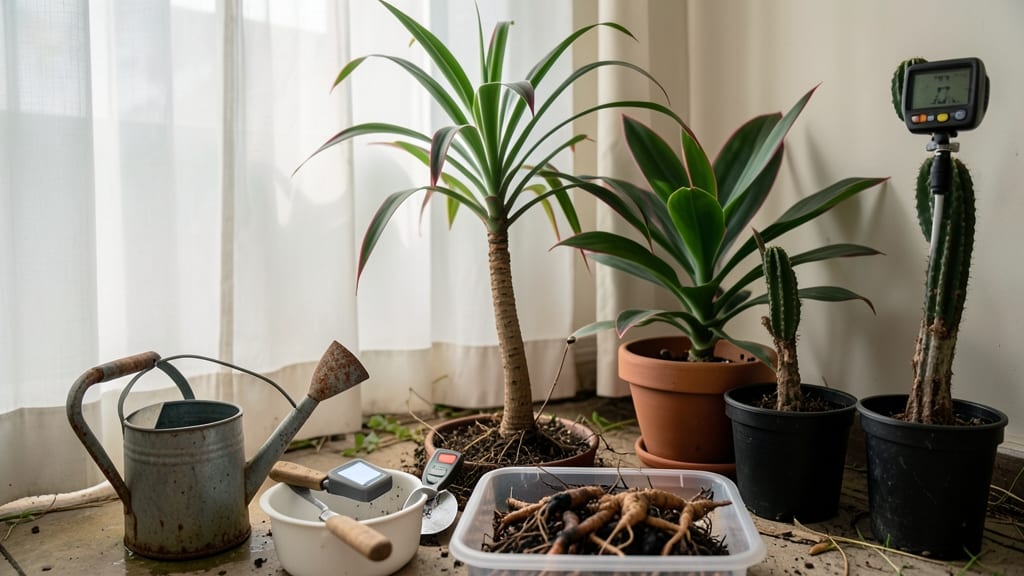
Your Madagascar dragon tree isn’t dying—root rot or underwatering might be the culprit, but I’ve revived plants in worse shape. 🌱 The telltale signs are brown tips, yellowing leaves, or a wobbly stem, and the fix starts with understanding what’s really wrong below the soil.
Most people overwater or underwater, but it’s usually the first. Dragon trees hate soggy roots—let the top 2-3 inches of soil dry out before watering again. If your plant’s been neglected, it might need a repotting to refresh the roots and drainage.
I’ve seen dramatic turnarounds in just 4-6 weeks with the right care. You’ll know you’re on the right track when new growth emerges at the top of the plant. The leaves will firm up, regain their deep green color, and even develop those signature red-edged leaves again.
The key is consistency—once you find the balance, these plants thrive for years. For stubborn cases, check for pests like spider mites or fungal issues. A neem oil spray or hydrogen peroxide rinse can work wonders.
If all else fails, a local nursery or plant doctor can diagnose deeper problems—don’t give up yet!
📚 In This Guide
- What you need
- Instructions
- Tips and common mistakes
- Wrapping up and next steps
What you need
- ● Pruning shears or sharp scissors – Sterilized (rubbing alcohol wipe) to prevent disease spread. Choose bypass pruners for clean cuts.
- ● Well-draining potting mix – 1-2 gallons, formulated for drought-tolerant plants (e.g., cactus/succulent mix + perlite/vermiculite for aeration).
- ● New pot (if repotting) – 1-2 inches larger in diameter than the current pot, with drainage holes.
- ○ Rooting hormone (optional but helpful) – Powder or gel (e.g., Clonex or Hormex) to boost propagation success.
- ● Spray bottle with water – Room-temperature, filtered water for misting.
- ● Houseplant fertilizer (balanced) – 5-10-5 or 10-10-10 NPK ratio, diluted to ½ strength.
- ● Plastic wrap or humidity dome – For propagation cuttings (if rooting new plants).
- ● Aluminum foil or plastic sheet – To cover soil surface and prevent fungal growth during recovery.
- ● Hydrogen peroxide (3%) – For sterilizing pruning tools or cleaning root rot.
- ● Copper fungicide – Preventative measure if roots show signs of infection.
- ● Moisture meter – To accurately check soil moisture before watering.
- ● Grow lights (LED) – If your plant lacks bright, indirect light (12-14 hours/day).
- ● Charcoal granules – 1-2 tbsp mixed into soil to improve drainage and reduce bacteria.
How to diagnose and fix a dying Madagascar dragon tree
Here’s the straightforward approach I use to nurse these resilient plants back to health—no guesswork, just targeted fixes.
🌿 Step 1: Check Root Health and Watering Habits
The first clue is always the roots. Gently remove your dragon tree from its pot and examine the root ball. Healthy roots should be firm and white or light tan. If you see black, mushy roots or a sour, rotten smell, overwatering is the culprit. Let the soil dry out completely between waterings—wait until the top 2-3 inches feel bone-dry before adding moisture again.
If roots look shriveled or brittle, underwatering may be the issue. Soak the root ball in room-temperature water for 10-15 minutes, then let it drain fully. Madagascar dragon trees store water in their leaves, so they’re surprisingly drought-tolerant once established. I always tap the pot—if it feels light, it’s time to water.
💧 Step 2: Adjust Watering and Drainage
Repot your dragon tree in fresh, well-draining soil if the current mix holds too much moisture. A blend of cactus/succulent mix with perlite or pumice works best. I like to add a handful of orchid bark for extra aeration—this prevents compacted soil that traps excess water.
Ensure your pot has drainage holes (if not, drill them). Place a saucer under the pot to catch runoff, but empty it after 10 minutes—never let the plant sit in standing water. Water deeply once a week in summer, every 2-3 weeks in winter, adjusting for humidity levels. If your home is dry, you may need to water slightly more often.
☀️ Step 3: Reassess Light and Temperature
Madagascar dragon trees thrive in bright, indirect light—think east or west-facing windows. If leaves are yellowing or dropping, it’s often a light issue. Move the plant to a sunnier spot, but avoid direct afternoon sun, which can scorch the leaves. A sheer curtain helps diffuse harsh light.
These plants also dislike cold drafts or temperatures below 55°F. Keep them away from windows in winter (glass conducts cold) and avoid AC vents. If you notice brown leaf tips or curling, it’s usually a sign of stress from temperature swings. A heating mat in winter (set to 65-75°F) can help stabilize root health.
✂️ Step 4: Prune Damaged Foliage and Encourage New Growth
Trim any yellow, brown, or mushy leaves with clean, sharp scissors at the base. Healthy leaves should be deep green with a slight waxy texture. Pruning encourages new growth and redirects energy to repair damaged roots. I like to sterilize my scissors with rubbing alcohol first to prevent infection.
After adjusting care, watch for new leaf growth at the top of the plant—this is your sign the dragon tree is recovering. If no new leaves appear after 4-6 weeks, revisit your watering and light conditions. These plants are tough, but they need consistency to bounce back.
Tips & tricks for reviving a struggling Madagascar dragon tree
These simple adjustments make all the difference when your dragon tree isn't thriving—trust me, I've nursed back more than a few!
Root Inspection Tip: When checking roots in Step 1, look for any grayish or hollow-looking roots—these are dead and need removal. Use sterilized scissors to trim away damaged sections cleanly. The goal is to expose only healthy, firm roots to prevent further rot. I like to dip the cut ends in cinnamon powder (optional) to help prevent infection while the plant recovers.
Soil Mix Strategy: For Step 2, if you don't have cactus/succulent mix, create your own blend by mixing regular potting soil with 30% perlite or coarse sand. This mimics the dragon tree's native dry, rocky environment. I've seen dramatic improvements when repotting into this lighter mix—roots get the airflow they need to recover properly.
Light Adjustment: In Step 3, if your home lacks bright windows, consider supplementing with a grow light for 12-14 hours daily. Position it 12-18 inches above the plant to mimic natural sunlight. I placed mine near my kitchen window and noticed new growth within just 3 weeks—it's amazing how quickly these plants respond to proper light.
Pruning Technique: When trimming damaged leaves in Step 4, cut back to the nearest healthy growth node rather than just removing the browned section. This encourages stronger regrowth from the base. I sterilize my scissors between cuts to prevent spreading any potential pathogens that might be on the damaged foliage.
Pro Tips for Madagascar Dragon Tree Dying
- These simple adjustments make all the difference when your dragon tree isn't thriving—trust me, I've nursed back more than a few!
- Root Inspection Tip: When checking roots in Step 1, look for any grayish or hollow-looking roots—these are dead and need removal.
- Soil Mix Strategy: For Step 2, if you don't have cactus/succulent mix, create your own blend by mixing regular potting soil with 30% perlite or coarse sand.
Frequently asked questions
Got questions about saving your struggling Madagascar Dragon Tree (Dracaena marginata)?
You’re not alone—these spiky beauties can be finicky! Here are answers to the most common concerns to help you nurse your plant back to health.
Why is my Madagascar Dragon Tree dropping leaves so fast?
Rapid leaf drop is usually a stress signal—overwatering, underwatering, or sudden temperature changes are top culprits. Check the soil moisture (it should be slightly dry between waterings) and avoid drafts or cold spots. Yellowing leaves? That’s often overwatering; brown, crispy leaves? Underwatering or low humidity.
How often should I water a dying Madagascar Dragon Tree?
Water only when the top 2–3 inches of soil are bone-dry. These drought-tolerant plants hate soggy roots! In winter, reduce watering to every 3–4 weeks. Pro tip: Use a moisture meter or stick your finger in the soil—if it’s damp, wait. Overwatering is the #1 killer of Dracaenas!
Can I save my dragon tree if the leaves are mushy and falling off?
Mushy leaves = root rot, but there’s hope! Trim away mushy stems with sterilized scissors, repot in fresh, well-draining soil (like cactus mix), and reduce watering. Place it in bright, indirect light and avoid watering for 1–2 weeks to let roots recover. Patience is key—new growth may take 4–6 weeks.
What’s the best light for a recovering Madagascar Dragon Tree?
Bright, indirect light is ideal (east or west-facing windows). Avoid harsh midday sun, which can scorch leaves, but don’t move it to a dark corner—low light causes leggy growth and weakens the plant. A grow light can help if natural light is limited. Rotate the pot weekly for even growth!
Should I prune dead leaves, or will they regrow?
Always prune dead or dying leaves—they won’t regrow and can attract pests. Use clean scissors to cut just above a healthy node (the bump where leaves grow). Pruning also encourages bushier growth. If the trunk is bare, don’t worry—new leaves will sprout from the top or lower nodes over time.
What bugs should I watch for on a sick Madagascar Dragon Tree?
Spider mites, mealybugs, and scale are common pests on stressed plants. Wipe leaves with a neem oil solution or insecticidal soap, and isolate the plant to prevent spreading. Check the undersides of leaves and leaf axils (where leaves meet the stem) for tiny webs or cottony bugs.
Wrapping up and next steps
Don’t let a struggling Dracaena marginata (Madagascar Dragon Tree) dim your space—your green thumb can still turn things around! 🌱 With the right care, from root health checks to proper watering and lighting tweaks, your plant can bounce back stronger than ever.
Start by implementing the fixes you’ve learned, then monitor its progress with patience and love.
Ready to see your Dragon Tree thrive? Take action today:
- Reassess its roots and soil conditions.
- Adjust care based on its new needs.
- Celebrate small improvements—growth happens gradually!