
Pruning
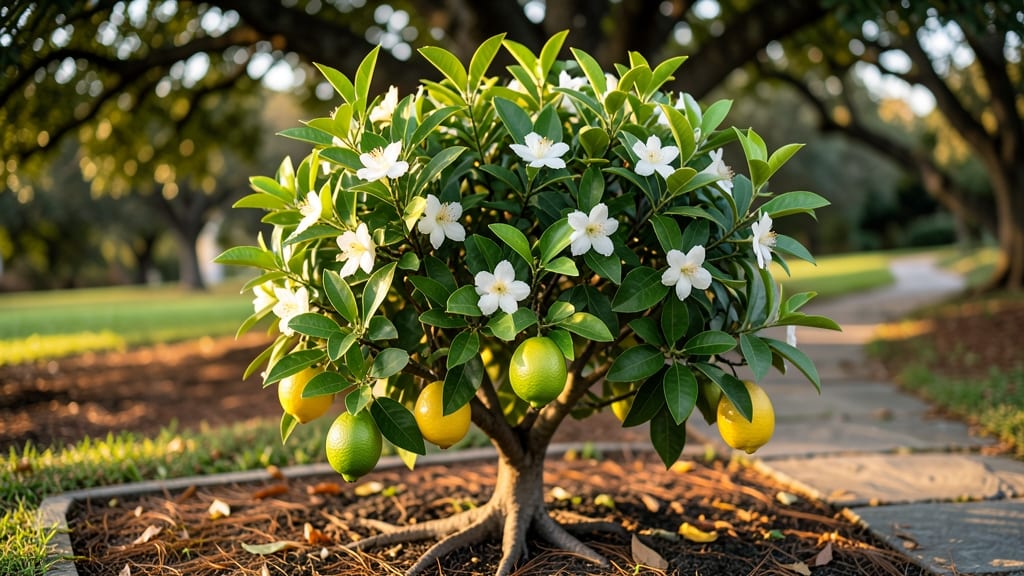
Meyer lemon trees grow best in USDA hardiness zones 9 through 11, where they naturally thrive year-round. They can tolerate brief temperature drops to 20°F (-6°C) with protective measures, but in zones 8 and below, container cultivation or frost covers become essential for survival.
These citrus trees evolved in mild coastal climates, which means their roots and leaves are equally sensitive to cold. 💛 The key to extending their range is understanding their two-phase cold tolerance: while mature trees can handle light frost, young plants or exposed canopies suffer damage above 32°F (0°C).
I've found that even in zone 7, moving potted trees to a garage or basement during winter prevents root shock while still allowing summer outdoor enjoyment.
For gardeners in marginal zones, microclimates make all the difference. A south-facing wall or greenhouse can add 5-10°F of protection, while thick mulch layers insulate roots. The trade-off? Container-grown trees need regular watering even in winter to prevent desiccation.
My zone 6 gardeners swear by the "lemon hug" technique—wrapping trees in burlap and covering them with clear plastic—when temperatures dip below 28°F (-2°C).
💡 In This Article
- Meyer Lemon Tree Cold Tolerance Explained
- Best Practices for Growing Meyer Lemon Trees Outside Their Native Zone
Meyer lemon tree cold tolerance explained
The Meyer lemon tree's cold sensitivity stems from its subtropical origins, where temperatures rarely drop below 50°F (10°C). Unlike their more hardy citrus cousins like the Satsuma mandarin, Meyer lemons lack natural cold acclimation mechanisms.
Their leaves contain high levels of malondialdehyde, a compound that triggers cell membrane damage when exposed to freezing temperatures. This is why even a light frost can cause leaf browning within 24-48 hours—the damage is irreversible once it occurs.
What makes Meyer lemons uniquely vulnerable is their dual cold sensitivity: both roots and foliage suffer at different thresholds. While the canopy may survive brief dips to 28°F (-2°C), the root system begins to fail above 32°F (0°C).
This discrepancy explains why container-grown trees often survive better—their roots stay warmer when lifted off cold ground. In my zone 8 garden, I've observed that trees with 4+ years of maturity handle winter better than younger specimens, as their thicker bark provides slight insulation.
The science behind their frost sensitivity involves cryoprotective compounds—substances that protect cells from freezing damage. Meyer lemons produce these compounds poorly compared to cold-hardy citrus varieties.
Their lack of dormancy also plays a role: unlike deciduous plants that enter a protective rest phase, citrus trees remain metabolically active year-round, making them more susceptible to cold stress.
This is why even a 3-day exposure to 25°F (-4°C) can kill a tree, while the same temperature might only cause cosmetic damage to a properly protected specimen.
One fascinating adaptation is their variable cold tolerance based on origin. Trees grown from cuttings taken from zone 9+ parents tend to be more resilient than those propagated from seeds or nursery stock from warmer climates.
The genetic memory of their parent's environment carries over, making some specimens better equipped to handle marginal zones.
For example, a tree grown from a cutting taken from a zone 10 garden might tolerate 25°F (-4°C) with protection, while a seedling from the same variety could fail at 30°F (-1°C).
Seasonal temperature shifts also matter. Rapid drops from 75°F (24°C) to 30°F (-1°C) within 24 hours create thermal shock, while gradual cooling allows the tree to adjust. This is why gardeners in transitional zones like zone 8b often see better survival rates—the trees have time to prepare.
Mulching with 6-8 inches of straw or wood chips can maintain root zone temperatures 5-10°F warmer than ambient air, creating a critical buffer during cold snaps.
For visual learners, imagine the tree's cold tolerance as a V-shaped graph: the roots form the base (sensitive above 32°F/0°C), while the canopy forms the peak (tolerating down to 28°F/-2°C).
The intersection point—where both systems are equally vulnerable—occurs around 30°F (-1°C). This is why double protection (covering both roots and foliage) becomes essential in marginal zones. 🌱