
Pruning
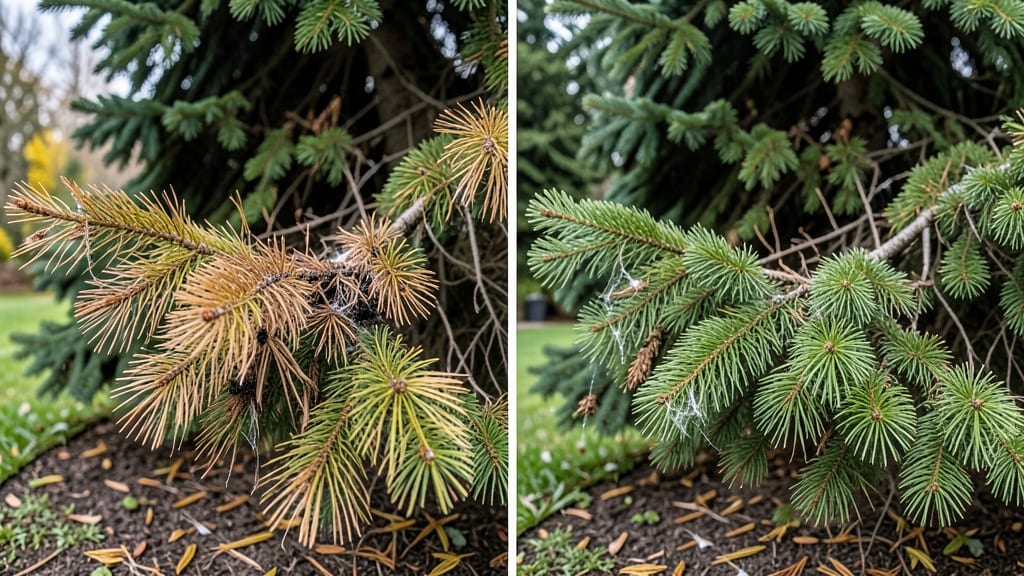
Your Nordmann fir tree problems—yellowing needles and stunted growth—aren’t a death sentence, just a cry for help. 🌲 I’ve nursed back more than a few of these evergreens from the brink, and the fixes are simpler than you’d think, especially when you catch them early.
The real culprits? Overwatering, poor drainage, or pests hiding in the branches. Spider mites and bark beetles love stressed trees, and once they move in, the damage spreads fast. But here’s the good news: pruning the right way can stop the decline and even encourage new growth.
Within 4-6 weeks of proper care, you’ll see fresh green needles pushing out where yellow ones fell. The key is acting fast—before the tree’s energy gets completely drained. We’ll tackle the root causes (literally) and show you exactly which branches to trim.
Works for both container-grown and in-ground Nordmann firs, no matter the season. Let’s get your tree back to its full, lush glory.
Root Causes Behind Your Fir’s Struggles
Understanding why your Nordmann fir tree is showing signs of distress—like yellowing needles or stunted growth—starts with peeling back the layers of its care. These issues rarely happen in isolation; they’re often symptoms of deeper, interconnected problems.
Let’s break down the science-backed reasons behind the most common Nordmann fir tree pruning problems, so you can diagnose and fix them like a pro.
Nordmann firs (Abies nordmanniana) are hardy, but they hate sudden swings in temperature, drought, or prolonged exposure to cold winds. Here’s why:
- Winter Burn (Desiccation): When temperatures dip below freezing but then spike during the day, the tree’s needles lose moisture faster than roots can replace it. This causes browning or yellowing tips, especially on exposed branches.
Cold winds dry out the needles even more, mimicking drought stress. - Science alert: The cuticle layer on needles thickens in winter to retain moisture, but extreme cold cracks it, leading to water loss. 🌬️❄️
- Heat Stress in Summer: If your tree is planted in a full-sun, high-heat area without enough water, its needles may turn yellow or bronze as chlorophyll breaks down.
High temperatures also disrupt photosynthesis, slowing growth. - Pro tip: Mulch around the base (3–4 inches deep) to retain soil moisture and protect roots from temperature fluctuations. 🌡️💧
- Frost Cracking: Young Nordmann firs are especially vulnerable to frost cracks in the bark, which can expose the tree to pests and diseases. Look for vertical splits on the trunk—often on the south or west side where sun heats the bark unevenly.
Nordmann firs prefer consistently moist but well-drained soil. When watering goes haywire, the tree sends distress signals through its needles and growth.
- Underwatering (Drought Stress): - Symptoms: Needles turn dull yellow or brown, starting at the tips and working inward. Branches may feel dry and brittle. - Why it happens: The tree’s fine root system (especially in container-grown firs) struggles to absorb enough water, leading to nutrient starvation.
Roots also release stress hormones that trigger needle drop. 🌱🚰 - Fix it: Water deeply 1–2 times per week (1–1.5 inches per session) during dry spells. Drip irrigation or soaker hoses work best to avoid surface evaporation.
- Overwatering (Root Rot): - Symptoms: Needles turn yellow or purple, and the tree may lean or wilt. Check the soil—if it’s soggy or smells like rot, roots are drowning. - Why it happens: Nordmann firs hate wet feet.
Poor drainage or compacted soil cuts off oxygen to roots, leading to Phytophthora (a deadly fungus) or Pythium infections. 🍄⚠️ - Fix it: Improve drainage with organic matter (compost or pine bark) and avoid watering if the top 2 inches of soil are damp. Raise containers to prevent pooling.
Even if your fir looks green, it might be starving for key nutrients or suffering from soil toxicity.
- Nitrogen Deficiency (The Most Common): - Symptoms: Pale yellow needles (chlorosis) that stay soft, stunted new growth, or sparse branches. - Why it happens: Nitrogen is the building block of chlorophyll.
If your soil lacks it (common in sandy or acidic soils), the tree can’t produce enough energy. Over-fertilizing with high-phosphorus/potassium mixes can also throw off the balance. 🧪💡 - Fix it: Apply a slow-release nitrogen fertilizer (like 10-10-10) in early spring or use composted manure. Avoid synthetic fertilizers in late summer—they can promote tender growth vulnerable to frost.
- Iron or Magnesium Deficiency: - Symptoms: Yellowing between needle veins (iron) or purple-red needles (magnesium). Older needles are usually affected first. - Why it happens: Alkaline soils (pH > 7) lock out iron, even if it’s present.
Magnesium deficiencies often stem from over-fertilizing with nitrogen without balancing other minerals. 🌍🔄 - Fix it: Test your soil’s pH—aim for 5.0–6.5 for Nordmann firs. If deficient, use chelated iron (for iron) or Epsom salt (for magnesium) in water every 2–3 weeks.
- Soil Compaction: - Symptoms: Slow growth, needles clustering at branch tips, or roots growing in circles (gnarled roots). - Why it happens: Compacted soil restricts root expansion, limiting water and nutrient uptake.
Common in heavily walked areas or clay-heavy soils. 🏗️🚫 - Fix it: Aerate the soil with a garden fork or top-dress with pine bark to loosen it. For container-grown firs, repot every 2–3 years to refresh the root ball.
Even the hardiest Nordmann firs can fall prey to pests and pathogens that hijack their health.
- Spider Mites & Aphids: - Symptoms: Sticky residue (honeydew), yellow stippling on needles, or fine webbing on branches. - Why it happens: These sap-suckers thrive in hot, dry conditions.
They inject toxins into needles, causing yellowing and premature drop. 🕷️💥 - Fix it: Blast them off with a strong spray of water or use neem oil (repeat every 5–7 days). Increase humidity around the tree to deter them.
- Bark Beetles & Sawflies: - Symptoms: Sawdust-like frass near the trunk, chewed needles, or dieback in branches. - Why it happens: Stress weakens the tree’s defenses. Bark beetles bore into the phloem, while sawfly larvae skeletonize needles.
Both spread rapidly in drought-stressed trees. 🪲🔪 - Fix it: Prune and destroy infested branches (don’t compost!). Apply beneficial nematodes or insecticidal soap early in the season.
- Root & Stem Rot (Phytophthora): - Symptoms: Mushrooms at the base, sudden wilting, or needles turning brown and crispy. - Why it happens: This water-loving fungus thrives in poorly drained soils.
It clogs xylem vessels, cutting off water and nutrients. 🍄💀 - Fix it: Remove infected trees immediately (don’t burn—double-bag and trash). Improve drainage and avoid overwatering nearby plants.
Pruning is essential for Nordmann firs, but mistakes can trigger stress that manifests as yellowing or stunted growth.
- Over-Pruning or Improper Timing: - Why it happens: Nordmann firs lose 10–15% of their needles annually naturally. If you remove too many at once (especially in late summer or early fall), the tree can’t replace them fast enough.
This leads to thinning foliage and reduced photosynthesis. - Fix it: Prune in early spring (before new growth) or late fall. Never remove more than 25% of the canopy in one year. 🌿✂️
- Shearing or Topping:
- Why it happens: Shearing (cutting into the main stem) creates weak, stubby growth
Quick Fixes for Fading Firs
Reviving your Nordmann fir starts with identifying the root cause—whether it’s drought stress, pests, or poor soil. Below are practical, step-by-step solutions tailored to the most common issues, plus prevention tips to keep your tree thriving long-term.
Cause: Yellowing needles often signal iron chlorosis (nutrient deficiency) or root rot from overwatering. Solution:
- Test Your Soil 🔬
- Grab a small sample (6 inches deep) and send it to a local extension office for a pH test. Ideal pH for firs: 5.0–7.0.
- If pH is too high (>7.0), amend with sulfur or peat moss to acidify the soil gradually.
- Fertilize Correctly 🍃
- Use a slow-release, acid-loving plant fertilizer (look for iron chelate or ferrous sulfate).
- Apply in early spring (before new growth) and fall, following package rates.
- Avoid high-nitrogen fertilizers—they worsen chlorosis.
- Adjust Watering 💧
- Overwatering? Let the top 2–3 inches of soil dry out between waterings. Improve drainage with organic matter (compost or pine bark).
- Underwatering? Water deeply 1–2 times per week (more in extreme heat) and mulch with 3–4 inches of wood chips to retain moisture.
💡 Pro Tip: If needles turn yellow with green veins, it’s iron deficiency. If they’re uniformly yellow, check for overwatering or compacted soil.
Cause: Slow growth often means root restriction (container-bound trees) or nutrient-poor soil. Solution:
- Repot or Refresh Soil 🏺
- If your fir is in a container, check roots. If they’re circling or packed, repot into a larger container with fresh, well-draining potting mix (add perlite or sand for aeration).
- For ground-planted trees, amend the top 6–12 inches of soil with compost and pine fines to improve fertility.
- Feed for Growth 🌱
- Use a balanced fertilizer (e.g., 10-10-10) in early spring to encourage new shoots.
- Avoid heavy nitrogen—it promotes foliage over root development.
- Prune Strategically ✂️
- Remove dead or crossing branches in late winter/early spring to improve airflow.
- Never shear firs—they grow in a natural, dense shape and don’t respond well to harsh pruning.
⏰ Timing Matters: Prune only when the tree is dormant (late winter) to minimize stress. Avoid pruning in summer heat.
Cause: Tiny invaders sap nutrients, causing needle drop and stunted growth. Solution:
- Inspect & Isolate 🔍
- Check for webbing (spider mites), sack-like bags (bagworms), or sticky residue (aphids).
- Quarantine affected trees to prevent spread.
- Natural Remedies First 🌿 - Spider mites: Spray with neem oil (mix 1 tbsp neem oil + 1 tsp mild soap per gallon of water).
Reapply every 5–7 days. - Bagworms: Handpick bags or Bt (Bacillus thuringiensis) spray in early summer before larvae mature. - Aphids: Blast off with water or use insecticidal soap.
- Severe Infestations? 💥
- For heavy damage, use systemic insecticides (e.g., imidacloprid) last resort—follow label instructions carefully.
🎯 Prevention:
- Encourage beneficial insects (ladybugs, lacewings) by planting marigolds or dill nearby.
- Water deeply—pests thrive in drought-stressed trees.
Cause: Dry winter winds or sudden temperature swings cause brown needle tips. Solution:
- Water Before Freeze 💦
- Give trees a deep watering in late fall to build root resilience.
- Mulch heavily (4–6 inches of pine straw or wood chips) to insulate roots.
- Windbreaks 🌬️
- Plant evergreen hedges (e.g., arborvitae) as wind barriers on the northwest side of your fir.
- Use burlap screens for young trees in exposed areas.
- Avoid Salt Damage ❄️
- If your tree is near a salted driveway, flush the soil with water in spring and apply gypsum to reduce salt buildup.
🔥 Quick Fix for Existing Damage: Trim only dead tips in early spring—never prune healthy tissue, as firs won’t regrow needles on old wood.
To keep your Nordmann fir lush and problem-free: ✅ Water deeply but infrequently (1–2x/week, more in heat). ✅ Mulch annually with acidic, organic matter. ✅ Fertilize twice a year (spring & fall) with iron-rich formulas. ✅ Monitor for pests weekly during spring/summer. ✅ Prune only when necessary (late winter/early spring).
By tackling issues early and maintaining consistent care, your Nordmann fir will stay vibrant, full, and pest-free for years! 🎄✨
Frequently asked questions about Nordmann fir tree problems
Why are my Nordmann fir needles turning yellow?
Yellowing needles usually signal iron deficiency (chlorosis) or overwatering. Check the soil pH—Nordmann firs thrive in acidic soil (pH 5.0-6.5). If the pH is too high, amend with sulfur or peat moss. For overwatering, let the top 2-3 inches of soil dry out between waterings and improve drainage with pine bark mulch.
What causes brown tips on my Nordmann fir needles?
Brown tips often result from winter burn (dry winter winds) or underwatering. To prevent it, give your tree a deep watering before the first freeze and mulch heavily (4-6 inches) with pine straw. For existing damage, trim only the dead tips in early spring—never prune healthy tissue as firs won't regrow needles on old wood.
How do I know if my Nordmann fir has spider mites?
Look for fine webbing on branches and yellow stippling on needles. Spider mites thrive in hot, dry conditions. Treat with neem oil (mix 1 tbsp neem oil + 1 tsp mild soap per gallon of water) and spray every 5-7 days. Increase humidity around the tree by misting or using a hose spray to knock them off.
Can I prune my Nordmann fir in summer?
No, avoid pruning during summer heat. The best time is late winter or early spring (before new growth). Never remove more than 25% of the canopy in one year, and never shear—Nordmann firs grow naturally dense and don't respond well to harsh pruning. Always use clean, sharp pruners to prevent damage.
How often should I fertilize my Nordmann fir?
Fertilize twice a year: once in early spring and again in fall. Use a slow-release, acid-loving plant fertilizer with iron chelate to prevent chlorosis. Avoid high-nitrogen fertilizers in late summer—they promote tender growth vulnerable to frost. For container-grown firs, fertilize every 4-6 weeks during the growing season.