
Blooming
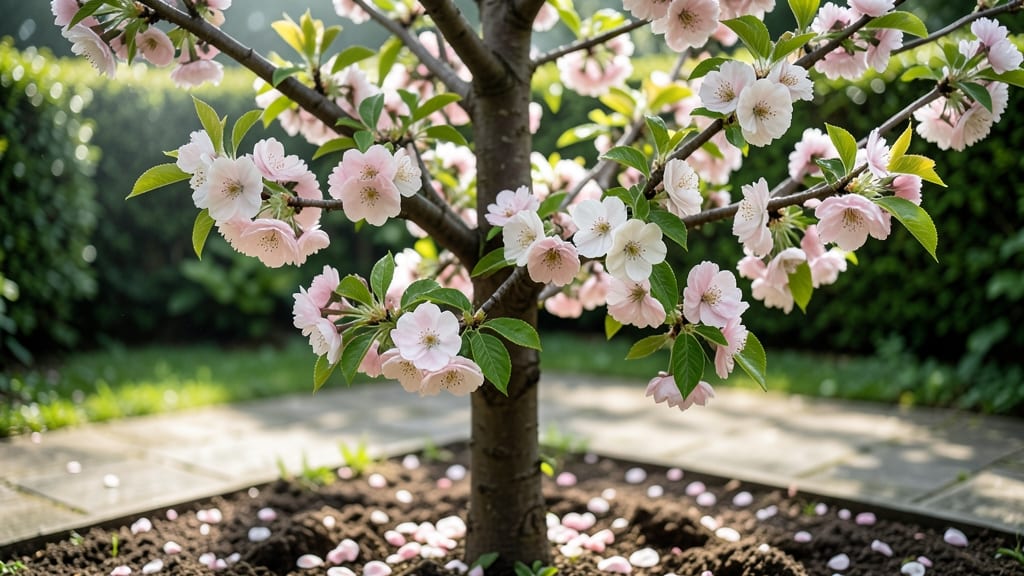
Peach tree blossom time arrives like a whisper of summer—pale pink clouds bursting against bare branches. 🌸 I still remember the first year my tree exploded with blooms, and how the scent of peach blossoms filled the yard before the leaves even appeared.
Timing matters more than most gardeners realize: bloom windows vary by zone 5 to 9, with early bloomers in the South and late bloomers in the North.
The magic happens when daytime temperatures hover around 50-60°F and nights stay above freezing—too cold, and buds freeze; too warm too soon, and they drop.
Pruning last fall set the stage, but now it's about watching for those first pink-tipped buds (about 30 days before bloom) to time your final pruning and pest control. My tree blooms for 7-10 days—a fleeting but unforgettable show.
You'll know you've timed it right when the branches sag under the weight of blossoms, and the air hums with bees. The secret to extending that bloom?
Plant varieties with staggered bloom times—early, mid, and late season—to turn your yard into a pink paradise for weeks. Just avoid late frosts at all costs.
Regional differences are huge: Southern peaches often bloom in March, while Northern trees wait until May. If you're in between, watch your neighbors' trees or use a heat accumulation tracker—it's the gardener's secret weapon for predicting bloom time. Now go enjoy that fragrant spectacle!
📚 In This Guide
- What you need
- Instructions
- Tips and common mistakes
- Wrapping up and next steps
What you need
- ● Peach tree (or access to one): Choose a healthy, mature tree (5+ years old) for the best bloom display.
- ○ Optional: If planting a new tree, select a dwarf or semi-dwarf variety (e.g., 'Redhaven' or 'Elberta') for easier maintenance.
- ● Camera or smartphone: DSLR/mirrorless camera with a macro lens (50-100mm) for close-ups.
- ● Budget-friendly: A smartphone with a high-resolution camera (12MP+) and a tripod mount (e.g., JOBY GorillaPod).
- ● Photography gear: External flash or reflector (5-in-1) to enhance bloom lighting.
- ● Polarizing filter to reduce glare and deepen colors.
- ○ Optional: Drone (e.g., DJI Mini 2) for aerial shots (check local regulations!).
- ● Gardening supplies (for planting/care): Well-draining soil mix (compost + native soil, 2:1 ratio).
- ● Organic mulch (wood chips or straw) (2–3 inches thick).
- ● Slow-release fertilizer (10-10-10 NPK) (1 lb per tree).
- ● Pruning shears (bypass type, sharp and sterilized).
- ○ Optional: Tree stakes & ties (for young saplings).
- ● Safety & comfort: Gloves (gardening or nitrile for handling tools).
- ● Comfortable shoes (closed-toe for gardening, sturdy for outdoor shoots).
- ○ Optional: Portable fan (blossoms release pollen—helpful for sensitive folks!).
- ● Bloom timing: Peach blossoms typically appear in early to mid-spring (varies by climate—check your USDA zone!).
- ● Pro tip: 🌡️ Monitor temperatures—blossoms thrive in 50–75°F and may drop if frost hits.
- ● Location scouting: Find trees in sunny, open areas (avoid shaded spots where blooms may be sparse).
- ○ Optional: Visit local orchards or botanical gardens for guaranteed spectacle!
- ● Legal considerations: Always ask permission before photographing or picking blossoms on private property.
- ● Check local pesticide/herbicide rules if treating your tree.
How to maximize your peach tree’s blossom time
Timing and care make all the difference when your peach tree bursts into fragrant bloom.
🌸 Step 1: Prune for Optimal Airflow and Light
Start pruning late winter to early spring, just as buds swell but before flowers open. Remove any dead, crossing, or inward-growing branches first—they block sunlight and airflow, which weakens blossoms. I target branches thicker than ½ inch for removal, as they compete with new growth for energy.
Make cuts at a 45-degree angle, about ¼ inch above an outward-facing bud. This ensures the tree directs energy to fruit-bearing branches rather than dense foliage. Thin the canopy by 20-30% to let sunlight reach the center where most blossoms form. If your tree is young, prioritize removing water sprouts—they steal nutrients from flower production.
☀️ Step 2: Provide Consistent Spring Sun and Warmth
Peach trees need 6-8 hours of direct sunlight daily during blossom time. If your tree is in partial shade, move it to a sunnier spot or supplement with a reflective mulch (like white gravel) to bounce light onto the trunk. Young trees especially struggle in cool climates—wrap the trunk with burlap if nighttime temps drop below 25°F to protect emerging buds.
Watch for pink bud stage—this is when flowers are most sensitive to frost. If a late frost is forecasted, drape a lightweight frost cloth over the tree at dusk and remove it by mid-morning. Overwatering now can drown buds, so water deeply but only when the top 2 inches of soil feel dry. A drip irrigation system keeps moisture consistent without wetting the leaves.
🌿 Step 3: Fertilize for Vibrant Blooms
Apply a balanced 10-10-10 fertilizer in early spring, just as buds swell. Scatter granules evenly under the canopy and water deeply to activate them. Avoid high-nitrogen fertilizers—they promote leafy growth at the expense of flowers. For established trees, a slow-release granular fertilizer spread in 3-inch-wide bands around the drip line works best.
Here’s the thing—peach trees are heavy feeders. If your soil is sandy, add 2-3 inches of compost around the base in late winter to replenish organic matter. Mulch with wood chips to retain moisture and regulate soil temperature. Keep mulch 3 inches deep and 6 inches away from the trunk to prevent rot. You’ll see stronger blossoms and fewer dropped buds if the tree isn’t struggling for nutrients.
🐝 Step 4: Encourage Pollination
Peach trees are self-pollinating but thrive with help. Plant a small bee-friendly garden nearby with early bloomers like crocus or fruit trees like plums or cherries. If your area has few native bees, hand-pollinate by gently shaking branches on warm, dry mornings when bees are least active. Avoid this on rainy days—wet pollen doesn’t transfer well.
Watch for full bloom, when petals are fully open and stamens are visible. This is peak pollination time. If you notice dropped blossoms, it could signal frost damage, overwatering, or nutrient deficiency. Adjust care immediately—reduce watering slightly and apply a calcium nitrate spray to strengthen cell walls and retain blossoms.
⏰ Step 5: Monitor for Pests and Diseases
Blossom time is prime for peach tree borers and aphids. Inspect leaves daily for sticky residue (aphid honeydew) or tiny holes in buds (borer entry points). Spray with neem oil at the first sign of trouble—it’s organic and safe for bees once dry. For severe infestations, apply kaolin clay as a physical barrier to deter pests without chemicals.
Fungal diseases like brown rot thrive in damp conditions. Remove any mummified fruit from last season’s harvest and dispose of it in the trash (not compost). Prune out any branches with blackened buds immediately and sterilize your pruners with 70% isopropyl alcohol between cuts. A copper fungicide spray applied preventatively can save your blossoms if humidity stays high.
Tips & tricks for perfect peach tree blossom time
Between us, the difference between a spectacular peach tree bloom and a lackluster one often comes down to these precise details.
Pruning Precision: When you're thinning the canopy by 20-30% in Step 1, focus on removing branches that grow inward or cross each other—these are the real culprits blocking sunlight. I've seen trees with beautiful outer foliage but bare centers because of neglected interior branches. Use pruning shears to make clean cuts at the 45-degree angle about ¼ inch above an outward-facing bud, and always sterilize your tools with rubbing alcohol between cuts to prevent disease transmission. This isn't just about aesthetics; it's about directing the tree's energy where it counts.
Frost Protection Strategy: The pink bud stage mentioned in Step 2 is your critical warning period. I learned this the hard way after losing two seasons of blossoms to unexpected late frosts. If frost is forecasted, cover the tree with a lightweight frost cloth at dusk and remove it by mid-morning. Here's what nobody tells you—make sure the cloth doesn't touch the branches directly, as this can cause more damage than the frost itself. Also, avoid watering the day before a frost; wet buds freeze more easily.
Fertilizer Application Technique: For that balanced 10-10-10 fertilizer in Step 3, don't just scatter it randomly. Work it into the top 2-3 inches of soil under the drip line, then water thoroughly to activate it. The key is even distribution—uneven application can lead to weak spots in your blossom production. I've found that using a spreader makes this much easier, and it ensures you don't miss any areas. Remember, peach trees are heavy feeders, so don't skimp on the fertilizer or compost if your soil is sandy.
Pollination Boost: When hand-pollinating in Step 4, timing is everything. Choose warm, dry mornings between 9 and 11 AM when bees are least active and pollen transfer is most effective. Gently shake individual branches rather than the whole tree—this prevents pollen from falling to the ground where it can't reach other flowers. For even better results, plant a small bee-friendly garden nearby with early bloomers like crocus or fruit trees like plums. This creates a pollinator highway that benefits your entire orchard.
Pro Tips for Peach Tree Blossom Time
- Between us, the difference between a spectacular peach tree bloom and a lackluster one often comes down to these precise details.
- Pruning Precision: When you're thinning the canopy by 20-30% in Step 1, focus on removing branches that grow inward or cross each other—these are the real culprits blocking sunlight.
- Frost Protection Strategy: The pink bud stage mentioned in Step 2 is your critical warning period.
Frequently asked questions
Got questions about peach tree blossoms? You’re not alone! Here are some of the most common inquiries—plus quick, practical answers to help you make the most of this fragrant spring display.
When is the best time to see peach tree blossoms?
Peach tree blossoms typically appear in early to mid-spring, depending on your climate. In warmer regions (like California or Georgia), blooms may start as early as February or March. Cooler zones (like the Midwest or Northeast) often see them in April or May. Check your local frost dates—late frosts can damage buds, so timing matters!
How long do peach tree blossoms last?
Peach blossoms are ephemeral—they usually last just 7–14 days before falling to make way for fruit. However, some varieties (like Elberta or Redhaven) may linger slightly longer in ideal conditions. For the best show, plan a visit during peak bloom, often announced by local nurseries or agricultural extensions.
What should I do if my peach tree isn’t blooming?
Several factors could be at play: age (young trees <1–2 years old may not bloom), pruning timing (cutting too late can remove flower buds), nutrient deficiencies (lack of nitrogen or zinc), or pests/disease (like peach leaf curl). Start by checking for buds in late winter—if none appear, consult a local extension office for a soil test or pest inspection.
Can I eat the flowers, or are they safe?
Peach blossoms are edible and delicious! They’re often used in sweets, teas, or garnishes for their mild, floral sweetness. However, avoid spraying them with pesticides if you plan to harvest. Pro tip: Infuse them in simple syrup for cocktails or decorate cakes with them (just ensure no chemicals were used). Always harvest sustainably—don’t strip an entire tree!
Are there alternatives to peach trees for early spring blooms?
If you love peach blossoms but want variety, consider these early-blooming alternatives:
- Cherry blossoms (e.g., Yoshino or Stella Pink)
- Almond trees (fragrant and edible flowers)
- Magnolias (large, showy blooms in late winter)
- Crabapple trees (compact and colorful)
How can I predict when my peach tree will bloom next year?
Track chill hours (the number of hours below 45°F/7°C your tree needs to bloom). Most peach varieties require 300–1,000 chill hours. Use a home weather station or check local agricultural data. Once you know your tree’s pattern, you can estimate bloom time based on the prior year’s timing and weather conditions.
Wrapping up and next steps
Peach tree blossom time is a fleeting yet magical moment that transforms gardens into fragrant, pink-hued paradises. Whether you’re admiring nature’s artistry or planning your own orchard, this season reminds us to slow down and savor life’s sweetest moments—literally! 🌸
Now that you’re armed with tips to enhance your peach tree’s bloom and answer common questions, why not take the next step? Plant a peach tree, visit a local orchard, or even sketch the delicate blooms—your garden (and future harvest) will thank you! 🌱✨