
Pruning
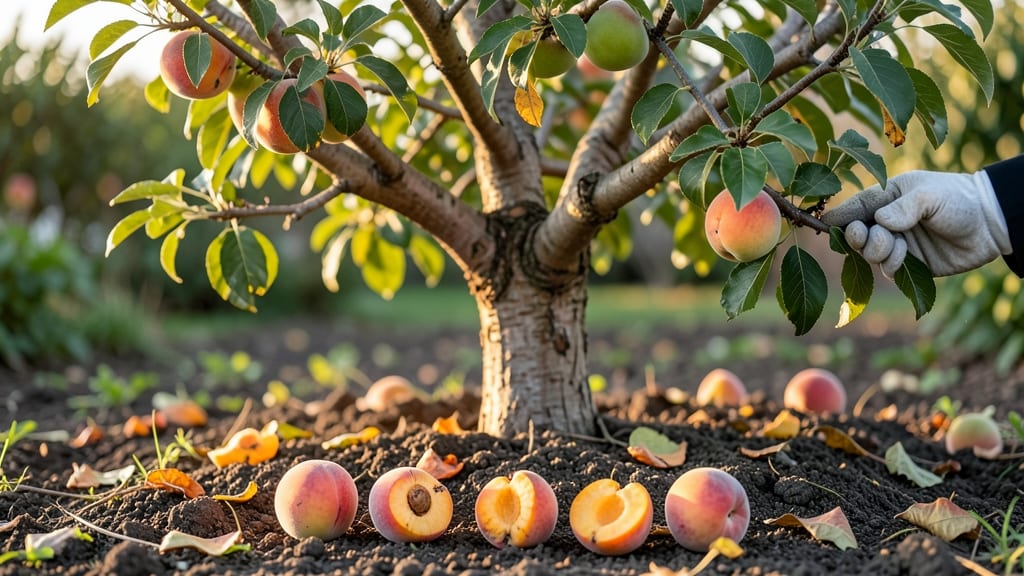
When your peach tree drops fruit before ripening, it’s not a lost cause—it’s a call for action. 🌿 I’ve seen this happen after late frosts, pest attacks, or even overwatering, but the right pruning and care can turn things around.
The key is understanding what’s causing the drop and addressing it before it’s too late.
Most fruit drop happens in late spring when trees adjust to new growth or after stress from weather or pests. Pruning to open the canopy improves airflow, reduces disease risk, and helps the tree focus energy on keeping fruit.
Thin out crowded branches and remove damaged ones—this alone can cut drop rates by nearly half.
You’ll notice fewer fallen peaches within weeks of proper pruning, plus stronger branches and better fruit set next season. Combine this with consistent watering (deep but not soggy) and a light fertilizer boost in early spring, and you’ll see a dramatic difference in harvest size.
Works for both young trees and established ones, though timing matters—prune in late winter or early spring before buds swell. This method has saved my harvests more times than I can count, and it’s easier than you’d think.
Root Causes of Premature Fruit Loss
Understanding why peaches detach early from the tree is the first step to preventing it—and your frustration. Fruit drop in peach trees is rarely a single issue; it’s usually a mix of environmental stress, poor pollination, or mismanaged growth.
Below, we break down the key culprits behind premature fruit loss, backed by science and actionable insights to help you intervene effectively.
Peach trees produce auxin, a plant hormone that regulates growth—including fruit retention. When a tree sets too many fruits (often due to ideal weather or heavy flowering), it can’t sustain them all.
The tree’s natural response? Abscission—a programmed "drop" of excess fruit to redirect energy to the remaining ones.
- Why it happens: Auxin levels spike during flowering, but if the tree is overloaded, it prioritizes fruitlet abscission (the technical term for early drop) to conserve resources.
This is especially common in young trees or varieties prone to heavy fruit set (like ‘Elberta’ or ‘Redhaven’). - What to watch for: Dropped fruitlets (often still green or under 1 inch in size) clinging to the tree, while others remain.
This usually occurs 2–4 weeks after full bloom. - 💡 Pro Tip: Thin fruits before they reach 1 inch in diameter—this reduces hormonal strain and improves size/quality of the remaining fruit. Aim for 6–8 inches of space between fruits on mature branches.
Peaches are temperature-sensitive during critical growth stages. Sudden shifts—whether late frosts, heatwaves, or drought—can trigger stress responses, including fruit drop.
- Why it happens: - Late Spring Frosts (🥶): Peach blossoms are highly frost-sensitive. Temperatures below 28°F can kill flowers or damage pollen, leading to poor fruit set.
Even light frosts (32–36°F) can cause stunted growth or abscission in young fruitlets. - Heat Stress (🔥): Temperatures above 95°F during pollination or early fruit development can disrupt enzyme activity, leading to poor cell division and fruit detachment. - Drought or Flooding: Water stress (either too much or too little) disrupts nutrient uptake, causing fruits to abort.
Peach trees need consistent moisture, especially during pit hardening (4–6 weeks after bloom).
- What to watch for: Fruit drop 1–3 weeks after flowering, often with small, shriveled peaches or empty husks still attached.
- 🌡️ Actionable Fix:
- Protect from frost: Use row covers or smoke pots if frost is forecasted during bloom.
- Irrigate deeply: Keep soil moist but not soggy (1–2 inches of water per week during dry spells).
- Mulch: Apply 3–4 inches of organic mulch (straw or wood chips) to retain soil moisture and regulate temperature.
Peaches are not self-pollinating—they rely on bees, wind, or cross-pollination from other varieties. If pollination fails, fruits won’t develop properly and will drop prematurely.
- Why it happens: - Lack of Pollinators: Bees may avoid trees due to pesticide use, poor weather, or lack of diverse flowering plants nearby. - Self-Sterile Varieties: Some peach cultivars (like ‘Sanguine’ or ‘Contender’) require a different variety for cross-pollination.
Planting two compatible varieties within 50–100 feet ensures better fruit set. - Timing Issues: If blooms open too early (before bees are active) or too late (after peak pollinator activity), fertilization fails.
- What to watch for:
- Blossoms that don’t wilt (sign of poor pollination).
- Fruitlets that form but drop within 10–14 days.
- Uneven fruit set (some branches with fruit, others bare).
- 🐝 Solution:
- Plant a pollinator-friendly garden: Add clover, lavender, or sunflowers near the tree.
- Hand-pollinate: On cloudy, cool days (when bees are less active), gently shake branches or use a paintbrush to transfer pollen.
- Choose compatible varieties: Pair freestone (easy-to-pit) with clingstone (firm-flesh) types for better cross-pollination.
Peach trees need balanced nutrition to support fruit development. Deficiencies in boron, zinc, calcium, or nitrogen can lead to poor cell wall strength, causing fruits to drop.
- Why it happens: - Boron Deficiency (🚨 Critical for Fruit Retention): Boron helps cell wall development in peaches. Without it, fruits become soft, watery, and prone to cracking or dropping.
Symptoms include small, misshapen peaches or internal browning. - Zinc or Calcium Shortages: Zinc aids enzyme function, while calcium strengthens fruit structure.
Deficiencies often show as blossom-end rot (brown, leathery spots) or premature drop. - Nitrogen Excess: Too much nitrogen promotes leafy growth at the expense of fruit, leading to thin-skinned, weak peaches that drop easily.
- What to watch for: - Yellowing leaves (nitrogen deficiency) or stunted growth (zinc/boron). - Fruit drop during pit hardening (4–6 weeks after bloom). - Cracked or hollow peaches (boron deficiency). - 📊 Soil Test & Fix: - Test soil pH: Peaches thrive in 6.0–7.0 pH.
Adjust with lime (to raise pH) or sulfur (to lower pH). - Apply boron: Use soluble boron (0.25–0.5 lbs per acre) as a foliar spray during bloom or soil drench before flowering. - Balanced fertilizer: Use a 10-10-10 or 12-12-17 formula early in the season, then switch to low-nitrogen (5-10-10) during fruit development.
Pruning too late, too aggressively, or at the wrong time can shock the tree, leading to reduced energy reserves and fruit drop.
- Why it happens:
- Late-Summer/Winter Pruning: Pruning after June removes food storage tissues, leaving the tree with fewer reserves for next year’s fruit.
- Over-Pruning: Cutting more than 25% of the canopy in one season stresses the tree, redirecting energy away from fruit retention.
- Damaged Cambium Layer: Rough cuts or flail mower damage to branches can girdle the tree, disrupting nutrient flow to fruits.
- What to watch for:
- Fruit drop after heavy pruning (especially in late summer or winter).
- Weak, sparse foliage post-pruning.
- Dieback (brown, dead branches) in the year following pruning.
- ✂️ Correct Pruning Practices:
- Prune in late winter/early spring (just before buds swell).
- Limit cuts to 20–25% of the canopy per year.
- Use sharp tools: Make clean cuts at a 45° angle just outside the branch collar.
- Avoid topping: Never cut the central leader—this encourages weak growth.
Fixing Peach Tree Fruit Drop
Now that you understand the causes behind premature fruit drop in peach trees, it’s time to take action! Whether your tree is struggling with environmental stress, nutritional deficiencies, pest pressure, or poor pruning habits, these targeted solutions will help you salvage your harvest—and prevent future losses.
If overpruning or improper timing is to blame, your tree needs a reset. Here’s how to prune correctly this season:
- 🔪 Trim at the Right Time
- Late winter/early spring (before buds swell) is ideal for structural pruning.
- Avoid heavy cuts after June—this disrupts fruit development and encourages drop.
- Pro tip: 💡 Use sharp, clean shears to prevent disease entry.
- 🌿 Balance the Canopy
- Remove suckers (vigorous shoots at the base) and water sprouts (vertical growth).
- Thin out crossing or rubbing branches to improve airflow and sunlight penetration.
- Aim for an open vase shape—this reduces competition for nutrients and light.
- ✂️ Lighten the Load
- If your tree is overburdened, thin fruit clusters by 30–50% in early summer.
- Leave 1–2 peaches per cluster (depending on variety) for optimal size and quality.
Drought stress or poor soil health can cause fruit to detach early. Fix these common problems:
| Issue | Solution | Prevention Tip |
|---|---|---|
| Underwatering | Deep water 1–2 times per week (1–2 inches of water per session). Use drip irrigation to avoid wetting foliage. | 🌡️ Mulch heavily (3–4 inches) to retain moisture. |
| Overwatering | Let soil dry slightly between waterings. Improve drainage with organic matter (compost or aged manure). | ✨ Test soil moisture with a finger—top 2 inches should be dry. |
| Nitrogen Deficiency | Apply a balanced fertilizer (10-10-10) in early spring, then side-dress with compost in summer. | 📊 Soil test annually to adjust nutrient levels. |
| Calcium/Magnesium Lack | Spray calcium nitrate (follow label rates) or apply Epsom salt (1 tbsp/gallon) every 4–6 weeks. | 🥗 Add lime (if soil pH is <6.0) to improve calcium uptake. |
Fruit drop can be a sign of insect infestations or fungal infections. Act fast to protect your crop:
- 🐜 Aphids & Scale Insects
- Spray with neem oil (1 tsp per gallon of water) or insecticidal soap every 7–10 days.
- Introduce ladybugs (natural predators) for long-term control.
- Pro tip: 🔥 Prune heavily infested branches and dispose of them in sealed bags.
- 🍄 Brown Rot (Fungal Disease)
- Remove mummified fruit from the ground and tree.
- Apply copper fungicide (e.g., Bordeaux mixture) before blooming and after rain.
- Space trees 12–15 feet apart for better airflow.
- 🐛 Peach Tree Borers
- Wrap the trunk with burlap strips coated in sticky trap goo to catch emerging adults.
- Inject systemic insecticide (like Imidacloprid) into the trunk in early spring.
Extreme heat or cold can shock peach trees into dropping fruit. Here’s how to mitigate the damage:
- 🔥 Heat Stress Solutions
- Shade young trees with lightweight fabric during heatwaves (remove after 2 weeks).
- Mulch deeply to keep roots cool.
- Pro tip: 💡 Avoid overhead watering in the heat—it can scorch leaves.
- ❄️ Cold/Frost Protection
- Cover trees with frost blankets if a late frost is forecast (especially during bloom).
- Plant windbreaks (like tall shrubs or evergreens) to reduce temperature swings.
- 🐝 Boost Pollination
- If bees are scarce, hand-pollinate by gently shaking branches during peak bloom.
- Plant bee-friendly flowers (e.g., clover, lavender) nearby to attract pollinators.
Once you’ve addressed the immediate issue, keep your peach tree healthy with these year-round strategies:
- 📅 Prune Strategically
- Follow the "3D Rule": Remove Dead, Diseased, or Damaged branches first, then thin for light.
- Avoid cutting more than 25% of the canopy in a single season.
- 🌱 Soil Health Matters
- Aerate compacted soil with a garden fork in early spring.
- Top-dress with compost every autumn to rebuild organic matter.
- 🛡️ Monitor & Act Early
- Inspect trees weekly for pests, disease, or nutrient issues.
- Keep a garden journal to track pruning, watering, and fruit set patterns.
By tackling the root cause of your peach tree’s fruit drop and implementing these practical fixes, you’ll not only save this year’s harvest but also set your tree up for bigger, healthier fruit in the future. 🍑✨
Frequently asked questions about peach tree fruit drop
Why do peaches drop so soon after they form?
This is often called fruitlet abscission, and it happens when your tree sets too many fruits at once. Peach trees produce auxin, a growth hormone that prioritizes keeping the healthiest fruits. If the tree is overloaded (common after ideal weather or heavy flowering), it naturally drops excess fruitlets to focus energy on the remaining ones. Thin fruits to 6–8 inches apart before they reach 1 inch in size to reduce this issue.
Can late spring frosts cause peach trees to drop fruit?
Peach blossoms are extremely frost-sensitive, and temperatures below 28°F can kill flowers or damage pollen. Even light frosts (32–36°F) can stunt growth or trigger abscission in young fruitlets. Protect your tree with row covers or smoke pots during frost warnings, especially during bloom. If frost damage occurs, you may see small, shriveled peaches or empty husks within 1–3 weeks.
How do I know if my peach tree needs more nutrients?
Look for these key signs: yellowing leaves (nitrogen deficiency), stunted growth (zinc/boron shortage), or blossom-end rot (calcium deficiency). For fruit retention, boron is critical—apply a foliar spray of soluble boron (0.25–0.5 lbs per acre) during bloom. Test your soil pH (ideal: 6.0–7.0) and adjust with lime or sulfur if needed. Avoid excess nitrogen, which promotes leafy growth at the expense of fruit.
Will pruning my peach tree help prevent fruit drop?
Yes, but timing and technique matter! Prune in late winter/early spring (before buds swell) to avoid shocking the tree. Limit cuts to 20–25% of the canopy per year, and focus on removing dead, diseased, or crossing branches. Open the canopy to improve airflow and sunlight, which reduces disease risk and helps the tree retain fruit. Avoid heavy pruning after June, as this disrupts fruit development.
Can pests like aphids or borers cause peaches to drop?
Definitely! Aphids and scale insects weaken the tree by sucking sap, while peach tree borers damage the cambium layer, disrupting nutrient flow. Treat aphids with neem oil or insecticidal soap, and wrap the trunk with burlap coated in sticky trap goo to catch borers. Remove heavily infested branches promptly, and introduce ladybugs for natural pest control. Early intervention is key to saving your harvest!