
Trees
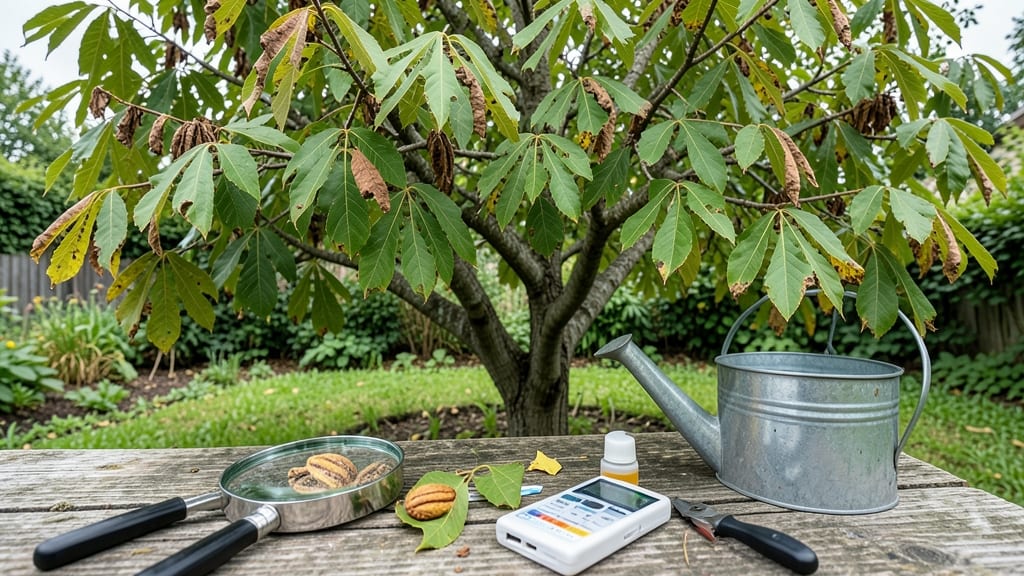
Pecan tree leaves turning brown? That crunchy, brittle look is often fungal blight—and I’ve saved my own trees from total collapse with these quick fixes. 🌳 The key is acting fast before the disease spreads to the nuts or weakens the tree permanently.
Most gardeners wait too long, assuming it’s just summer stress, but fungal blight thrives in warm, wet conditions.
First, identify the problem: if the brown spots are raised and crusty, it’s likely pecan scab. If the leaves look scorched and brittle, check for aphids or spider mites hiding on the undersides.
I’ve seen both issues ruin a harvest in just two weeks, so grab a magnifying glass and inspect closely—especially the new growth. The sooner you spot the culprit, the easier it is to stop it.
Prune out infected branches immediately (sterilize your tools with rubbing alcohol between cuts) and apply a fungicide like copper spray or neem oil. For pests, a strong spray of water or insecticidal soap does the trick.
Within 7-10 days, you’ll see new green growth pushing through, and the tree will start recovering. The secret? Consistency—keep monitoring and treating until the leaves stay vibrant.
Prevention is even easier: thin the canopy for better airflow, water at the base (not overhead), and mulch to keep the soil moist but not soggy. If the tree is young or the blight keeps coming back, call an arborist—sometimes the roots need help too.
Trust me, a little effort now saves a lot of heartache (and lost pecans) later.
Root Causes of Leaf Discoloration
Understanding why your pecan tree’s leaves are turning brown starts with identifying the primary stressors disrupting their health. Pecan trees (Carya illinoinensis) are resilient, but environmental, biological, and cultural factors can trigger premature leaf senescence (aging) or necrosis (cell death).
Below, we break down the most common culprits—each with a distinct "signature" that helps diagnose the issue.
---
Pecan trees thrive in hot, humid climates, but prolonged heatwaves (above 95°F/35°C) or water deficits force leaves into survival mode. When roots can’t supply enough moisture, leaves wilting and brown at the edges (a process called scorch).
- How it happens: - Stomatal closure: High temperatures cause leaf stomata (pores) to shut to conserve water, halting photosynthesis.
Without energy, cells die. - Oxidative damage: Sunlight + dehydration = reactive oxygen species (ROS), which "burn" chlorophyll (the green pigment) and replace it with brown necrotic tissue. - Soil moisture drop: Even well-watered trees suffer if roots can’t reach deep water (common in clay or compacted soils).
- What to watch for: - Symptoms: Crispy, papery edges (not fungal spots), wilting in heat, recovery after rain. - Actionable fix: Deep water 1–2 inches per week (check soil 3" down—it should be damp). Mulch (3–4" of wood chips) retains moisture and regulates soil temp.
---
Fungal pathogens like **anthracnose (Colletotrichum gloeosporioides), pecan scab (Cladosporium caryigenum), or powdery mildew (Oidium) thrive in wet, humid conditions (ideal for pecan trees!). These fungi clog stomata, block nutrient transport, and trigger brown, irregular patches with a velvety or powdery texture.
- How it happens: - Spores land on leaves → germinate in high humidity (>75% for 24+ hours) → penetrate leaf tissue → cut off water/nutrients → cells die. - Anthracnose causes sunken, dark brown lesions with yellow halos; scab creates raised, crusty spots. - Weakened trees (from drought/poor soil) are vulnerable.
- What to watch for: - Symptoms: Spots with fuzzy edges, black fruiting bodies (fungal "seeds"), or white powder (mildew).
Leaves may drop prematurely. - Actionable fix: - Prune infected branches (sterilize tools with 70% alcohol). - Fungicide spray (copper-based or propiconazole) before bud break (spring) and after rain. - Improve airflow: Thin canopy, remove debris, avoid overhead watering.
---
Pecan trees are a buffet for sap-feeding insects like aphids, spider mites, or pecan weevils. These pests inject toxins or stimulate fungal growth, causing leaves to yellow, curl, and brown from the edges inward.
- How it happens: - Aphids/mites: Pierce cells to siphon sap → leaves curl and dry out (like "burning" from the inside). - Weevils/borers: Larvae feed on foliage or bark → stunted growth, premature leaf drop. - Honeydew: Sticky residue from aphids attracts sooty mold (a black fungal film that blocks sunlight).
- What to watch for: - Symptoms: Sticky leaves, visible bugs, silver webbing (mites), holes in leaves. - Actionable fix: - Blast pests off with a strong water spray (early morning). - Neem oil or insecticidal soap (apply at dusk to avoid harming bees). - Beneficial insects: Release ladybugs or lacewings (natural predators).
---
Pecan trees need balanced nutrients, especially nitrogen (N), magnesium (Mg), and zinc (Zn). Deficiencies disrupt chlorophyll production, leading to interveinal browning (brown areas between leaf veins).
- How it happens: - Nitrogen (N) deficiency: Leaves yellow first, then brown (oldest leaves first). - Magnesium (Mg) deficiency: Brown patches between veins (like a "V" shape). - Zinc (Zn) deficiency: Small, distorted leaves with brown spots.
- What to watch for: - Symptoms: Uniform browning, stunted growth, poor nut production. - Actionable fix: - Soil test (send to a lab for pH and micronutrient levels). - Amend soil: Add compost (N), Epsom salt (Mg), or zinc sulfate (follow package rates). - Slow-release fertilizer in early spring (avoid over-fertilizing—it burns roots).
--- While drought stresses trees, excess water is just as deadly. Waterlogged roots can’t absorb oxygen, leading to root rot (Phytophthora) or nutrient lockout, causing leaves to yellow and brown as the tree gasps for air.
- How it happens: - Compacted/clay soil holds too much water → roots suffocate → leaf chlorosis (yellowing) → necrosis. - Fungal root rot** (e.g., Armillaria) spreads in soggy conditions, cutting off water transport.
- What to watch for: - Symptoms: Mushy brown leaves, moldy soil, roots with black, mushy spots. - Actionable fix: - Improve drainage: Add sand or perlite to heavy soil. - Raise planting bed if in a low spot. - Aerate roots with a garden fork (loosen soil 12" deep).
--- Pecan trees near industrial areas, highways, or over-fertilized lawns may suffer from air pollution (ozone, sulfur dioxide) or herbicide drift, causing brown, "bleached" patches on leaves.
- How it happens: - Ozone damage: Forms purple-brown stippling on upper leaf surfaces. - Herbicide drift: Bleached, crispy edges (common with 2,4-D or glyphosate). - Salt buildup: From de-icing salt or poor-quality water → leaf scorch.
- What to watch for: - Symptoms: Random brown spots, no fungal growth, symptoms on all plants nearby. - Actionable fix: - Move tree if pollution is chronic. - Flush soil with rainwater (avoid tap water high in chlorine/salt). - Use barrier sprays (like plant-based oils) if herbicide drift is suspected.
--- Pecan trees naturally shed older leaves in late summer/fall, but if young leaves are browning, it’s a sign of stress. However, senescent leaves (normal aging) turn brown from the edges inward, often on lower branches first.
- How it happens: - Leaf lifespan: Pecan leaves live 1–2 years; older ones recycle nutrients back to the tree. - Nutrient translocation: As the tree prepares for dormancy, chlorophyll breaks down → brown pigments (anthocyanins) appear.
- What to watch for: - Symptoms: Brown edges on oldest leaves, no wilting or spots, happens in late summer/fall. - Actionable fix: - No treatment needed—it
Revive Your Pecan Tree Now
Brown leaves on your pecan tree aren’t just an eyesore—they’re a sign your tree is crying out for help. But don’t panic! With the right approach, you can nurse it back to health and prevent future damage.
Below, we’ve broken down practical fixes for the most common causes of browning leaves, from fungal infections to environmental stress, plus prevention tips to keep your tree thriving.
---
If your pecan tree’s leaves are turning brown with black spots, yellowing, or a powdery coating, fungal blight is likely the culprit. These pathogens thrive in warm, humid conditions, so act fast!
#### 🔥 Step 1: Remove Infected Leaves & Debris - 🍳 Gather tools: Wear gloves and a mask.
Use pruning shears or a rake to collect all fallen leaves, twigs, and debris beneath the tree. - 👨🍳 Dispose properly: Place infected material in a sealed plastic bag and toss it in the trash (or burn it if local regulations allow). Never compost diseased plant matter—it spreads spores!
#### 🥘 Step 2: Apply Fungicide - 🔪 Choose the right treatment: - Copper fungicide (e.g., Bordeaux mixture) – Effective against bacterial and fungal blights. - Neem oil – A natural, organic option that disrupts fungal growth (mix 1 tbsp neem oil + 1 tsp mild soap per quart of water). - Systemic fungicides (like myclobutanil or propiconazole) – For severe infections (follow label instructions). - ⏰ Timing matters: Apply fungicide at the first sign of infection and repeat every 7–14 days during wet or humid periods.
#### 🌡️ Step 3: Improve Air Circulation Fungal spores love stagnant, damp air. Prune the tree to: - Remove crossing or crowded branches (aim for an open canopy). - Thin out dense foliage to let sunlight and air flow through. - 💡 Pro tip: Avoid pruning during wet weather—wait for a dry day to prevent spreading spores.
---
If browning leaves appear dry, crispy, or curled (without spots or mold), your tree may be struggling with heat, drought, or poor soil.
#### 💧 Step 1: Water Deeply & Consistently - 🍳 Check soil moisture: Stick your finger 2–3 inches deep into the soil.
If it’s dry, it’s time to water. - 👨🍳 Deep watering technique: - Water slowly (1–2 inches per week) to encourage deep root growth. - Use a soaker hose or drip irrigation to avoid wetting leaves (which can promote fungal growth). - ⏰ Best time: Water early morning to reduce evaporation and fungal risk.
#### 🥗 Step 2: Mulch & Protect Roots - 🔪 Apply 2–4 inches of mulch (wood chips, pine straw, or shredded bark) around the base of the tree, keeping it 6 inches away from the trunk. - 🌡️ Mulch benefits: - Retains moisture in the soil. - Regulates root temperature. - Blocks weeds that compete for nutrients.
#### 🎯 Step 3: Fertilize for Recovery Brown leaves can signal nutrient deficiencies (like nitrogen, potassium, or magnesium).
Test your soil (a $20 home kit works) and amend as needed: - 💡 Quick fixes: - Nitrogen deficiency? Use a balanced fertilizer (10-10-10) in early spring. - Potassium deficiency? Try wood ash (sprinkle lightly around the base) or a potassium sulfate supplement. - Magnesium deficiency? Apply Epsom salt (1 tbsp per gallon of water, sprayed on leaves).
---
If you spot tiny holes, webbing, or sap oozing on branches, pests like aphids, spider mites, or pecan weevils may be to blame.
#### 🔪 Step 1: Inspect & Identify Pests - 🍳 Look closely: Check undersides of leaves, buds, and new growth for: - Aphids (tiny green/black bugs clustered together). - Spider mites (fine webbing + speckled leaves). - Pecan weevils (adults are brown; larvae tunnel into nuts). - 👨🍳 Confirm with a magnifying glass if needed.
#### 🥘 Step 2: Treat Naturally or Chemically - 🌿 Natural remedies: - Neem oil spray (repeat every 5–7 days). - Insecticidal soap (mix 1 tbsp soap + 1 quart water; spray directly on pests). - Horticultural oil (drowns mites and eggs; apply in early spring before leaves emerge). - 🔥 Chemical control (if severe): - Imidacloprid (systemic insecticide) for weevils and borers. - Bifenthrin (for aphids and mites—use sparingly and follow label instructions).
#### ✨ Step 3: Prevent Future Outbreaks - 💡 Install sticky traps (for adult weevils) in late spring. - 🌡️ Encourage beneficial insects (ladybugs, lacewings) by planting marigolds or dill nearby. - 🎯 Remove fallen nuts (weevils lay eggs in them) and deep-till the soil in fall to disrupt pest cycles.
---
Once your pecan tree is back in shape, keep it healthy with these easy maintenance habits:
| Issue | Prevention Tip | |--------------------------|-----------------------------------------------------------------------------------| | Fungal diseases | Prune for airflow, avoid overhead watering, and apply copper fungicide in spring. | | Drought stress | Mulch heavily, water deeply, and plant drought-tolerant ground cover. | | Pest infestations | Monitor trees weekly, remove debris, and rotate natural sprays seasonally. | | Nutrient deficiencies| Test soil every 2–3 years and fertilize based on results. | | Environmental damage | Protect young trees from winter burn with burlap wraps in cold climates. |
--- 💡 Final Pro Tip: If browning persists even after treatment, consult a local arborist—your tree may need deeper soil aeration or root health assessment.
With these steps, your pecan tree should bounce back with vibrant green leaves in no time! 🌿🌱
Frequently asked questions
Why are my pecan tree leaves turning brown in patches but not all at once?
Patchy browning usually signals a fungal infection like pecan scab or anthracnose, which thrives in humid conditions. Look for raised crusty spots (scab) or sunken dark patches (anthracnose). These fungi attack specific leaves first, creating irregular patterns. Prune infected branches immediately and apply copper fungicide to stop spread.
Can I save my pecan tree if the brown leaves are crispy and curling?
Yes! Crispy, curling leaves often mean drought stress or pest damage. Water deeply 1-2 inches per week (check soil 3" down) and mulch with 2-4 inches of wood chips. For pests, blast leaves with water early morning or use neem oil. New growth should appear within 2-3 weeks if roots are healthy.
Is it too late to treat my pecan tree if the leaves are already mostly brown?
Not necessarily! If the tree still has some green leaves, it can recover. Focus on removing all brown leaves (they won't photosynthesize) and improving care. For severe cases, consult an arborist to check for root rot or deep fungal infections. Healthy new growth often emerges after pruning and proper watering.
Will brown pecan leaves affect next year's nut production?
It depends on the cause. Mild fungal infections or late-season browning (normal aging) won't hurt next year's crop, but severe pest damage or drought stress can weaken the tree. Healthy foliage is crucial for nut development, so address issues now. A well-cared-for tree typically produces 70-80% of normal yield even after recovery.
How do I tell if my pecan tree's brown leaves are from disease or just old age?
Old leaves brown naturally from the edges inward on lower branches in late summer/fall. Disease-caused browning appears randomly on all leaves, often with spots, powdery coatings, or webbing. Check for new growth—if young leaves are also browning, it's likely a problem needing treatment.