
Propagation
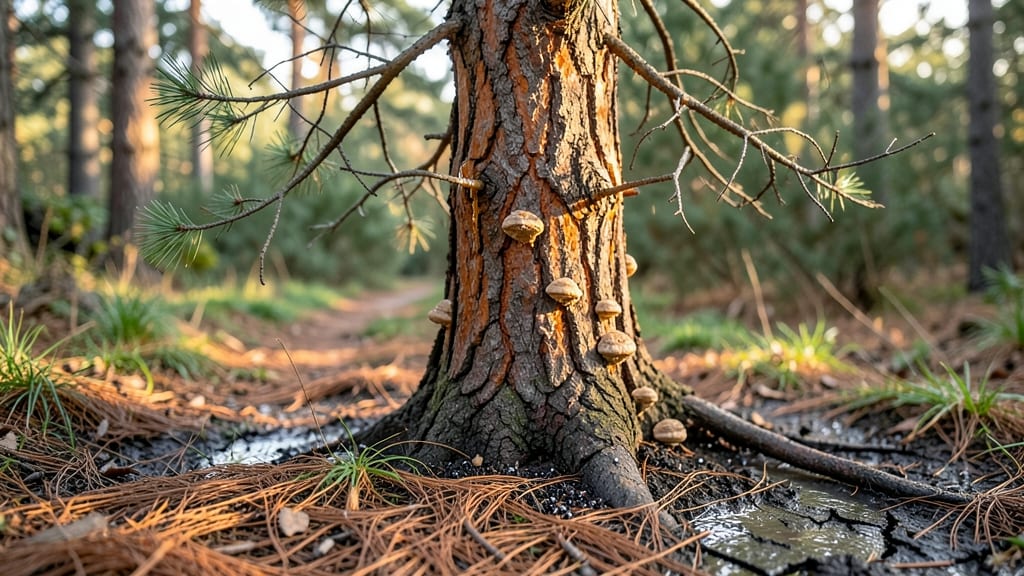
Your pine tree dying from the top down isn’t just sad—it’s a clear warning sign. 🌲 The most likely culprits are fusarium wilt or dothistroma needle blight, fungal infections that strangle needles from the top while roots stay stubbornly alive.
I’ve seen this pattern destroy healthy pines in just two growing seasons, and the fix starts with identifying the exact type of blight before it spreads to neighboring trees.
The telltale signs are needle discoloration (brown or purplish) starting at the tips, followed by branch dieback that works its way downward like a slow-motion avalanche. Unlike root rot, which kills from the bottom up, these fungal infections target the canopy first because that’s where spores land and multiply.
The good news? Early action—like pruning infected branches 6-12 inches below the damage—can stop the spread before the whole tree turns into a brown skeleton.
You’ll need to test soil moisture (too wet = fungal paradise) and inspect for pitch tubes (sign of bark beetles, which often hitch a ride with stressed trees). Once you confirm the blight, copper fungicides and proper spacing between trees become your best defense.
The key is acting before more than 30% of the canopy shows symptoms—after that, the tree’s often beyond saving, and removal becomes the only option.
This isn’t just about saving one tree—it’s about protecting your entire landscape. Fungal spores hitch rides on wind, tools, and even birds, so disinfect pruners with rubbing alcohol between cuts.
For stubborn cases, I’ve had success with mycorrhizal soil amendments to boost the tree’s natural defenses, though severe infections may require professional intervention. Let’s diagnose yours before it’s too late.
Root Causes Behind Top-Down Pine Decline
When your pine tree starts shedding needles from the top down, it’s rarely a coincidence—it’s a distress signal from deep within the tree’s system. Understanding the why behind this pattern is the first step toward saving your evergreen.
Below, we break down the most common culprits, backed by science and actionable insights to help you diagnose the issue accurately.
Fungi are the #1 reason pine trees exhibit top-down decline, and the most notorious offenders include pine needle cast, needle blight, and root rot. These pathogens thrive in moist, shaded conditions and spread via spores, often entering through damaged needles or bark.
- Pine Needle Cast (e.g., Lophodermium species) - How it works: Fungal spores overwinter on fallen needles, then infect new growth in spring.
Infected needles turn yellow, brown, or purple before dropping, starting at the top. - Red flags: Needles appear banded with dark brown lesions, and the tree loses its vibrant green hue. - Why top-down? Fungi spread more easily in the upper canopy where humidity and shade are higher, creating ideal conditions for spore germination.
- Needle Blight (e.g., Dothistroma septosporum) - How it works: This aggressive fungus clogs the tree’s vascular system, disrupting water and nutrient flow.
Infected needles develop red-brown bands and drop prematurely. - Red flags: Tiny black fruiting bodies (pycnidia) appear in needle lesions under magnification. - Why top-down? The fungus exploits the tree’s natural growth pattern, targeting new, less resistant needles first.
- Root Rot (e.g., Armillaria or Phytophthora) - How it works: Soil-borne fungi attack roots, cutting off water and nutrient uptake.
As the tree starves, it sheds needles from the top down—a classic symptom of systemic decline. - Red flags: Mushrooms at the base of the tree, mushy roots, or a foul odor near the trunk. - Why top-down? The tree prioritizes survival by shedding less critical (older) needles first, while new growth at the top is the most vulnerable to stress.
💡 Pro Tip: If you suspect fungal infection, collect a few infected needles in a plastic bag and take them to a local extension office for lab testing. Early diagnosis = faster treatment!
Pine trees are tough, but prolonged stress from their environment can trigger top-down decline. Think of it like a marathon runner hitting the wall—too much strain without recovery leads to collapse.
- Drought or Overwatering - How it works: Pines are adapted to dry conditions, but prolonged drought or waterlogged soil (from poor drainage or overzealous irrigation) both stress the root system. - Why top-down? The tree’s survival instinct kicks in, shedding needles to reduce water loss.
Overwatering, meanwhile, suffocates roots, leading to oxygen deprivation and needle drop. - Red flags: Needles turn yellow or brown uniformly, soil feels soggy, or the tree is in a low-lying area with poor drainage.
- Herbicide or Chemical Damage
- Why top-down? The upper canopy is the first to absorb airborne chemicals, while lower branches are shielded.
- Red flags: Needles show bleached or scorched tips, and damage appears sudden and widespread.
🌡️ Pro Tip: Mulch your pine tree with 3–4 inches of organic mulch (like pine bark) to regulate soil temperature and retain moisture. Keep mulch 6 inches away from the trunk to prevent rot.
Pests don’t just chew needles—they disrupt the tree’s entire physiology, often leading to top-down decline as the tree weakens.
- Pine Bark Beetles (e.g., Dendroctonus species) - How it works: These beetles bore into the phloem (the tree’s food-transport layer), blocking nutrient flow.
The tree responds by shedding needles to conserve energy. - Why top-down? Beetles often target the upper crown first, where bark is thinner and easier to penetrate. - Red flags: Sawdust-like frass at the base of the tree, boreholes in the bark, or a sudden yellowing of needles.
- Sawfly Larvae or Spider Mites - How it works: These pests defoliate the tree by feeding on needles, starting with the most accessible (top) foliage.
Severe defoliation stresses the tree, leading to decline. - Why top-down? Larvae and mites move upward as they mature, following the freshest growth. - Red flags: Visible webs, tiny eggs on needles, or a general "sandy" appearance on foliage.
🔥 Pro Tip: If you spot beetle activity, prune and destroy infested branches immediately. For mites, blast the tree with a strong hose stream to dislodge them before treating with horticultural oil.
Even the hardiest pines need the right balance of nutrients. A deficiency can manifest as top-down decline, especially if the tree can’t support new growth.
- Nitrogen Deficiency - How it works: Nitrogen is essential for chlorophyll production.
Without it, needles turn yellow (chlorotic) and drop, starting with the oldest (top) needles. - Why top-down? The tree prioritizes root and lower-branch growth, leaving the top foliage malnourished. - Red flags: Pale green or yellow needles, stunted new growth, and slow recovery after pruning.
- Magnesium or Potassium Deficiency - How it works: These minerals are critical for needle health and disease resistance.
A lack of magnesium causes interveinal chlorosis (yellowing between veins), while potassium deficiency leads to brown needle tips. - Why top-down? New needles are more demanding and show symptoms first. - Red flags: Yellowing between needle veins (magnesium) or crispy, dead tips (potassium).
💪 Pro Tip: Conduct a soil test before fertilizing! Pines prefer acidic soil (pH 4.5–6.0). If deficient, apply a slow-release, balanced fertilizer (e.g., 10-10-10) in early spring.
Sometimes, the cause is as simple as mechanical stress—whether from humans, animals, or nature itself.
- Wind or Hail Damage - How it works: Severe storms can tear needles or break branches, starting with the top-heavy canopy.
The tree then sheds damaged needles to redirect energy. - Why top-down? The upper branches take the brunt of wind and hail. - Red flags: Broken or torn needles, exposed wood, or a "broomstick" appearance in the crown.
- Improper Pruning
- Why top-down? Poor pruning cuts disrupt the tree’s apical dominance, causing new growth to sprout erratically and die back.
- Red flags: Ragged cuts, excessive stubs, or a "haircut" look to the canopy.
✨ Pro Tip: If pruning was the issue, avoid heavy cuts in late summer/fall (when the tree is already stressed). Instead, prune in late winter/early spring before new growth begins.
Revive Your Pine Tree Step by Step
Now that you’ve identified why your pine tree is dying from the top down, it’s time to take action! The good news? Many of these issues can be reversed with the right care.
Below, we’ve mapped out practical solutions tailored to the most common causes, along with prevention tips to keep your pine thriving for years.
If your pine is suffering from Diplodia tip blight or Sphaeropsis tip blight, act fast to stop the spread.
🔪 Step-by-Step Treatment:
- Prune Infected Branches Immediately
- Use sterilized pruning shears (wipe with rubbing alcohol between cuts).
- Cut 6–12 inches below the last visible signs of disease (healthy green needles).
- Dispose of infected branches in a sealed bag—do not compost them.
- Apply Fungicide
- Spray with a copper-based fungicide (like Copper Sulfate or Chlorothalonil) every 2–3 weeks during the growing season (spring to early fall).
- Follow label instructions for concentration and safety.
- Improve Air Circulation
- Thin out dense branches to allow sunlight and airflow.
- Avoid overwatering, which creates a damp environment fungi love.
💡 Prevention Tips:
✔ Water in the morning so foliage dries quickly. ✔ Space trees properly (at least 10–15 feet apart) to reduce humidity. ✔ Avoid overhead irrigation—use drip systems instead.
If pine bark beetles, sawflies, or spider mites are to blame, aggressive pest control is key.
🛡️ How to Remove Pests:
- Handpick Larvae (Beetles/Sawflies)
- Check under bark for small holes or sawdust-like frass.
- Remove infested branches and burn or bag them.
- Use Insecticidal Soap or Neem Oil
- Spray neem oil (mixed with water and a drop of dish soap) on both sides of needles for mites.
- For beetles, apply permethrin-based insecticide (follow label rates).
- Introduce Beneficial Predators
- Ladybugs and parasitic wasps eat mites and larvae—buy them from garden centers.
🎯 Long-Term Pest Prevention:
✔ Inspect trees monthly, especially in spring and summer. ✔ Keep trees healthy—stressed pines attract pests. ✔ Remove fallen needles/debris where pests hide.
If your pine is overwatered or underwatered, it’s time to reset its moisture balance.
🌡️ Fixing Water Issues:
- Check Soil Moisture
- Stick your finger 2–3 inches deep—if dry, water deeply. If soggy, stop watering immediately.
- Water Deeply but Infrequently
- Young pines: Water 1–2 times per week (1–2 inches per session).
- Mature pines: Water every 2–3 weeks (unless in extreme drought).
- Use a soaker hose to avoid wetting foliage.
- Improve Drainage
- If soil is clay-heavy, mix in compost or sand to aerate.
- Raise the root zone slightly with mulch (but keep mulch 3–4 inches away from the trunk).
💡 Smart Watering Tips:
🔥 Morning watering prevents fungal growth from evening dampness. 🌡️ Mulch heavily (3–4 inches of pine straw or wood chips) to retain moisture. ✨ Avoid compacted soil—walking on roots can suffocate them.
If sun scorch, windburn, or poor soil are the culprits, your pine needs protection and nourishment.
🏡 Creating the Right Conditions:
- Protect from Harsh Sun
- Install a light shade cloth (30–50%) if planting in full sun.
- Avoid transplant shock—water deeply before and after moving.
- Windbreak Solutions
- Plant taller shrubs or a fence on the windward side.
- Stake young pines if they’re bending excessively.
- Amend Poor Soil
- Test soil pH (pines prefer 5.0–7.0).
- Mix in acid-loving fertilizer (like pine-specific 10-10-10) in early spring.
🌿 Soil Health Boosters:
💪 Top-dress with compost annually in fall. 🍎 Avoid heavy nitrogen—it burns needles; opt for balanced fertilizers. 🎯 Mulch properly—keeps roots cool and moist.
If girdling roots, construction damage, or compacted soil are the issue, your pine needs root recovery care.
🔧 Reviving Damaged Roots:
- Stop Foot Traffic
- Mark a no-step zone around the tree (at least 3 feet from the trunk).
- Aerate Compacted Soil
- Use a manual soil aerator or rent a core aerator for large areas.
- Mix in coarse sand or perlite to improve drainage.
- Encourage New Root Growth
- Apply a mycorrhizal fungus (available at nurseries) to help roots absorb nutrients.
- Deep water once a month to encourage deep root development.
🌱 Root Health Prevention:
🔥 Plant at the right depth—never bury the root flare (where roots meet the trunk). 🌡️ Mulch correctly—too much mulch suffocates roots. ✨ Avoid heavy machinery near the tree base.
If your pine is severely infected, structurally unstable, or beyond DIY fixes, consult an arborist. They can:
- Perform high-pruning safely.
- Diagnose hidden diseases (like Armillaria root rot).
- Recommend tree removal if necessary (sad but sometimes needed).
Your pine can recover—just act quickly and stay consistent! With the right care, you’ll see new growth within 6–12 months. 🌲💪
Frequently asked questions
Why does my pine tree always die from the top down instead of the bottom?
This pattern happens because fungal infections like Dothistroma needle blight or pine needle cast target the upper canopy first. The top branches are more exposed to spores, creating ideal damp conditions for fungal growth. Additionally, new growth at the top is less resistant than older needles, making it the perfect entry point for pathogens.
How can I tell if my pine tree is suffering from a fungal infection versus environmental stress?
Look for specific symptoms: fungal infections show banded brown or purple needles with tiny black fruiting bodies (under magnification), while environmental stress causes uniform yellowing or browning. Check the soil—soggy conditions suggest root rot, while dry soil indicates drought stress. Fungal issues often appear in patches, while environmental stress affects the tree more evenly.
Is it safe to prune a pine tree with fungal infection?
Yes, but only with sterilized tools and proper technique. Cut 6-12 inches below the infected area using pruners wiped with rubbing alcohol. Never compost infected branches—seal them in a bag and dispose of them. Pruning helps remove the infection source while improving airflow to prevent further spread.
Can I save my pine tree if more than 50% of the canopy is dead?
At this stage, recovery is unlikely without professional intervention. If the root system is still healthy, an arborist might recommend selective pruning and fungicide treatment, but severe cases often require removal to prevent spore spread. Focus on preventing the issue in neighboring trees by improving spacing and airflow.
How often should I apply fungicide to protect my pine tree?
Apply copper-based fungicides every 2-3 weeks during the growing season (spring to early fall). For prevention, two applications—early spring and late summer—can help protect against fungal spores. Always follow label instructions for concentration and safety, especially when treating edible landscapes.