
Container Gardens
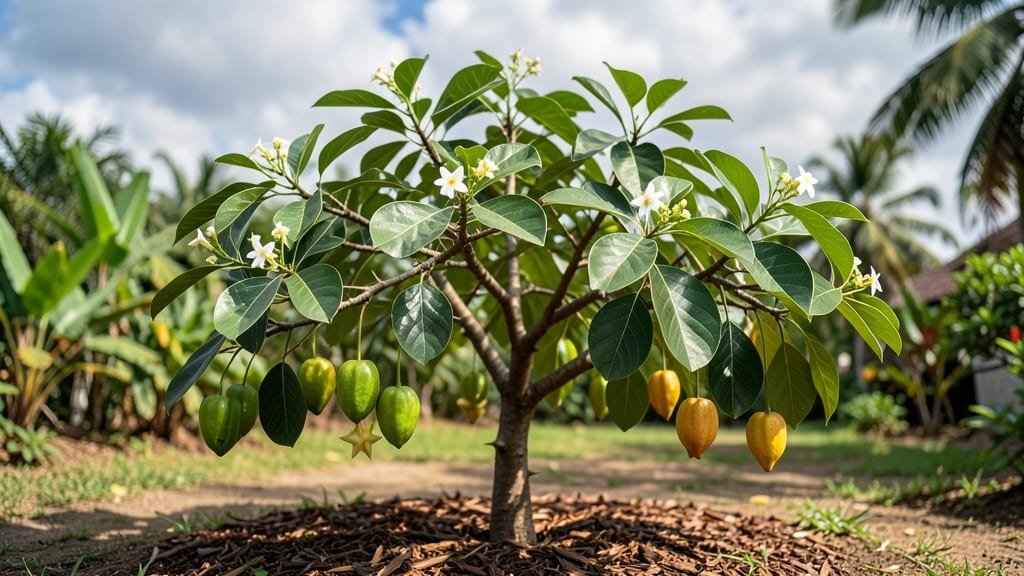
Star fruit trees thrive best in USDA growing zones 10 through 12, where they can enjoy warm temperatures year-round without frost damage. These tropical trees need consistent warmth above 30°F and full sun exposure for optimal fruit production.
Star fruit trees are tropical plants that struggle in cooler climates, which is why zones 10-12 provide their ideal environment. 🌴 The key factor isn't just heat—it's the absence of temperature drops below 30°F, which can cause irreversible damage to the leaves and branches.
Even brief cold snaps can stress the tree, reducing fruit yield or killing it entirely. If you're outside these zones, consider growing your star fruit in large containers that you can move indoors during winter months.
What makes these zones perfect is their combination of warmth and humidity, which mimics the tree's native habitat in Southeast Asia. The full sun requirement isn't just about light—it's about the intensity needed to power the tree's metabolic processes that produce those signature star-shaped fruits.
Without proper sunlight, you'll get leafy growth but minimal fruiting.
💡 In This Article
- Understanding Star Fruit Tree Climate Requirements
- Best Practices for Growing Star Fruit in Marginal Zones
Understanding star fruit tree climate requirements
The star fruit tree's tropical origins explain why it demands such specific climate conditions. Native to Southeast Asia, this tree evolved in regions where temperatures rarely drop below 60°F and humidity stays consistently high—conditions that trigger its metabolic processes for flowering and fruiting.
The tree's leaves contain a waxy cuticle that helps retain moisture, but this adaptation makes it highly sensitive to cold. When temperatures fall below 30°F, ice crystals form in the plant cells, rupturing them and causing irreversible damage known as "cold injury."
This is why even a single night below 30°F can kill a mature star fruit tree.
What's fascinating about star fruit trees is their photoperiod sensitivity—they require 12+ hours of direct sunlight daily to produce fruit. In zones 10-12, the year-round sunshine provides this consistent light exposure, while the warm nights (typically 65-85°F) prevent metabolic stress.
The tree's roots also need well-draining soil to prevent waterlogging, which can occur in cooler zones with heavier rainfall patterns. In its native habitat, the tree grows in volcanic soil with excellent drainage, mimicking the loose, aerated conditions needed for optimal root health.
Here's what happens when you push the tree's limits: In zone 9, where winter lows can reach 25°F, star fruit trees may survive one winter if properly protected, but they'll experience reduced flowering the following season due to cold stress.
The tree's growth cycle becomes disrupted because the cold triggers a form of dormancy similar to temperate fruit trees, but star fruit trees aren't adapted to recover from this state. 🌡️ The key difference is that temperate fruit trees have evolved to handle seasonal dormancy, while star fruit trees remain in active growth mode year-round in their native climate.
Another critical factor is humidity. Star fruit trees thrive in environments with 60-80% relative humidity, which helps prevent leaf scorch—a common problem in drier climates. In zones 10-12, coastal areas naturally provide this humidity, while inland regions may require supplemental misting during dry periods.
The tree's large, glossy leaves are adapted to high humidity, and when exposed to dry air, they can develop brown edges—a clear sign of environmental stress that directly impacts fruit production.
For those curious about the tree's growth rate, star fruit trees grow about 1-2 feet per year in ideal conditions, reaching maturity (and fruit production) in 3-5 years.
This slower growth rate is another clue to its tropical nature—faster-growing trees often have adaptations for seasonal changes that star fruit lacks.
The tree's wood is relatively soft compared to temperate fruit trees, making it more vulnerable to wind damage in exposed locations, which is why windbreaks are essential in marginal zones.
Understanding these climate requirements helps explain why star fruit trees are rarely found outside zones 10-12. The combination of frost sensitivity, humidity needs, and sunlight requirements creates a very specific growing window that's difficult to replicate in cooler climates.
However, with the right adaptations (like container growing or indoor cultivation), you can still enjoy this tropical fruit—we'll explore those solutions in the next section. 🌿