
Pruning
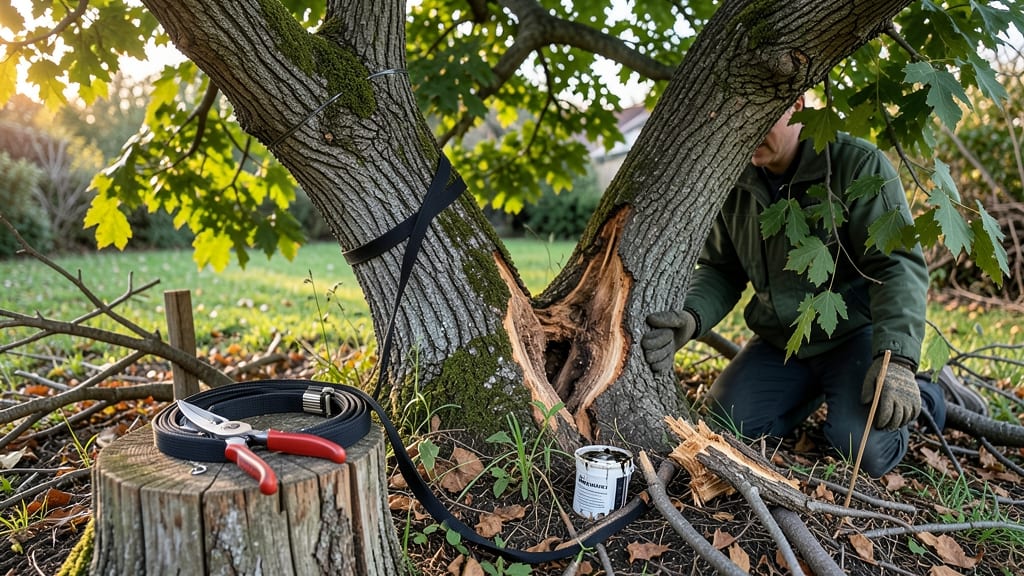
A tree broke in half? Don’t panic—this is fixable. ✂️ The first 48 hours are critical for saving what’s left, and the right cuts can mean the difference between a lost tree and one that recovers with proper care.
I’ve nursed back more broken trees than I’d like to admit, and the key is acting fast while assessing the damage carefully.
Start by evaluating the break: Is the tree still attached at the base? Are the ends still alive? If the trunk is split but not severed, you might be able to save it with strategic pruning and support.
The worst mistake? Making hasty cuts that weaken the tree further. Instead, focus on removing only the damaged wood while preserving the healthy structure—think of it like splinting a broken bone.
With the right technique, your tree can bounce back stronger than ever. You’ll see new growth within weeks if the roots and cambium layer are intact, and proper bracing (like cables or stakes) gives it the stability it needs to heal.
The best time to act is right after the break—spring or early summer gives the tree the longest growing season to recover.
Not all trees make it, but many do with quick action. If the damage is severe (like a complete split at the base), removal might be the only option—but don’t assume that yet. Let’s walk through the steps to give your tree the best shot at survival.
What Weakens Tree Structure
When a tree snaps in half, it’s rarely a random act of nature—it’s usually the result of years of hidden stress. Understanding the root causes (literally and figuratively) can help you prevent future damage in your own trees. Let’s break down the science behind why trees lose their structural integrity.
High winds, storms, and even heavy snow loads can exert immense pressure on a tree’s trunk and branches. But why does this lead to a clean break rather than just bending?
Trees are designed to flex, but when the wind speed exceeds their critical load capacity—typically around 40–60 mph for mature trees—they snap like a twig. Here’s how it happens:
- Leverage effect: Long, heavy branches act like levers. A strong gust can create a torque force that exceeds the trunk’s ability to resist bending. Think of a broomstick snapping when you twist it too hard.
- Decay and rot: If the tree already has internal rot (often from past wounds or fungal infections), the weakened core can’t handle wind stress. A healthy tree might bend; a compromised one splits.
- Shallow root systems: Trees with roots confined to a small soil volume (common in urban areas or after construction) have poor anchorage. Even moderate winds can topple or break them.
Actionable tip: 🌡️ If your tree has a codominant stem (two main trunks growing together), it’s especially vulnerable to wind damage. Prune competing leaders early to strengthen the structure.
Not all trees are built to last. Some species and growth patterns are inherently unstable, making them prone to structural failure. Here’s what puts them at risk:
| Weak Growth Feature | Why It Fails | Fix or Prevent |
|---|---|---|
| 🌿 Co-dominant stems (two main trunks) | Competing leaders create weak crotches where branches meet the trunk, acting like a "V" under stress. | Prune one leader early to encourage a single strong trunk. |
| 🍃 Wide crotch angles (>45°) | Branches growing at sharp angles have poor attachment and are more likely to tear out or snap. | Avoid topping trees—it encourages weak, wide-angle regrowth. |
| 🪵 Included bark (bark trapped between branch and trunk) | td>Trapped bark restricts nutrient flow and creates pressure points, leading to cracks or splits.Remove branches with included bark during pruning to prevent future rot. |
Pro tip: 🔥 Fast-growing trees (like willows or poplars) often have weak wood. If you’re planting for longevity, opt for slower-growing species like oaks or maples.
Fungal infections, bacterial rot, and pests can hollow out a tree from the inside, turning it into a structural time bomb. Here’s how decay accelerates failure:
- Heart rot: Fungi like Fomes fomentarius (the "hoof fungus") break down the tree’s core, leaving a hollow shell. The outer bark may look fine, but the trunk can shatter under minimal stress.
- Water sprouts and wounds: Every cut, storm damage, or broken branch creates an entry point for pathogens. Over time, these wounds expand into decay columns that weaken the trunk.
- Root rot: Fungal infections (e.g., Armillaria) attack roots, reducing stability. A tree with 30% root loss can break in half during a single strong gust.
Warning sign: 💡 If you see conks (shelf fungi) on the trunk or base, the tree is likely beyond saving. Remove it before it becomes a hazard.
Urban trees face relentless pressure from human activity. Soil compaction, buried utilities, and poor planting techniques can turn a healthy tree into a liability. Here’s how:
- Soil compaction: Heavy foot traffic, vehicles, or construction equipment compresses soil, reducing oxygen and water availability. Roots suffocate, leading to shallow, weak growth.
- Buried roots: Trenches, sidewalks, or underground pipes can sever or strangle roots, disrupting the tree’s anchor.
- Improper pruning: Topping (cutting branches back to stubs) creates water sprouts, which are weak and prone to splitting.
Actionable fix: ✨ If you’re planting near a sidewalk, use root-directed pruning (trimming roots before backfilling) to encourage deeper growth.
Next up: How to Assess and Repair a Broken Tree—because knowing the cause is only half the battle.
Fixing a Snapped Tree Safely
When a tree breaks in half, the first priority is safety—for you, your property, and any nearby structures. But don’t panic! With the right approach, you can stabilize the tree, assess the damage, and even restore its health.
Below, we break down solutions based on the root cause of the snap, along with prevention tips to keep your tree standing strong for years to come.
---
🔧 Fix: Cabling & Bracing A tree with soft, decayed wood or a weak branch collar may need supportive cabling to prevent further splitting. Here’s how:
1. 🔍 Inspect the Damage - Check for mushrooms at the base, hollow sections, or a sweet, musty smell—signs of rot. - If the break is clean and jagged, the wood may have snapped due to structural weakness.
2. 🛠️ Install Support Cables (DIY-Friendly Steps) - Use steel cables (¼-inch diameter) and through-bolts (for larger trees). - Attach cables to healthy branches or sturdy stakes on either side of the break. - ⚠️ Warning: If you’re not experienced, hire an ISA-certified arborist—improper cabling can cause more harm.
3. 🌱 Promote Healing - Prune dead or hanging branches to reduce weight. - Apply wound dressing (optional)—modern arborists debate this, but a thin layer of tree sealant can help prevent pests. - 💡 Pro Tip: If the tree is non-salvageable, removal may be safer than long-term cabling.
---
🛡️ Fix: Emergency Stabilization & Long-Term Support Storms leave trees leaning, split, or uprooted. Act fast to prevent further damage.
1. 🚨 Immediate Steps (Safety First!) - Clear the area—hanging branches can fall unexpectedly. - If the tree is still attached but unstable, tie it to a sturdy anchor (like a metal post or another tree) with strong rope or cable. - ⏰ Time-Sensitive: If the tree is blocking a road or power line, call professionals immediately.
2. 🌿 Long-Term Solutions - For minor splits: Use tree repair clips (like the TRO system) to hold the break together while the tree heals. - For severe leans: Guylines (cables anchored into the ground) can help gradually straighten the tree over time. - 💡 Pro Tip: If the root flare is exposed, the tree may not recover—consider removal.
---
✂️ Fix: Proper Pruning & Structural Adjustments Over-pruning or top-heavy growth (like too many large branches) weakens a tree’s ability to handle stress.
1. 🌿 Corrective Pruning Techniques - Remove competing leaders (competing upright branches) to reduce weight stress. - Thin out dense foliage to improve airflow and distribute weight evenly. - 🔪 Cut at the branch collar (the swollen base where the branch meets the trunk) to prevent wounds.
2. 🌱 Encourage Stronger Growth - Fertilize (if soil tests show deficiency) to boost structural strength. - Mulch properly (2-4 inches deep, not touching the trunk) to support root health. - 💡 Pro Tip: If the tree is young, stake it temporarily (for 6-12 months) to prevent wind damage.
---
Some situations require professional help—don’t risk DIY mistakes: - 🌪️ The tree is a hazard (leaning toward a house, power lines, or a busy street). - 🍄 Extensive rot or pest damage (like termites or woodpecker holes). - 🪓 The break is too large (over 50% of the trunk’s diameter). - 🌳 The tree is a valued specimen (like an old oak or maple)—professionals can maximize its lifespan.
--- Even after repairs, proactive care prevents future snaps: ✅ 🌱 Plant the right tree in the right place—avoid fast-growing, weak-wooded species (like willows) near structures. ✅ 💧 Water deeply but infrequently—drought-stressed trees split easier. ✅ 🌿 Mulch & aerate—healthy roots = stronger support. ✅ 🪓 Prune correctly—never remove more than 25% of foliage in one season. ✅ 🌪️ Prepare for storms—tie young trees to stakes and remove dead branches before hurricane season.
--- Final Thought: A snapped tree isn’t always a death sentence—with the right repair, support, and care, many can recover and thrive. But act fast, assess honestly, and don’t hesitate to call an expert when needed. Your tree (and your property) will thank you! 🌳💪
Frequently asked questions
Can a tree with a broken trunk still survive?
It depends on the severity and location of the break. If the tree is still attached at the base and the cambium layer (the growth layer under the bark) remains intact, there’s a good chance it can recover. The key is to act fast—within 24-48 hours—to stabilize the break and prevent further damage. Trees with clean breaks often heal better than those with jagged tears.
How do I know if my tree needs professional help?
Call an arborist if the break is over 50% of the trunk’s diameter, the tree is leaning dangerously toward structures, or you see signs of rot or pest damage (like mushrooms at the base or woodpecker holes). Also seek professional help if the tree is a large specimen (like an oak or maple) or if you’re unsure about DIY cabling techniques—improper repairs can cause more harm.
What’s the best way to temporarily stabilize a broken tree?
Use tree repair clips (like the TRO system) or steel cables to hold the break together while the tree heals. For smaller trees, tie them to a sturdy stake with non-elastic rope to prevent movement. Avoid using nails or excessive weight—these can crush the bark and slow recovery. Always prune away any dead or hanging branches to reduce stress on the remaining structure.
Will a broken tree grow back together?
Trees don’t "glue" back together like bones, but they can form a callus tissue over the break to seal the wound. With proper care—like cabling, pruning, and avoiding stress—the tree may eventually grow new branches from the healthy parts of the trunk. The best candidates for recovery are young, healthy trees with strong root systems and minimal rot.
When is the best time of year to repair a broken tree?
Spring or early summer is ideal because the tree is entering its active growing season, which helps it heal faster. Avoid repairing in late fall or winter when the tree is dormant. If you must act in winter, focus on stabilizing the tree and wait until spring to assess recovery potential. Never prune or make major repairs during extreme weather conditions.