
Trees
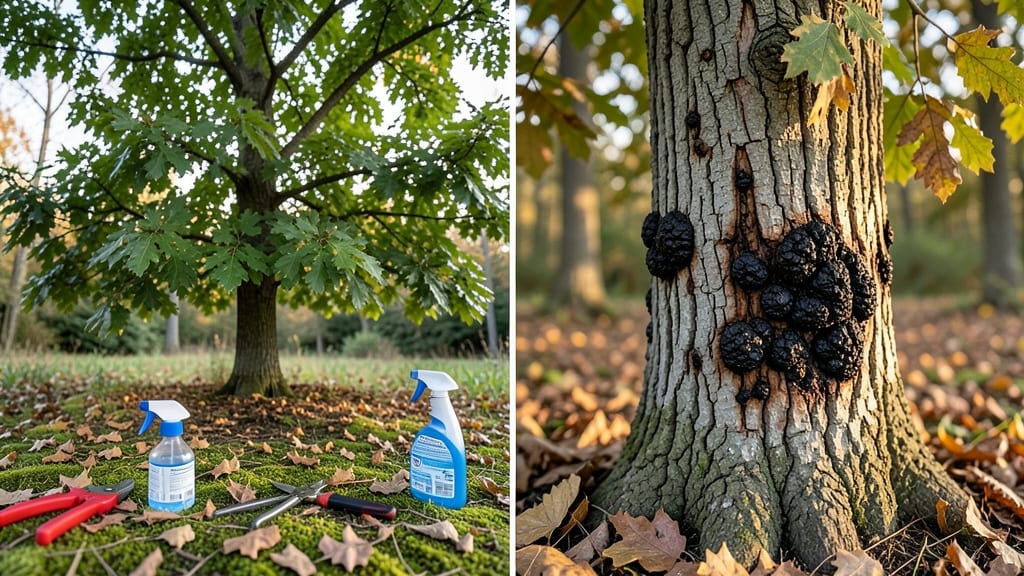
Your tree’s sudden yellow leaves or oozing bark might not be just age—it’s a tree infection fungus fighting for survival. 🌳 I’ve watched anthracnose turn healthy oaks into skeletal shadows and root rot silence my favorite maple, but there’s hope with early action.
The key is spotting the warning signs before the fungus spreads beyond saving.
Fungal infections thrive when trees are stressed—think poor drainage, crowded roots, or weak branches from drought. Powdery mildew leaves white dust on leaves, while root rot creates mushrooms at the base or wilting despite wet soil.
The good news? Organic fixes like pruning infected limbs, applying copper fungicide, and improving airflow can stop the spread.
With the right mix of prevention and treatment, you’ll see fresh green growth within weeks. Start by removing infected debris, spacing trees properly, and watering at the base—not overhead. For stubborn cases, a baking soda spray (1 tablespoon per gallon of water) tackles mildew while keeping your yard chemical-free.
This works for both young saplings and mature giants, but act fast—fungus doubles its damage every season. Your tree’s future depends on catching it now, before the roots or canopy give up. Let’s save it before it’s too late.
Underlying Causes Of Tree Fungus Spread
Fungal infections in trees don’t happen by chance—they thrive because of specific conditions and vulnerabilities. Understanding these root causes helps you spot risks early and take preventative action. Here’s why tree infection fungus becomes a problem in the first place.
Trees rely on a strong immune system to fight off pathogens, but stress weakens their natural resistance. When trees are under pressure, fungal spores find it easier to invade and establish infections.
- Environmental Stress: Drought, extreme heat, or flooding disrupts a tree’s ability to produce protective compounds. Example: Oak wilt fungus spreads rapidly in drought-stressed red oaks because their vascular system struggles to transport water and nutrients, leaving them vulnerable.
- Poor Soil Health: Compacted, nutrient-deficient, or overly wet soil starves trees of essential minerals like nitrogen and phosphorus. Result: Weak roots can’t support the tree’s immune response, making it an easy target for fungi like Armillaria (honey fungus).
- Physical Damage: Wounds from storms, construction, or improper pruning create entry points. Fun Fact: Fungi like Cryphonectria parasitica (chestnut blight) exploit fresh cuts to infect cambium layers, which are critical for growth.
Actionable Tip: 💡 Mulch properly (2–4 inches deep, 6 inches away from the trunk) to protect roots and retain moisture without suffocating the tree. Water deeply during droughts to reduce stress.
Fungi don’t just appear—they spread via spores, which are everywhere but only become problematic when conditions align. Trees in high-risk areas or near infected hosts are especially susceptible.
- Spores in the Air or Soil: Many fungi (e.g., Phytophthora) produce microscopic spores that travel via wind, water, or even tools. Example: Sudden oak death spores hitchhike on garden hoses or shoes, infecting healthy trees in coastal regions.
- Infected Hosts Nearby: Dead or dying trees, stumps, or plant debris act as reservoirs. Case Study: Heterobasidion annosum (annosum root rot) spreads from infected stumps to nearby conifers for decades.
- Overcrowded Plantings: Poor airflow and humidity build-up in dense tree groupings create ideal fungal incubation chambers. Think: Maple trees in tight clusters are prone to Anthracnose due to prolonged leaf wetness.
Pro Tip: ✨ Remove fallen leaves, branches, or stumps within 50 feet of healthy trees to break the spore cycle. Space out plantings to improve airflow.
Fungi are opportunistic—they wait for the perfect storm of moisture, temperature, and organic matter to multiply. Even healthy trees can succumb if these factors align.
| Factor | Fungal Trigger | Examples |
|---|---|---|
| Moisture | Prolonged wetness softens bark and washes away protective waxes. | Cercospora (leaf spot fungi) thrives in 12+ hours of leaf wetness. |
| Temperature | Most fungi prefer 60–85°F (15–30°C), with some needing cooler nights. | Valsa canker (apple/pear trees) spreads fastest at 70°F (21°C). |
| Organic Debris | Decaying wood or mulch provides food and shelter for fungal mycelium. | Armillaria grows underground in rotting roots, then attacks living trees. |
Key Insight: 🌡️ Fungi like Botryosphaeria (dieback disease) exploit summer droughts followed by sudden rains—prune in dry weather to avoid opening wounds during high-risk periods.
By addressing these three core causes—weakened defenses, spore exposure, and favorable conditions—you can disrupt the cycle before fungus takes hold. Next, we’ll cover how to detect these early warning signs in your trees.
How to Treat and Prevent Tree Fungus
Fungal infections can weaken or even kill your trees if left unchecked, but with the right approach, you can restore their health and prevent future outbreaks. Below are practical, organic solutions tailored to common causes of tree fungus, along with prevention tips to keep your trees thriving.
Problem: Excess moisture creates the perfect breeding ground for fungi like root rot or Armillaria (honey fungus).
Solution: ✅ 🔥 Improve Soil Drainage
- Amend heavy clay soil with compost, sand, or perlite to loosen it.
- Avoid compacting soil around the base—keep it aerated.
✅ 🍳 Adjust Watering Habits
- Water deeply but less frequently (1–2 times per week, depending on climate).
- Use drip irrigation or soaker hoses to deliver water at the roots, not the leaves.
✅ 👨🍳 Raise the Soil Level (If Needed)
- For trees in low-lying areas, create a berm (raised mound) around the trunk to improve drainage.
💡 Pro Tip: Mulch with wood chips (3–4 inches deep) to retain moisture without suffocating roots—just keep mulch 6 inches away from the trunk.
Problem: Stress from pests, drought, or poor nutrition makes trees vulnerable to fungal attacks.
Solution: ✅ 💪 Strengthen with Organic Fertilizers
- Apply a balanced organic fertilizer (like fish emulsion or compost tea) in early spring.
- For nitrogen-deficient trees, use alfalfa meal or blood meal to promote leafy growth.
✅ 🌡️ Prune for Better Airflow
- Remove dead, diseased, or crossing branches to improve circulation.
- Sterilize pruning tools with rubbing alcohol between cuts to prevent spreading spores.
✅ 🎯 Introduce Beneficial Microbes
- Use mycorrhizal fungi (available as powder or granules) to enhance root health.
- Bacillus subtilis (a beneficial bacteria) can outcompete harmful fungi in the soil.
💡 Pro Tip: Avoid over-fertilizing—too much nitrogen can attract pests that stress trees further.
Problem: Spots, cankers, or mushrooms at the base signal an active infection.
Solution: ✅ 🔪 Remove Infected Areas
- For cankers or dead branches, cut 6 inches below the affected area at a 45° angle.
- Burn or bag infected debris—do not compost it.
✅ 🥘 Apply Organic Fungicides
- Neem oil (1–2% solution) – Spray on leaves and trunk to disrupt fungal growth.
- Copper fungicide (like Bordeaux mixture) – Effective against blights and rusts.
- Potassium bicarbonate – A gentle, OMRI-listed option for leaf spots.
✅ ⏰ Monitor and Repeat
- Reapply treatments every 7–14 days during wet seasons.
- Check for re-infection signs (new spots, wilting) and adjust as needed.
💡 Pro Tip: Apply fungicides in the early morning or evening to avoid burning leaves in direct sunlight.
Problem: Fungus thrives where trees are neglected. Stop it before it starts!
Solution: ✅ 🌿 Choose Resistant Tree Species
- Opt for native or disease-resistant varieties (e.g., oak hybrids, disease-free maple saplings).
- Avoid planting susceptible species (like willows or elms) in high-moisture areas.
✅ 🚫 Avoid Soil Compaction
- Use permeable mulch (like straw or pine needles) and avoid heavy foot traffic near roots.
✅ 🌧️ Improve Site Conditions
- Plant trees in well-draining locations—avoid depressions where water pools.
- Raise beds for container-grown trees if your yard floods easily.
✅ ✨ Year-Round Vigilance
- Inspect trees quarterly for early signs (discoloration, oozing sap, mushrooms).
- Clean up fallen leaves/debris—fungi often overwinter in organic matter.
💡 Pro Tip: If you’re unsure about a diagnosis, send a sample to a local extension service for testing—many offer free or low-cost analysis.
Final Note: Most tree fungi can be managed without chemicals if caught early. Act fast, stay consistent, and prioritize tree health—your trees will thank you with years of lush, disease-free growth! 🌳💚
Frequently asked questions
What are the first signs my tree might have a fungal infection?
Watch for yellowing leaves that don’t fall naturally, dark spots or lesions on bark, or white powdery coatings on foliage. Mushrooms growing at the tree base or oozing sap from cracks are red flags too. Check both leaves and trunk—fungus often shows up in both places.
Can I save a tree with advanced fungal rot?
It depends on the fungus and how long it’s been spreading. For root rot, removing infected roots and improving drainage might help young trees, but mature trees with honey fungus (Armillaria) often need removal. Always consult an arborist first—they can assess whether pruning or soil treatment could work.
How often should I spray fungicide on my trees?
Apply organic fungicides like neem oil or copper spray every 7–14 days during wet seasons (spring/fall). For prevention, 2–3 treatments per season works well. Always spray in the early morning or evening to avoid leaf burn from sunlight.
Will pruning my tree help prevent fungus?
Yes! Prune to remove dead/diseased branches (cut 6 inches below infected areas) and improve airflow between branches. Sterilize tools between cuts with rubbing alcohol to prevent spreading spores. The best time to prune is during dry weather—never when leaves are wet.
Can I use household items to treat tree fungus?
Mix 1 tablespoon baking soda + 1 teaspoon dish soap + 1 gallon water for a mild fungicide that works on powdery mildew. For root rot, try hydrogen peroxide (3%) diluted to 10% strength and poured around the base. Both are safe, organic options that disrupt fungal growth.