
Lawn
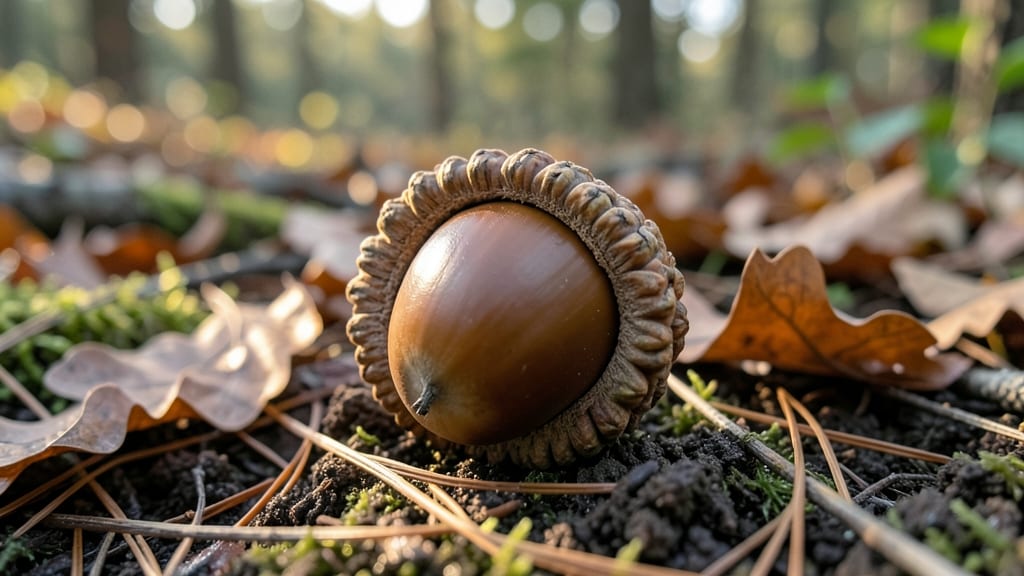
An oak tree seed, called an acorn, typically looks like a small, hard-shelled nut with a rounded or elongated shape, capped by a scaly cup (cupule) that encases the nut. Its size varies by species, often ranging from pea-sized to over an inch long, with a glossy brown shell and a single seed inside.
Oak tree seeds, or acorns, are instantly recognizable by their distinctive cupule—that fuzzy or scaly cap that hugs the nut like a protective helmet. 🌰 The cupule's shape and texture (smooth in white oaks, spiky in red oaks) are your first clues to species identification.
Inside, the nut itself is usually oval or egg-shaped, with a smooth, hard shell that can feel almost marble-like when mature. What's fascinating is how this simple structure holds the key to an oak tree's future—those tiny seeds pack all the genetic blueprint for a future forest giant.
The size difference between species is striking: white oak acorns are often larger and more rounded, while red oak acorns tend to be smaller and more elongated. This variation isn't just for show—it reflects how each oak species has adapted to thrive in different environments.
For example, white oak acorns take two years to mature, while red oak acorns mature in just one season. Understanding these differences helps gardeners and wildlife enthusiasts properly identify and care for these seeds.
💡 In This Article
- Acorn Structure: Cupule, Shell, and Seed Breakdown
- Identifying Oak Tree Seeds by Species and Region
Acorn structure: cupule, shell, and seed breakdown
The acorn's protective cupule is a marvel of botanical engineering, designed to shield the seed from predators and harsh conditions.
This cup-like structure varies dramatically between species—white oaks like the Quercus alba produce cupules with smooth, bowl-like scales that cling tightly to the nut, while red oaks such as Quercus rubra have spiky, more open cupules that resemble a fuzzy, starburst shape.
The cupule's texture isn't just for show; it influences how animals interact with the acorn. Smooth cupules deter squirrels, while spiky ones often attract birds that help disperse seeds. 🌱
The nut itself is a masterpiece of evolutionary adaptation, featuring a hard, glossy shell that ranges from 0.5 to 1.5 inches in length, depending on the species. This shell isn't just protective—it's also a moisture barrier that prevents the seed inside from drying out.
The shell's hardness varies too: white oak shells are notably thicker and denser, while red oak shells are thinner and more brittle. Inside, the single seed contains everything needed for germination: an embryo, stored nutrients, and a protective seed coat that regulates water uptake.
This seed-to-shell ratio is why some acorns (like white oak's) take two years to mature—they need extra time to develop a robust seed.
What truly sets acorns apart is their germination trigger: a process called stratification. Most oak seeds require cold, moist conditions to break dormancy, mimicking winter's natural cycle. This is why acorns collected in fall often need 60-90 days of cold stratification (like refrigeration) before they'll sprout.
The seed's outer layers contain inhibitors that only break down after this cold exposure, ensuring the tree grows when environmental conditions are optimal. This built-in delay is nature's way of timing growth with spring's arrival. 🌿
Here's where things get fascinating: the acorn's shape isn't random. White oak acorns are typically more rounded and symmetrical, while red oak acorns are more elongated and tapered.
This difference reflects how each species disperses seeds—white oaks rely on gravity and animals, while red oaks often use wind dispersal through their lighter, more aerodynamic cupules. Even the acorn's color plays a role: darker acorns absorb more heat, potentially speeding up germination in warmer microclimates.
Consider this comparison: a white oak acorn might weigh 0.2 to 0.5 grams with a cupule that's 10-20% of the total weight, while a red oak acorn could be half that weight with a cupule making up 30-40% of the total.
These proportions affect how the acorn moves through ecosystems—heavier acorns fall closer to the parent tree, while lighter ones travel farther. This structural diversity is why oak forests maintain such complex biodiversity: different species create different microhabitats for wildlife.
The seed inside is where the real magic happens. It's not just a tiny plant—it's a genetic blueprint packed with nutrients to fuel early growth.
The seed's size relative to the nut varies too: white oak seeds occupy about 60-70% of the nut's volume, while red oak seeds take up 50-60%. This difference explains why white oak seedlings grow more slowly but live centuries longer than their red oak counterparts.
The seed's position within the nut is also critical—it's always attached to the nut's base, ensuring proper orientation when germination begins. 🌳