
Watering
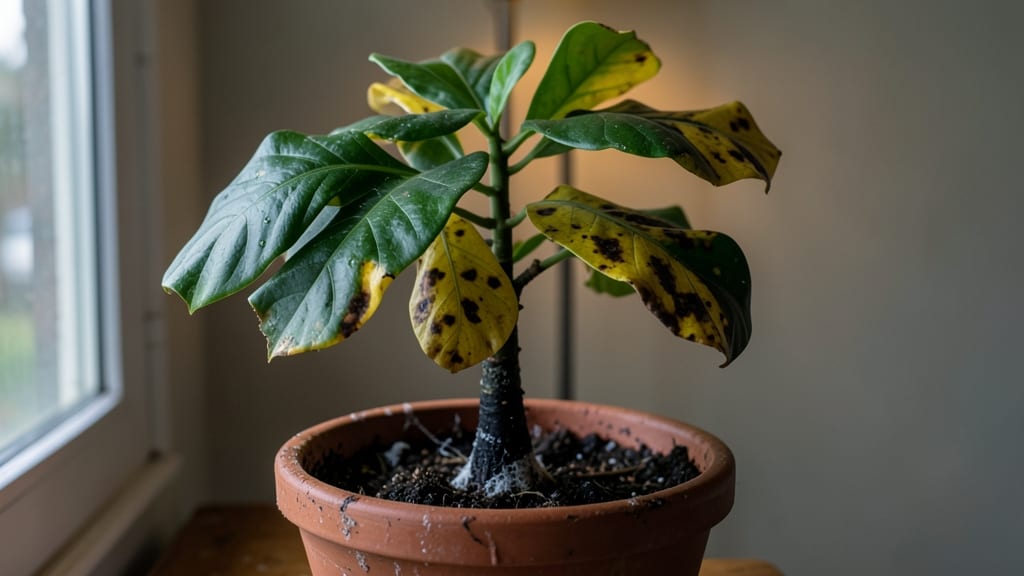
What does an overwatered ficus tree look like?
It screams for help with yellow leaves that start at the tips and spread inward—like someone drew a sad, droopy mustache on your plant. 🌿 I’ve seen this mistake turn lush, glossy foliage into a soggy mess in just two weeks, and the first sign is always those telltale yellow patches paired with stems that flop like overcooked noodles.
The real giveaway? Soil that smells like a swamp and stays clumpy even when you squeeze it. Roots rot faster than you’d think, turning brown and mushy where they should be firm and white.
This is your ficus begging for a break—it’s not a thirsty plant, it’s drowning in well-intentioned watering. What you’ll notice next is leaves that crunch when you touch them (a sure sign of cell damage) and new growth that looks stunted or curled.
The good news? Ficus trees are tough—they bounce back fast once you let the soil dry out between waterings. Just imagine that mustache fading away as the roots breathe again. This isn’t just about fixing the look—it’s about saving your plant from the silent killer of indoor gardens.
Let’s turn those sad stems into strong, upright branches again.
Root Causes Of Overwatering Ficus
Overwatering your Ficus tree isn’t just about pouring too much water—it’s a chain reaction triggered by environmental and care-related factors. Understanding these causes helps you fix the problem before it’s too late. Let’s break down the science behind why your tree might be drowning in its own pot.
Ficus trees thrive in well-draining soil, but when drainage fails, water pools at the roots instead of draining away. This creates a suffocating environment where roots can’t access oxygen, leading to anaerobic conditions—a fancy term for "no air." Without oxygen, roots suffocate, weaken, and eventually rot.
- Clogged pots: Old soil, decomposed plant matter, or mineral buildup can block drainage holes. Even "self-watering" pots can trap excess moisture if not monitored.
- Compacted soil: Heavy or clay-based potting mixes hold water like a sponge. If your soil doesn’t crumble easily when dry, it’s likely too dense.
- No drainage holes: Some decorative pots lack holes, forcing water to sit at the bottom. Without intervention, roots drown in stagnant water.
💡 Pro Tip: Always repot your Ficus every 1–2 years with fresh, chunky potting mix (like a cactus or orchid blend) and ensure the pot has drainage holes. If repotting isn’t an option, elevate the pot on a saucer with pebbles to create airflow underneath.
Even with good drainage, watering on a schedule—rather than by need—is a common mistake. Ficus trees are tropical but not rainforest giants; they prefer soil to dry out slightly between waterings. Overwatering stems from:
- Ignoring the soil: Sticking your finger 1–2 inches into the soil is the gold standard. If it’s damp, wait. If it’s bone-dry, water thoroughly.
- Mistaking thirst for wilting: Drooping leaves can signal both overwatering and underwatering. Check the soil first!
- Automatic watering systems: Drip irrigation or self-watering setups can deliver too much if not calibrated. Ficus trees hate soggy roots.
⏰ Rule of Thumb: Water your Ficus when the top 1–2 inches of soil feel dry. In summer, this might be weekly; in winter, biweekly or less. Always empty the saucer under the pot within 10 minutes of watering to prevent root rot.
Ficus trees love humidity but hate being cold and wet simultaneously. When indoor conditions swing from dry heat to damp chill (like near drafty windows or AC vents), the tree struggles to regulate moisture. Here’s how it backfires:
- Cold roots + excess water: Cool temperatures slow root activity, making it harder for the plant to absorb water. Stagnant, cold water accelerates root rot.
- Humidity traps moisture: High humidity (like in bathrooms or kitchens) can make the soil stay damp longer, even if you’re not watering often.
- Seasonal shifts: Winter air is drier, but if you water as heavily as in summer, the soil stays soggy while the tree’s growth slows.
🌡️ Fix It: Keep your Ficus in a spot with indirect light and consistent temps (65–80°F). If your home is dry, use a humidifier nearby—but never let the pot sit in standing water. Grouping plants together also raises local humidity naturally.
Overwatered soil is an all-you-can-eat buffet for Pythium, Phytophthora, and other root-loving fungi. These microbes thrive in waterlogged conditions, attacking roots and blocking nutrient uptake. Signs include:
- Mushy, black roots: Healthy roots are firm and white. Rotten roots are slimy, dark, and crumble easily.
- Foul odors: A sour or rotten smell from the soil? That’s bacteria feasting on your Ficus.
- Slow growth despite watering: If new leaves are tiny or yellow, roots may be too busy fighting fungi to support the plant.
🔥 Emergency Action: If you suspect fungal rot, stop watering immediately and let the soil dry out completely. Repot in sterile, fresh mix and trim any mushy roots with sterilized scissors. A fungicide (like copper-based sprays) can help, but prevention is key—never let the soil stay wet.
Now that you know the why, the next step is spotting the symptoms (like yellowing leaves or drooping stems) and acting fast. But first, let’s tackle the fixes—because reversing overwatering damage is totally doable with the right moves!
Revive Your Ficus Tree Now
If your ficus tree is suffering from too much love (in the form of water), don’t panic—there’s still hope! The key is acting fast and adjusting your care routine.
Below, we’ll break down the most common signs of overwatering and the step-by-step fixes to bring your leafy friend back to life. Plus, we’ll share prevention tips to keep your ficus thriving long-term.
The first rule of reviving an overwatered ficus? Cut back on the H2O. If the soil feels soggy, damp, or smells musty, your tree has had enough. Let the top 2–3 inches of soil dry out completely before watering again. This might mean waiting 7–10 days—yes, really!
Overwatering often leads to root rot, which can be fatal if ignored. Gently remove the tree from its pot (if possible) and inspect the roots:
- 🟢 Healthy roots: Firm, white, or light tan.
- 🟡 Soft or mushy roots: Sign of rot—trim these away with sterilized scissors.
- 🟣 Black or foul-smelling roots: Severe rot—prune aggressively and repot in fresh, well-draining soil.
Pro tip: 💡 If repotting, choose a pot with drainage holes (non-negotiable!) and use a mix of potting soil + perlite or orchid bark (30% perlite improves drainage).
Ficus trees hate “wet feet” but love bright, indirect light. Move your tree to a spot with:
- ✅ 4–6 hours of filtered sunlight (east or north-facing windows are ideal).
- ✅ Avoid direct midday sun (can scorch leaves, masking other issues).
If your tree is in a plastic pot without drainage, transfer it to a terracotta or ceramic pot (these wick away excess moisture).
Yellow, mushy, or drooping leaves won’t recover—they’re just draining energy from healthy growth. Use clean pruning shears to:
- 🔪 Trim yellow or brown leaves at the base.
- 🌿 Cut back soft, wilted stems (these are often beyond saving).
- 🌱 Focus on new green growth—this is your tree’s sign of recovery!
Pro tip: ✨ After pruning, wipe leaves with a damp cloth to remove dust and help them absorb light better.
Once your ficus is stable, follow this watering cheat sheet:
| Season | Watering Frequency | Soil Check |
|---|---|---|
| Spring/Summer | Every 7–10 days | Top 2 inches dry |
| Fall/Winter | Every 10–14 days | Top 3 inches dry |
Pro tip: 🌡️ Use your finger to test moisture—stick it in the soil up to your first knuckle. If it feels dry, water; if damp, wait.
Once your ficus is back in shape, prevent future overwatering with these habits:
- 📊 Use a moisture meter (cheap and foolproof for beginners).
- 🌿 Group plants together—humidity from neighbors reduces evaporation.
- 🚫 Avoid ice cube watering (trendy but risky—stick to room-temp water).
- 🍂 Reduce water in winter (growth slows, so does thirst!).
- 💧 Bottom-water when possible (place pot in a tray of water for 10 mins, then drain excess).
With patience and the right care, your ficus will bounce back—think of it as a spa day for your plant! 🌿✨ If you follow these steps, you’ll see new leaves and perky stems in just a few weeks. And remember: When in doubt, let it dry out.
Frequently asked questions
How can I tell if my ficus is overwatered vs. underwatered?
Overwatered ficus leaves turn yellow starting at the tips and feel mushy when touched, while underwatered leaves brown at the edges and feel crispy. The key difference? Check the soil: Overwatered soil stays damp and smells sour, while underwatered soil feels bone-dry. Pro tip: Stick your finger 1-2 inches deep—if it's damp, you're overdoing it.
Will my ficus recover from root rot caused by overwatering?
Yes, but only if you act fast! First, stop watering immediately and let the soil dry completely. Then, carefully remove the plant, trim any black or mushy roots with sterilized scissors, and repot in fresh, well-draining mix. With proper care, new roots will grow in 4-6 weeks. The sooner you act, the better the recovery.
Can I save a ficus with completely black stems?
Black stems indicate severe rot that's often too far gone to save. However, if only the tips are black, you can trim those back to healthy green tissue. For fully black stems, focus on new growth—these plants often sprout fresh shoots from the base if the root system is still healthy. Start fresh with a cutting from healthy stems if needed.
How often should I water my ficus after fixing overwatering?
After recovery, wait until the top 2-3 inches of soil are completely dry before watering again. In summer, this might be every 10-14 days, while winter care requires even less (every 3-4 weeks). Always empty the saucer after watering to prevent soggy roots. Use your finger as a moisture meter—if it feels dry, it's time!
Why does my ficus keep getting overwatered even when I think I'm doing it right?
Common culprits include compacted soil that holds too much moisture, plastic pots without drainage, or humid environments that slow evaporation. Try these fixes: Use terracotta pots, add perlite to your soil mix, and place a humidity tray nearby instead of watering more. Remember, ficus trees prefer dry spells between waterings—think of it as a desert plant's cousin!