
Companion Plants
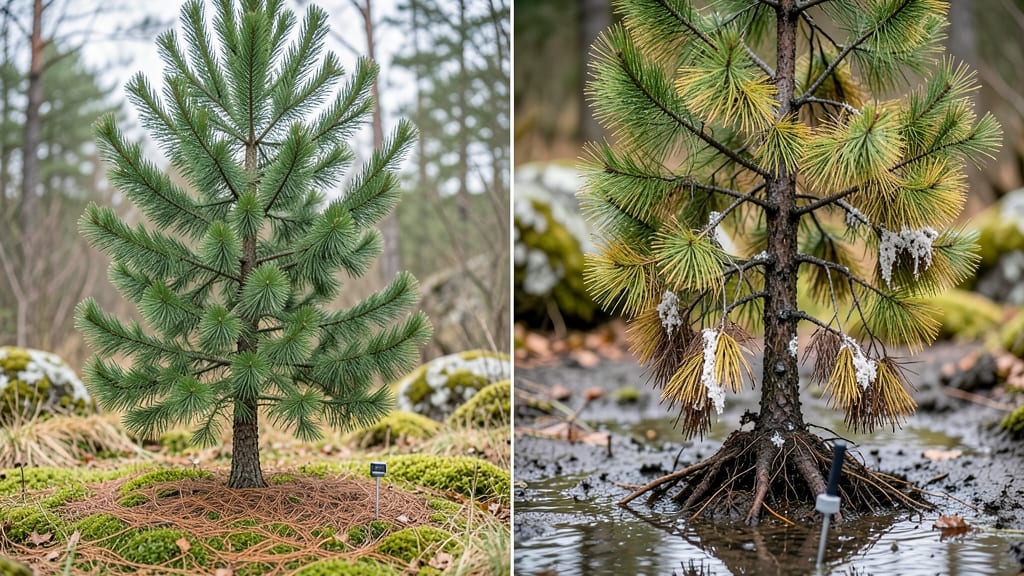
What does an overwatered pine tree look like? It reveals itself with yellowing needles that cling like limp, faded confetti—nothing like the vibrant green of healthy foliage. 🌲 The first clue? Needles turn pale yellow or even brown, especially on the lower branches where water pools. Unlike drought stress, which affects needles gradually from the tips, overwatering makes the entire needle go soft and sad, often with a mushy texture when you squeeze it.
Drooping branches and a soggy base are dead giveaways. The soil around the trunk stays damp for days, smelling musty or like wet cardboard, while healthy pine soil drains quickly and smells fresh.
Fungal growth—black or white speckles on needles or bark—is another red flag, signaling root rot’s silent takeover. Even the roots themselves may ooze when pulled gently, a sure sign of suffocation.
Here’s the good news: recovery starts with cutting back water to once every 2-3 weeks (unless it’s scorching hot) and improving drainage. Prune any mushy branches and add coarse sand or gravel to compacted soil.
Within weeks, you’ll see new growth pushing through—proof your pine is fighting back. The key is acting fast before the tree’s roots drown for good.
Think of it like a spa day for your pine: less water, better airflow, and a little TLC. Most trees bounce back if you catch it early, so grab that trowel and let’s get to work.
Your pine’s future depends on it—and trust me, the first flush of fresh green needles after recovery is worth the effort.
Root zone overload explained
Overwatering a pine tree isn’t just about giving it too much H2O—it’s a cascading problem rooted (literally) in how water disrupts the tree’s delicate balance. Let’s break down the key reasons this happens, so you can spot the warning signs before they become irreversible.
Pine trees thrive in well-draining soil, but when their root zone becomes waterlogged, oxygen can’t reach the roots. Here’s why this is deadly:
- Compacted or clay-heavy soil acts like a sponge, holding water instead of letting it drain. Roots suffocate because they can’t absorb oxygen—a process called anaerobic respiration, which produces toxic byproducts like ethanol and acetaldehyde.
- Organic matter buildup (e.g., mulch piled too high) can create a barrier that traps moisture against the trunk, mimicking a swampy environment.
- No root aeration: Pine roots need air pockets to breathe. Without them, fungal infections (like Phytophthora) move in, rotting roots and cutting off nutrient flow.
Actionable fix: Test your soil’s drainage by digging a 12-inch hole and filling it with water. If it drains in less than 4 hours, you’re in the danger zone. Amend with coarse sand, perlite, or pine bark fines to improve airflow.
Pine trees are drought-tolerant by nature, but overzealous watering—especially from sprinklers or automatic systems—drowns them. Here’s how it backfires:
- Frequent shallow watering keeps the topsoil soggy while deeper roots dry out, creating a false sense of thirst. The tree drinks more than it needs, leading to nutrient dilution.
- Automatic timers set too long: Many systems run for 30+ minutes, even when the soil is already saturated. Pines need deep but infrequent watering (1–2 times per week in dry climates).
- Water stress from evaporation: Wet needles + hot sun = transpiration overload. The tree loses water faster than roots can replace it, causing wilting and needle drop.
Actionable fix: Switch to drip irrigation or soaker hoses placed 12–18 inches from the trunk. Water slowly for 10–15 minutes until the top 6 inches of soil are moist—but not drenched.
Even the best-intentioned gardener can’t control the elements, but these factors amplify overwatering risks:
- High humidity: Air already saturated with moisture means the soil stays damp longer, delaying evaporation. Pines in shady, low-lying areas are especially vulnerable.
- Heavy rainfall + poor drainage: A single storm can add 1–2 inches of water to the soil. If your tree’s roots can’t escape the deluge, they’ll start to rot within 48 hours.
- Container-bound stress: Potted pines dry out faster, but if you’re overwatering to compensate, the roots circle the pot and strangle themselves in compacted, waterlogged soil.
Actionable fix:
Situation
Solution
Shady, humid spot
Raise the planting bed 6–12 inches or add a gravel drainage layer.
Frequent storms
Install a French drain or swale to redirect excess water.
Potted pine
Use terracotta pots (breathable) and water only when the top 1 inch of soil is dry.
Waterlogged soil is a fungal buffet. Pathogens like Armillaria root rot and Heterobasidion thrive in soggy conditions, clogging root vessels and blocking water/nutrient uptake. Signs to watch for:
- White, mushroom-like growths at the base of the trunk.
- Needles turning yellow or brown in patches (not uniform).
- Roots that look dark, mushy, or smell like rotten eggs when checked.
Actionable fix: If you suspect fungus, prune infected roots with sterilized shears and treat the soil with copper fungicide. For severe cases, replace the top 6 inches of soil with a sterilized mix (baking soil in an oven at 180°F for 30 minutes kills pathogens).
Pro Tip: 🌡️ Stick your finger in the soil before watering—if it’s still damp 2–3 inches down, wait. Pines would rather thrive on thirst than drown in kindness!
Revive Your Pine Tree: Step-by-Step Fixes
Overwatering can turn your pine tree into a sad, droopy mess, but the good news is that with the right care, you can nurse it back to health. Let’s tackle the problem head-on with practical solutions tailored to the root causes—literally and figuratively. 🌲💧
Before diving into fixes, halt all watering immediately. Pine trees are drought-tolerant and suffer more from overwatering than underwatering. Let the soil dry out to prevent root rot from worsening.
- Check the soil: Stick your finger about 2–3 inches into the soil. If it’s damp, wait a few more days before taking action. - Inspect the roots: Gently loosen the top layer of soil (if possible) to peek at the roots.
Healthy roots are firm and white, while rotting roots are mushy, brown, or black. - Trim damaged foliage: If needles are yellowing or browning, snip them off with clean pruning shears to redirect the tree’s energy to healthier growth.
Pine trees thrive in well-draining soil. If your tree is sitting in soggy ground, it’s time to give its roots a breath of fresh air.
For Potted Pines: 🏺
- Repot if necessary: If the pot lacks drainage holes or the soil is compacted, transfer the tree to a larger pot with fresh, well-draining potting mix.
Mix in perlite or sand (20%) to improve aeration. - Raise the pot: Place it on a saucer or elevated stand to prevent water from pooling at the bottom.
For In-Ground Pines: 🌍
- Amend the soil: Dig around the base of the tree (avoid damaging roots) and mix in organic matter like compost or coarse sand to loosen heavy soil.
- Create a berm: Pile soil around the tree’s base to encourage water to flow away from the trunk, reducing soggy conditions.
Pine trees prefer consistency over excess. Here’s how to water like a pro:
- Water deeply but infrequently: Instead of daily shallow watering, give the tree a slow, deep drink every 1–2 weeks (adjust based on climate).
Aim for 1–1.5 inches of water per session. - Water at the base: Avoid wetting the needles or bark, as moisture on foliage can lead to fungal issues.
Use a soaker hose or drip irrigation for targeted watering. - Morning is best: Water in the early morning so the tree has all day to dry out, reducing the risk of disease.
Pine trees love acidic, nutrient-rich soil. If your tree’s soil is depleted or compacted, it’s time to feed it right.
- Test the soil: Use a simple soil pH test kit to ensure the soil is acidic (ideal pH: 4.5–6.0).
If it’s too alkaline, mix in pine bark fines or sulfur to lower the pH. - Fertilize lightly: Apply a slow-release, acidic fertilizer formulated for evergreens in early spring or fall.
Avoid high-nitrogen fertilizers, which can burn roots. - Mulch properly: Spread 2–3 inches of organic mulch (like pine straw or wood chips) around the base, but keep it 6 inches away from the trunk to prevent rot.
Once your pine tree is on the mend, keep an eye out for these signs of improvement (or relapse):
| Sign | What It Means | Action |
|---|---|---|
| New green needles | Tree is recovering | Continue good care |
| Firm, white roots | Healthy root system | No immediate action needed |
| Yellowing needles | Possible fungal infection or overwatering | Reduce water, improve airflow |
| Wilting or drooping | Root stress or dehydration | Water deeply if soil is dry, then adjust |
- Avoid compacted soil: Walk around the tree’s base to prevent soil compaction, which restricts root growth. - Prune in late winter: Remove dead or diseased branches to encourage new growth, but avoid heavy pruning, which can stress the tree. - Watch for pests: Overwatered pines are more susceptible to pests like pine bark beetles.
Inspect the tree regularly for signs of infestation. - Group with companions: Plant pine trees with drought-tolerant companions like lavender or rosemary to mimic their natural habitat and reduce water competition.
With these steps, your pine tree should bounce back in no time. Patience is key—reviving an overwatered tree takes time, but the results are worth it. Soon, you’ll be admiring a lush, vibrant pine that’s the star of your garden! 🌿✨
Frequently asked questions
Can I save a pine tree that’s already showing signs of overwatering?
Yes! The key is acting fast. First, stop watering immediately and let the soil dry out completely. Prune any mushy, yellowing branches to reduce stress. For severe cases, improve drainage by adding coarse sand or gravel around the roots. If root rot has set in, you may need to replace the top 6 inches of soil with fresh, well-draining mix.
How often should I water my pine tree to avoid overwatering?
Pine trees prefer deep but infrequent watering. In most climates, water once every 1-2 weeks during dry spells, aiming for 1-1.5 inches of water per session. Always check soil moisture first—if the top 2-3 inches are dry, it’s time to water. Avoid daily shallow watering, which keeps roots soggy.
What’s the difference between overwatered and underwatered pine needles?
Overwatered needles turn pale yellow or brown and feel mushy when squeezed, often starting at the base. Underwatered needles turn dull brown from the tips inward and stay crisp. Another clue: overwatered trees may have fungal growth at the base, while underwatered ones show dry, brittle branches.
Can I use mulch around my pine tree without causing overwatering?
Yes, but use it wisely! Apply 2-3 inches of organic mulch (like pine straw) around the base, keeping it 6 inches away from the trunk to prevent rot. Avoid thick layers that trap moisture—this creates the perfect conditions for overwatering. Mulch helps retain moisture in dry spells but should never stay soggy.
Why does my pine tree look fine above ground but has yellow needles?
This is a classic sign of root rot from overwatering! The roots may be rotting underground while the tree still stands upright. Dig gently to check for mushy, dark roots. If you find this, improve drainage immediately and consider repotting (for container pines) or amending the soil with sand to help roots recover.