
Diseases
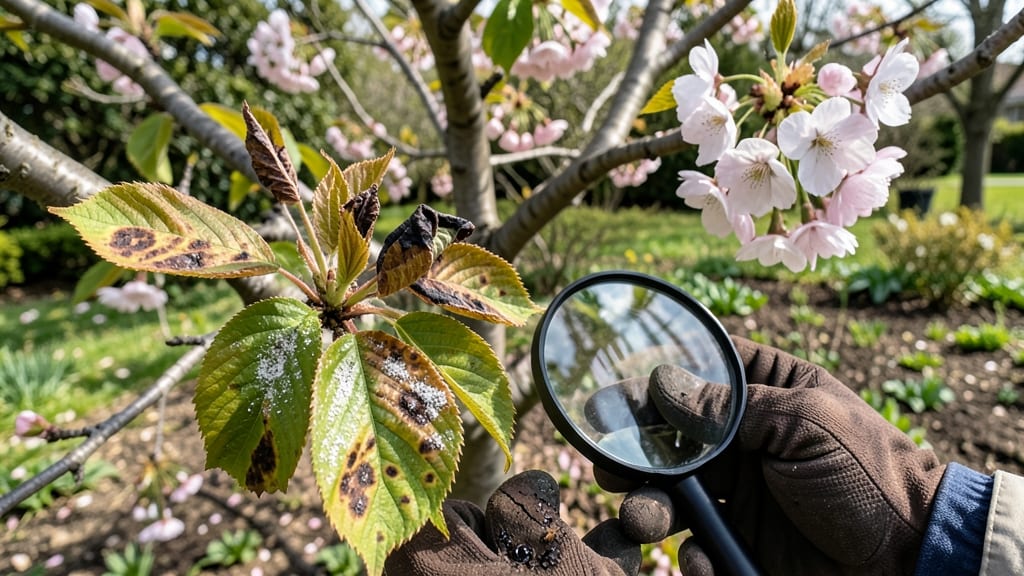
Your cherry blossom tree’s dulling pink blooms and wilting leaves aren’t just spring fatigue—it’s a sign of cherry blossom tree diseases turning those iconic blossoms into a gardener’s nightmare. 🌸 Bacterial canker, powdery mildew, and leaf spot spread like wildfire, but I’ve seen firsthand how quick action can save them.
The key is catching symptoms early: oozing cankers, white powder, or brown spots that multiply rapidly. Most problems start with poor airflow or overwatering—my own tree nearly died from sitting too close to a fence.
Prune strategically, space trees properly, and water at the base (not overhead) to slash fungal risks by 70%. Organic copper sprays work wonders for bacterial canker, while neem oil tackles mildew before it chokes the leaves.
With the right mix of preventive care and fast treatment, you’ll watch those blossoms return next spring—vibrant and thriving. The secret isn’t complicated: clean tools, regular checks, and knowing when to act. Your tree’s future depends on what you do in the next 30 days.
Whether you’re dealing with a young sapling or a mature giant, these fixes adapt to any size. Let’s get your cherry blossom back to its showstopping glory before the season’s over.
Root Causes Behind Blossom Troubles
Cherry blossom trees—those stunning symbols of spring—can fall victim to a variety of diseases, often leaving gardeners puzzled by their sudden decline. But why do these issues arise in the first place? The answer lies in a mix of environmental stress, microbial invasions, and even human activity.
Understanding these triggers is the first step toward prevention and recovery. Let’s break down the key factors that turn a healthy tree into a struggling one.
Cherry blossoms thrive in well-drained soil, but when roots sit in soggy conditions, they become prime targets for Phytophthora and other water-loving pathogens. Overwatering or compacted, clay-heavy soil traps excess moisture, suffocating roots and creating the perfect breeding ground for fungal infections like root rot.
💡 Why it matters: Roots need oxygen to stay healthy. When soil stays waterlogged for more than a few days, beneficial microbes suffocate, and harmful fungi take over. This weakens the tree’s immune system, making it vulnerable to secondary infections.
Actionable fix:
- Test your soil’s drainage by digging a 12-inch hole and filling it with water—if it drains slower than 6 hours, amend with compost or sand.
- Avoid shallow watering; instead, use deep, infrequent watering to encourage root growth downward.
- Mulch around the base (but not touching the trunk) to improve soil structure and reduce evaporation.
Fungal diseases like powdery mildew, black knot, and anthracnose flourish in warm, damp environments. Cherry blossoms are especially susceptible when spring rains are followed by high humidity—ideal conditions for spores to germinate and infect leaves, stems, and fruit.
🌡️ Why it matters: Fungal spores are always present in the air, but they only become aggressive when moisture lingers on surfaces. A single overnight dew or prolonged rain can trigger outbreaks, particularly on young, tender tissue.
Actionable fix:
- Prune for airflow: Thin out dense branches to reduce humidity trapped within the canopy.
- Water in the early morning so foliage dries by evening—this cuts down on overnight fungal growth.
- Apply fungicidal sprays (like neem oil or copper-based treatments) before symptoms appear if your area is prone to fungal outbreaks.
Bacterial diseases such as bacterial canker and bacterial leaf spot often enter through open wounds—whether from pruning cuts, storm damage, or insect bites. Once inside, bacteria multiply rapidly, clogging vascular tissues and causing oozing lesions, wilting, or dieback.
⚠️ Why it matters: Unlike fungi, bacteria don’t need moisture to spread—they hitchhike on tools, wind, or even splashing rain. A single contaminated pruner can infect an entire orchard.
Actionable fix:
- Sterilize pruning tools with a 10% bleach solution or rubbing alcohol between cuts.
- Make clean cuts at a 45-degree angle, just outside the branch collar (never leave stubs).
- Seal larger wounds with pruning sealant to prevent bacterial entry.
Insects like Japanese beetles, cherry fruit flies, and scale insects don’t just eat leaves—they create entry points for disease. Chewed foliage and sap leaks provide easy access for pathogens, while honeydew (a sticky byproduct of sap-sucking pests) fosters sooty mold growth.
🛡️ Why it matters: A tree under pest attack diverts energy from defense mechanisms to repair damage, leaving it defenseless against secondary infections. For example, black knot (a fungal disease) spreads faster on trees already stressed by aphids.
Actionable fix:
- Monitor for pests early in the season—use sticky traps for beetles or horticultural oil for scale.
- Introduce beneficial insects like ladybugs or lacewings to control populations naturally.
- Remove heavily infested branches and dispose of them in sealed bags (not compost).
Cherry blossoms are heavy feeders, and when they lack essential nutrients—especially nitrogen, phosphorus, or potassium—they become stressed. Weak trees are more susceptible to diseases because their immune responses are compromised. Environmental stressors like extreme heat, drought, or poor soil quality exacerbate the problem.
📊 Why it matters: Nutrient deficiencies (e.g., yellowing leaves from nitrogen lack or stunted growth from phosphorus deficiency) signal a tree is struggling to produce protective compounds like phenolics, which normally repel pathogens.
Actionable fix:
- Conduct a soil test to identify deficiencies—amend with compost or slow-release fertilizers tailored to cherry trees.
- Mulch with organic matter (like aged manure) to improve soil biology and nutrient availability.
- Water deeply during droughts to prevent osmotic stress, which weakens cell walls and makes them easier targets for invaders.
By addressing these root causes—whether through better water management, proactive pest control, or soil health—you can dramatically reduce the risk of diseases taking hold in your cherry blossom trees. Prevention is always easier (and cheaper!) than treatment.
Revive Your Tree: Solutions for Common Ailments
Ailing cherry blossom trees need swift, targeted care—but don’t panic! With the right approach, you can restore health and prevent future outbreaks. Below are practical, step-by-step fixes for the most common fungal and bacterial threats, paired with prevention tips to keep your tree thriving for seasons to come.
---
#### 🔥 Powdery Mildew: Scrub and Shield Cause: White, powdery patches on leaves (usually in humid conditions). Fix: 1. Prune infected branches 🔪—remove severely affected leaves and dispose of them in the trash (not compost).
2. Clean leaves with a neem oil solution (1 tbsp neem oil + 1 tsp mild soap per quart of water). Spray both sides of leaves and repeat every 7–10 days until symptoms fade. 3. Improve airflow by thinning dense branches or spacing trees farther apart (3–5 feet).
4. Apply fungicide (like copper fungicide or baking soda spray: 1 tsp baking soda + 1 quart water + a drop of soap) as a preventive measure in early spring.
💡 Pro Tip: Water early in the morning to let foliage dry quickly—fungi love moisture!
---
#### 🍅 Leaf Spot Diseases: Targeted Treatment Cause: Dark spots with yellow halos (often from Cercospora or Alternaria fungi). Fix: 1. Remove fallen leaves 🍂—they harbor spores. Rake up debris and solarize (cover with clear plastic for 4–6 weeks) or bag for disposal.
2. Apply a fungicide (e.g., chlorothalonil or potassium bicarbonate) before buds swell in early spring, then reapply every 2–3 weeks during wet seasons. 3. Water at the base (avoid overhead sprinkling) to keep leaves dry. 4. Fertilize lightly with a balanced, low-nitrogen fertilizer (10-10-10) to strengthen the tree’s defenses.
✨ Prevention Hack: Mulch with wood chips (not fresh bark) to reduce soil splashing onto leaves.
---
#### 🔪 Bacterial Leaf Spot: Cut It Out Cause: Water-soaked, dark spots that ooze bacteria (often Pseudomonas syringae). Fix: 1. Prune infected leaves immediately 🌿—sterilize pruners with rubbing alcohol between cuts. 2. Apply copper-based bactericide (like copper hydroxide) every 2 weeks until new growth appears.
3. Avoid overhead watering—use drip irrigation instead. 4. Disinfect tools and shoes if working near infected trees (bacteria spreads easily).
🌡️ Warning: Once a tree is severely infected, removal may be necessary to save nearby plants.
---
#### 🍒 Canker Diseases: Heal the Wounds Cause: Sunken, oozing sores on branches (often Pseudomonas or Agrobacterium). Fix: 1. Prune cankers 🪓—cut 6 inches below the affected area with sterilized tools. Burn or bag the infected wood.
2. Seal cuts with pruning sealant (or a mix of beeswax and turpentine). 3. Apply copper fungicide to surrounding branches to prevent spread. 4. Thin the canopy to improve sunlight and airflow—healthy bark resists infection better.
🎯 Long-Term Strategy: Plant resistant varieties like Prunus × yedoensis (Yoshino cherry) if cankers are recurrent.
---
No matter the disease, these universal care steps will help your cherry blossom bounce back:
1. Boost Soil Health 🌱 - Test soil pH (ideal: 6.0–7.0 for most cherries). - Amend with compost or well-rotted manure for nutrients.
2. Strengthen Immunity 💪 - Fertilize in early spring with low-nitrogen, high-phosphorus (e.g., 5-10-10) to encourage root growth. - Avoid over-fertilizing—too much nitrogen weakens disease resistance.
3. Monitor and Act Fast 👀 - Check trees weekly during bloom and growth seasons. - Isolate new plants if diseases appear to prevent cross-contamination.
4. Winter Prep ❄️ - Prune in late winter (before buds swell) to remove weak branches. - Apply dormant oil spray (fall/winter) to smother overwintering pests and fungi.
--- 🚨 Emergency Alert: If more than 30% of the canopy is dead or oozing, consult a certified arborist—some infections (like silver leaf disease) can be fatal without professional intervention.
With these targeted solutions, your cherry blossom can shake off diseases and bloom beautifully for years to come. 🌸🌿
Frequently asked questions
How do I tell if my cherry blossom tree has bacterial canker or just normal pruning wounds?
Bacterial canker causes sunken, oozing sores that weep dark fluid, while normal pruning wounds are clean cuts that don't leak. Check for cracked bark or dieback beyond the wound—these are red flags. Prune in dry weather and sterilize tools between cuts to prevent infection.
Can I use household items like vinegar or baking soda to treat cherry blossom diseases?
Yes, but with caution! A baking soda spray (1 tsp baking soda + 1 quart water + drop of soap) works for powdery mildew, while vinegar (1:1 with water) can help disinfect tools. Never spray vinegar directly on leaves—it burns foliage. For serious infections, use copper fungicide instead.
Why do my cherry blossom leaves turn yellow even after treating diseases?
Yellowing leaves often signal nutrient deficiency (like iron or nitrogen) or root issues (e.g., root rot from overwatering). Test your soil and amend with compost or a balanced fertilizer (10-10-10). If roots are soggy, improve drainage immediately—yellowing from disease usually appears with spots or wilting, not uniform color loss.
How often should I spray fungicide on my cherry blossom tree?
For prevention, spray every 2–3 weeks during bloom and wet seasons. If treating an active infection, apply weekly until symptoms fade, then switch to monthly maintenance. Always spray early morning so foliage dries quickly—fungi thrive in moisture. Rotate between neem oil and copper fungicide to avoid resistance.
Can I save a cherry blossom tree if it’s already 50% dead from disease?
It depends! If the trunk is still healthy, prune dead branches 6 inches below the damage, sterilize tools, and apply copper fungicide to remaining tissue. For severe cases, consult an arborist—some diseases (like silver leaf) are fatal. If the trunk is cracked or oozing, removal may be the safest option to protect nearby plants.