
Pruning
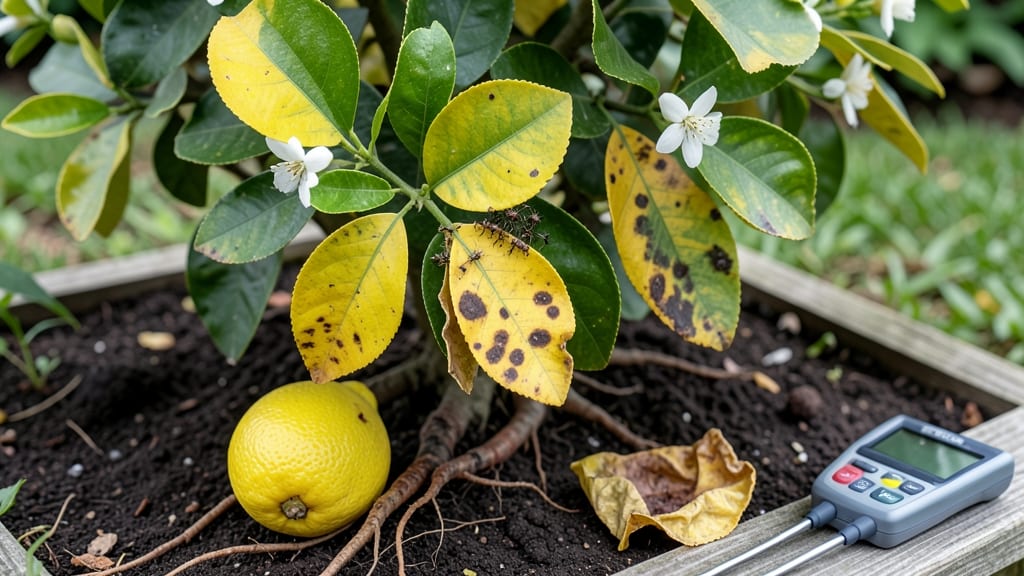
Citrus fruit tree problems can turn your backyard treasure into a sad, leafy shadow—until you know the right moves. 🌿 I’ve nursed back more than a few trees from yellowing leaves to limp branches, and the secret isn’t complicated: it’s about spotting the signs early and acting fast.
Whether it’s fungal infections, pests like aphids, or nutrient deficiencies, each issue has a telltale clue (and a fix) that keeps your tree thriving.
The biggest mistake? Waiting until the problem looks hopeless. A few weeks of yellow leaves can mean a simple iron deficiency, while sticky leaves or tiny holes might signal aphids or citrus leaf miners—both of which need immediate attention.
I learned the hard way that ignoring root rot or citrus canker can mean losing the whole tree. The good news? Most issues respond within weeks if you catch them early and use the right organic remedies.
By the end of this guide, you’ll diagnose problems like a pro—no guesswork, just clear steps. We’ll cover everything from pruning infected branches to adjusting water and fertilizer routines, so your tree goes from struggling to producing juicy, fragrant fruit again.
Whether your citrus lives indoors or basks in full sun outdoors, these fixes work.
Ready to turn things around? Let’s start with the most common issues and how to tackle them—before they take over.
Root Causes Behind Citrus Tree Struggles
Citrus trees are resilient, but even the hardiest varieties can fall victim to environmental stress, pests, or cultural mismanagement. Understanding why these problems arise is the first step to restoring your tree’s health.
Below, we break down the science-backed reasons your citrus tree might be underperforming—and how to spot the red flags early.
Citrus trees thrive in USDA Zones 8–11, where they enjoy warm days and mild winters. When temperatures stray too far from this ideal range, physiological damage occurs—often silently until it’s too late.
- Cold Damage (Chilling Injury): Temperatures below 28°F (-2°C) trigger cell membrane rupture in citrus leaves and stems. The tree’s antifreeze proteins (like _CBF_ genes) can only protect so much.
Symptoms like brown, mushy fruit or blackened twigs appear after a freeze, but the real damage happens at the cellular level—roots and vascular tissues may die back, starving the tree of water and nutrients. - Actionable clue: If your tree’s new growth wilts or turns black after a cold snap, it’s likely suffered vascular blockage from ice crystals.
- Heat Stress (Sunscald & Leaf Burn): Prolonged exposure to above 95°F (35°C) causes photoinhibition—chlorophyll breaks down, and leaves develop crinkled, yellow patches (a sign of oxidative damage).
Young trees are especially vulnerable because their cuticle layer (the waxy skin protecting leaves) hasn’t fully developed. - Actionable clue: White or grayish patches on fruit? That’s sunscald, where the peel’s epidermal cells collapse from overheating.
Citrus trees hate wet feet and drought stress, but both extremes disrupt their hydraulic system—the network of xylem vessels that transport water and nutrients.
- Overwatering & Root Rot: Citrus roots need aeration to breathe. When soil stays soggy for more than 48 hours, anaerobic bacteria (like Phytophthora) thrive, clogging root cells with gum-like substances.
This triggers ethylene gas buildup, a plant stress hormone that accelerates cell death. - Actionable clue: Yellowing leaves with green veins + mushy roots = classic root rot. The tree can’t absorb water, so leaves curl inward (a sign of hydraulic failure).
- Drought & Xylem Cavitation: When soil dries out, air bubbles form in the xylem, creating blockages that prevent water flow. The tree responds by abscising (dropping) leaves to conserve moisture—a survival tactic called hydraulic safety margin.
If drought persists, fruit drop follows as the tree prioritizes root survival over reproduction. - Actionable clue: Leaves feel papery and crisp when touched? That’s irreversible xylem damage—your tree is gasping for water.
Citrus trees are a buffet for sap-sucking insects and fungal pathogens, each exploiting a specific weakness in the tree’s defense mechanisms.
- Scale Insects & Aphids (Sap-Sucking Menace): These pests insert stylets (tiny mouthparts) into phloem vessels, draining sugary sap and injecting toxic saliva. The tree’s response? Excessive ethylene production, which triggers leaf drop and stunted growth.
Worse, their honeydew attracts sooty mold, a black fungal film that blocks sunlight and smothers leaves. - Actionable clue: Sticky residue on leaves + black streaks = scale infestation. Check the undersides of leaves for white cottony masses (aphids).
- Fungal Infections (Citrus Canker & Melanose): Bacteria like Xanthomonas citri (causing citrus canker) exploit wounds or high humidity to infect leaves and fruit. They disrupt cell walls, creating water-soaked lesions that ooze yellow bacterial ooze.
Fungal diseases like melanose thrive in wet conditions, causing dark, cracked bark that girdles branches (strangling the tree’s nutrient flow). - Actionable clue: Raised, corky lesions on fruit or leaves? That’s melanose—prune infected branches 6 inches below the damage to prevent spread.
Citrus trees are heavy feeders, but imbalances in macronutrients (N-P-K) or micronutrients (like zinc or iron) lead to metabolic breakdowns.
- Nitrogen Deficiency (The "Yellowing" Crisis): Nitrogen is the building block of chlorophyll. When soil lacks it, older leaves (which store nutrients) turn pale yellow (a condition called chlorosis).
The tree can’t produce enough energy via photosynthesis, so growth stalls and fruit size shrinks. - Actionable clue: Yellowing starts at leaf tips and spreads inward? That’s marginal chlorosis—often a sign of iron deficiency (common in alkaline soils).
- Potassium & Calcium Imbalances: Potassium (K) regulates water balance and disease resistance. A deficiency causes weak stems that snap easily and poor fruit set.
Calcium (Ca) strengthens cell walls—without it, blossom end rot (a brown, leathery spot on fruit) develops because cell membranes collapse under stress. - Actionable clue: Fruit drops prematurely or develops dark, sunken lesions? Test your soil—low calcium is often the culprit.
Even well-meaning pruning can wound the tree if done incorrectly, creating entry points for pathogens and disrupting hormonal signals.
- Over-Pruning (Stress Response): Cutting more than 25% of foliage in one session triggers abscisic acid (a stress hormone) production. The tree redirects energy to healing instead of fruit production, leading to reduced yields and weakened branches. - Actionable clue: New growth is sparse after pruning?
You may have over-thinned the canopy, exposing branches to sunburn.
- Improper Cuts (Stump & Bark Damage): Leaving large stubs or tearing bark when pruning creates open wounds that never heal properly. These callus poorly, inviting fungal infections (like Botryosphaeria) that girdle branches. - Actionable clue: Dark, sunken cankers at pruning sites?
You’ve likely caused bacterial or fungal entry points.
Air pollution, salt buildup, and improper pesticide use can poison citrus trees at a cellular level.
- Salt Stress (From Fertilizer or Irrigation): Excessive sodium or chloride in soil disrupts osmosis, preventing roots from absorbing water. Symptoms include leaf tip burn (brown, crispy edges) and stunted roots. - Actionable clue: White crust on soil surface + yellowing leaves = salt toxicity.
Flush soil with low-sodium water to dilute salts.
- Herbicide Drift or Over-Fertilization: Glyphosate (a common weed killer) and excess nitrogen can burn citrus foliage by disrupting protein synthesis. Symptoms mimic nutrient deficiencies but appear suddenly on new growth.
- Actionable clue: Bleached, white patches on leaves? That’s chemical burn—stop all treatments immediately.
Quick Fixes for Common Citrus Tree Struggles
Citrus trees are resilient, but even the hardiest varieties can fall victim to pests, diseases, or environmental stressors. The good news? Most issues have straightforward solutions—if you catch them early. Below, we’ll match the most common citrus tree problems with practical fixes and prevention tips to keep your tree thriving.
Fix:
- Test Your Soil 🧪
- Grab a soil sample (6 inches deep) and send it to a local extension office for a pH and nutrient analysis. Most citrus trees prefer a slightly acidic soil (pH 6.0–7.0).
- If the soil is too alkaline (pH > 7.5), amend it with sulfur or peat moss to lower pH gradually.
- Fertilize Correctly 🌱 - For nitrogen deficiency (pale yellow leaves): Use a balanced citrus fertilizer (e.g., 6-6-6 or 8-3-9) in early spring and summer.
Follow package rates—over-fertilizing burns roots! - For magnesium deficiency (yellow between veins): Apply Epsom salt (1 tbsp per gallon of water) as a foliar spray or soil drench every 2–3 weeks until leaves green up. - For iron deficiency (yellow new growth): Use chelated iron (available at garden centers) every 2–3 months.
- Adjust Watering 💧
- Overwatering causes yellowing and root rot. Let the top 2–3 inches of soil dry out between waterings.
- Underwatering stresses the tree—water deeply 1–2 times per week (more in extreme heat).
Prevention Tips: ✅ Mulch with 2–3 inches of wood chips or pine bark to retain moisture and regulate soil temperature. ✅ Avoid heavy clay soil—amend with compost or sand if drainage is poor. ✅ Water at the base, not overhead, to prevent fungal diseases.
Fix:
- Manual Removal (For Light Infestations) 🧼
- Scale insects (brown bumps on stems/leaves): Scrape them off with a soft brush dipped in soapy water.
- Aphids (tiny green/black clusters): Blast them off with a strong stream of water or wipe leaves with neem oil solution (1 tsp neem oil + 1 tsp mild soap per quart of water).
- Chemical Control (For Severe Cases) 💊 - Horticultural oil (like Neem Oil or Dormant Oil) – Spray every 7–10 days until pests are gone.
Best applied in early morning or late evening to avoid burning leaves. - Insecticidal soap (for aphids/mites) – Spray directly on pests; reapply after rain. - Systemic pesticide (e.g., Imidacloprid) – Last resort for stubborn infestations. Follow label instructions carefully.
- Encourage Natural Predators 🐞🐝
- Ladybugs, lacewings, and parasitic wasps eat pests naturally. Plant marigolds, dill, or fennel nearby to attract them.
Prevention Tips: ✅ Inspect trees weekly—catch pests before they spread! ✅ Remove fallen leaves/debris where pests hide. ✅ Avoid over-fertilizing with nitrogen—it attracts soft-bodied pests like aphids.
Fix:
- Citrus Canker (Bacterial Spot) 🦠
- Prune infected branches (sterilize tools with 70% rubbing alcohol between cuts).
- Apply copper fungicide (e.g., Copper Sulfate) every 2–3 weeks during wet seasons.
- Remove and destroy heavily infected leaves/fruit to prevent spread.
- Root Rot (From Overwatering) 🌧️
- Stop watering immediately and let the soil dry out.
- Improve drainage by amending soil with perlite or sand.
- Repot if the tree is in a container—check for mushy, black roots and trim affected areas with sterilized pruners.
Prevention Tips: ✅ Space trees properly (6–10 ft apart) for airflow. ✅ Water in the morning so foliage dries quickly. ✅ Avoid overhead irrigation—use drip systems instead.
Fix:
- Check Pollination 🐝
- Citrus trees are self-pollinating, but bees help! If you see no bees, hand-pollinate with a soft brush in early morning.
- Adjust Fertilizer 🌿
- Too much nitrogen = leafy growth, no fruit. Switch to a low-nitrogen, high-phosphorus fertilizer (e.g., 5-10-10) in late winter to encourage blooming.
- Control Temperature Stress ❄️☀️
- Cold damage? Protect young trees with frost cloth in winter.
- Heat stress? Provide afternoon shade (especially in hot climates).
Prevention Tips: ✅ Prune in late winter to remove dense growth and improve airflow. ✅ Thin fruit (if overloaded) to prevent branches from breaking—leave 6–8 inches between fruits. ✅ Avoid moving potted trees during flowering/fruiting—stress can drop blossoms.
- Prune Dead Wood ✂️ – Use clean, sharp pruners to remove brown, brittle branches.
- Deep Water Weekly 💦 – 1–2 inches of water per week (more in containers).
- Boost with Compost Tea 🍄 – Homemade compost tea (steep compost in water for 24 hours) adds beneficial microbes.
Final Pro Tip: 💡 When in doubt, start with soil and water adjustments—90% of citrus problems stem from these two factors! If the tree isn’t improving in 4–6 weeks, consult a local arborist for a second opinion.
Frequently asked questions
Why are my citrus tree leaves turning yellow, but the veins stay green?
This classic sign points to an iron deficiency—common in alkaline soils (pH >7.5). Iron helps produce chlorophyll, and when soil pH is too high, the tree can't absorb it. Try applying chelated iron every 2-3 months or amend soil with sulfur to lower pH gradually. Test your soil first to confirm the issue!
What should I do if my citrus tree has black spots on leaves and oozing lesions?
Those are red flags for citrus canker or melanose—serious bacterial/fungal infections. Prune infected branches 6 inches below the damage, sterilize tools with rubbing alcohol, and apply copper fungicide every 2-3 weeks. Remove all fallen leaves to prevent spread—this disease thrives in wet conditions!
How often should I water a potted citrus tree?
Potted citrus need 1-2 inches of water weekly (more in summer), but never let them sit in soggy soil. Check soil moisture by sticking your finger 2 inches deep—if dry, water thoroughly. Containers dry out faster than ground soil, so monitor closely. Yellowing leaves with green veins often signal overwatering causing root rot!
Can I save my citrus tree if it's completely leafless after a freeze?
It depends on the damage! If only new growth is affected (blackened tips), the tree may recover. Prune dead wood back to healthy green tissue and protect remaining branches with frost cloth in future cold snaps. If the trunk shows cracks or oozing sap, the vascular system may be damaged—consult an arborist immediately!
What's the best organic remedy for scale insects on my citrus tree?
Start with a neem oil solution (1 tsp neem oil + 1 tsp mild soap per quart of water) sprayed directly on infested areas. Repeat every 7-10 days until pests disappear. For heavy infestations, try horticultural oil in late winter when pests are dormant. Also plant marigolds nearby to attract beneficial ladybugs that eat scale naturally!