
Pruning
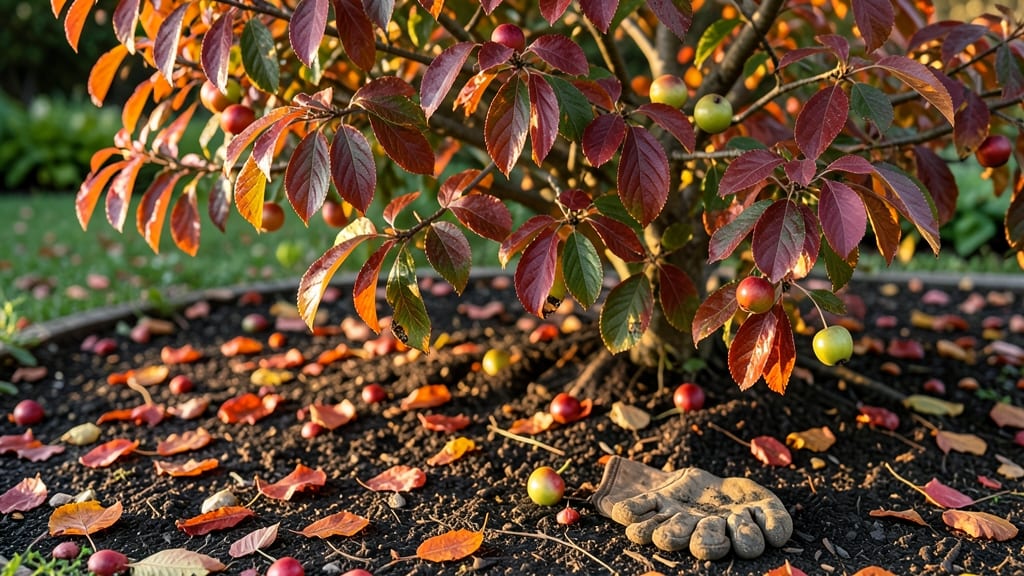
Fall pruning your crabapple tree isn't just about shaping branches—it's about giving it a fighting chance against winter's worst. 🌳 I learned the hard way that skipping this step left my tree vulnerable to wind damage and disease, but now it's the first thing I tackle every autumn.
The goal is to create a layered canopy that lets light reach all the way to the ground while keeping the tree's natural shape. Start by removing dead, crossing, or diseased branches first—those are the easy wins.
Then, thin out the canopy by cutting back about one-third of the smallest branches to improve air circulation. You'll end up with a tree that looks like it belongs in a park, not a backyard.
The branches won't snap under snow or ice, and the open structure means fewer hiding spots for pests to overwinter. Plus, those remaining branches will push out stronger growth come spring. Timing matters: do this after leaves fall but before hard frosts set in.
If you're in a cold climate, aim for late October to early November—just early enough to avoid winter stress but late enough to see what's truly dead.
📚 In This Guide
- What you need
- Instructions
- Tips and common mistakes
- Wrapping up and next steps
What you need
- ● Pruning saw: A sharp, bypass pruning saw (18–24" blade) for thick branches (1–3" diameter). Pro tip: Test sharpness by cutting a small twig—if it crushes instead of slices, it’s time to sharpen! 🔥
- ● Loppers: Bypass loppers (18–24" handles) for medium branches (½–2" diameter). Look for ratcheting or bypass styles for clean cuts.
- ● Hand pruners: Bypass pruners (6–8" blades) for small branches (Must be sterilized with rubbing alcohol to prevent disease spread. 🧴
- ○ Extension pole: A 6–10 ft telescoping pole with a pruning saw attachment for high branches (optional but highly recommended for safety).
- ● Work gloves: Heavy-duty, cut-resistant gloves (gardening or pruning-specific) to protect hands from thorns and rough bark.
- ● Safety gear: Safety goggles (to shield eyes from debris).
- ● Closed-toe shoes or sturdy boots (no sandals!).
- ● Long sleeves/pants (to avoid scratches from thorns).
- ● Cleaning supplies: Rubbing alcohol (70% isopropyl) or bleach solution (1 part bleach to 9 parts water) for sterilizing tools.
- ● Paper towels or rags.
- ● Disposal bags: Heavy-duty contractor bags (10–20 gallon size) for collecting fallen branches and debris.
- ● Marking twine or flags: Colored twine or small flags to tag branches slated for removal (helps avoid confusion mid-prune!).
- ● Step ladder or stump: A sturdy, extendable ladder (rated for your height + tree height) or a tree stump for stability when reaching high branches.
- ● Pruning sealant: Tree wound paint or sealant (controversial but useful for large cuts >2" in diameter to prevent disease entry).
- ● Camera or phone: To document the tree’s structure before/after pruning (great for tracking progress!).
- ● First-aid kit: Just in case—thorns and tools can be sneaky!
- ● Check the weather: Prune on a dry, cool day (avoid rain or extreme heat).
- ● Know your tree: Research your crabapple variety (e.g., ‘Adams’, ‘Royalty’) for species-specific pruning needs.
- ● Safety first: Ensure no power lines are near the tree—call your utility company if unsure! ⚡
- ● Plan ahead: Sketch a rough map of the tree’s canopy to visualize cuts before you start.
Step-by-step guide to pruning crabapple trees in fall
Fall is the perfect time to revitalize your crabapple tree's structure before winter dormancy.
✂️ Step 1: Remove Dead, Diseased, or Damaged Branches First
Start by identifying branches that are completely dead (no green beneath the bark when scratched), diseased (mushrooms, oozing sap, or discolored cankers), or physically damaged (cracks, splits, or broken limbs). Use sharp pruning shears to make clean cuts just outside the branch collar—the swollen area where the branch meets the trunk. This prevents unsightly stubs and promotes faster healing.
I always work from the bottom up, removing larger branches first. This makes it easier to see the tree's overall structure as you go. If you're unsure whether a branch is dead, wait until late fall when leaves have dropped completely—healthy branches will still have some green beneath the bark, while dead ones will be uniformly brown.
☀️ Step 2: Thin the Canopy for Better Airflow and Light Penetration
Next, focus on thinning the canopy by selectively removing branches that are crossing, rubbing against each other, or growing inward. Aim to create an open, layered structure that allows sunlight and air to circulate throughout. Start at the outer edges and work your way inward, removing about 20-25% of the total canopy volume—this prevents over-pruning, which can stress the tree.
Look for branches that grow straight up or down—they often block light from reaching lower layers. These vertical branches should be pruned back to a lateral branch or bud that grows outward. You'll know you're doing it right when you can see light filtering through the canopy and the tree's silhouette looks balanced from all sides.
🌿 Step 3: Shape the Tree for Winter Resilience
Now it's time to refine the tree's shape by pruning branches that are growing too close together or disrupting the natural form. Focus on maintaining a broad, rounded canopy with a strong central leader (the main upward-growing branch). If the central leader is weak or damaged, select the strongest lateral branch to become the new leader and prune it back to just above an outward-facing bud.
Pay special attention to water sprouts—fast-growing, vertical shoots that often appear after pruning or injury. These saplings steal energy from the tree, so prune them back to a lateral branch or bud. You'll see the difference in just a few months: a tree with fewer water sprouts will have stronger, more productive branches.
⏰ Step 4: Clean Up and Prepare for Winter
After pruning, rake up and dispose of all debris, especially diseased branches. Never leave pruned material on the ground beneath the tree, as it can harbor pests and diseases. Sterilize your pruning tools with rubbing alcohol or a 10% bleach solution to prevent spreading pathogens between cuts.
Apply a 2-3 inch layer of mulch around the base of the tree, keeping it 6 inches away from the trunk to prevent rot. Water the tree deeply to help it recover from the pruning stress. In colder climates, consider wrapping the trunk with tree guard or burlap to protect it from winter sunburn and rodent damage.
Tips & tricks for perfect crabapple tree fall pruning
Here's what nobody tells you about making your pruning job easier and more effective this fall.
Timing Tip: Late fall, after leaves have dropped, is the best time to prune because you can see the tree's true structure. But don't wait too long—prune before the ground freezes to allow the tree to heal before winter dormancy. The goal is to finish by early November in most climates, giving the tree about 6-8 weeks to recover before cold sets in.
Tool Tip: Use sharp, clean pruning shears for every cut—dull tools crush branches instead of making clean cuts. I keep a small bottle of rubbing alcohol in my tool bag to wipe down blades between cuts, especially when dealing with diseased branches. This simple step prevents cross-contamination that can spread disease throughout your tree.
Visual Cue: When thinning the canopy (Step 2), imagine sunlight filtering through the branches. You want to see light reaching all the way to the ground—this means you've removed enough blocking branches. A good rule of thumb is to leave about 6-8 inches of space between branches to allow proper airflow. This open structure prevents fungal diseases that thrive in damp, crowded canopies.
Recovery Strategy: After pruning, the tree needs time to heal before winter. I always water deeply after pruning to help the tree recover from stress. In colder climates, consider wrapping the trunk with tree guard or burlap to protect it from winter sunburn and rodent damage. This extra layer can make all the difference in tree health come spring.
Pro Tips for Crabapple Tree Fall
- Here's what nobody tells you about making your pruning job easier and more effective this fall.
- Timing Tip: Late fall, after leaves have dropped, is the best time to prune because you can see the tree's true structure.
- Tool Tip: Use sharp, clean pruning shears for every cut—dull tools crush branches instead of making clean cuts.
Frequently asked questions
Got questions about crabapple tree fall pruning? You’re not alone!
Here are answers to the most common concerns—from timing to tools and everything in between. Let’s clear up the confusion so you can tackle your tree with confidence.
When is the best time to prune a crabapple tree in fall?
Prune your crabapple tree after the leaves fall (late fall) but before the first hard frost—typically between November and early December. This timing helps the tree heal before winter dormancy while avoiding disease risks from wet spring conditions. Avoid pruning too early, as new growth may sprout and struggle to harden off before cold snaps.
Will fall pruning harm my crabapple tree if I do it wrong?
Pruning incorrectly can stress the tree, but with the right approach, fall pruning is safe! Stick to removing dead, diseased, or crossing branches (never more than 25% of the canopy at once). Avoid heavy pruning—save major structural work for late winter or early spring. If you’re unsure, consult a local arborist to assess your tree’s health first.
Can I prune a crabapple tree in fall if it’s young (under 5 years old)?
Yes! Young crabapple trees benefit from light pruning in fall to establish strong branch structure. Focus on removing water sprouts and shaping the tree to encourage upward growth. Just avoid heavy cuts—let the tree focus on root development before winter. Think of it as a “growth guide,” not a full makeover.
Do I need special tools for fall pruning, or will my basic pruners work?
Basic hand pruners and loppers are fine for small branches, but invest in a pruning saw for thicker limbs (over 1.5 inches). Sterilize your tools with rubbing alcohol between cuts to prevent spreading disease. A pole pruner can also save your back for higher branches. Pro tip: Sharpen your tools beforehand for cleaner cuts!
Will fall pruning affect next year’s fruit or flowers?
No—fall pruning actually enhances next year’s blooms and fruit! By removing crowded or weak branches now, you improve airflow and sunlight penetration, which leads to healthier growth. Just avoid pruning too late in the season, as new growth stimulated by late cuts may not survive winter. Think of it as a reset button for a more productive spring.
What if my crabapple tree has already lost leaves early? Should I still prune?
If your tree’s leaves dropped prematurely (due to disease, pests, or stress), wait until spring to prune. Fall pruning could further stress a weakened tree. Instead, focus on mulching, watering (if needed), and monitoring for pests. Once the tree shows new growth in spring, you can safely prune to remove any damaged wood.
Wrapping up and next steps
Crabapple tree fall pruning isn’t just about trimming—it’s an investment in your tree’s future vitality. By following the right techniques, you’ll foster a stronger, more resilient canopy that thrives through winter and beyond. Whether you’re a seasoned gardener or just starting, this layered approach ensures your crabapple stays healthy and stunning year-round.
Ready to take action? Start by marking your calendar for late fall or early winter—when your tree is dormant but still benefits from care. Gather your tools, review the steps, and give your crabapple the revival it deserves! 🌳✨