
Pruning
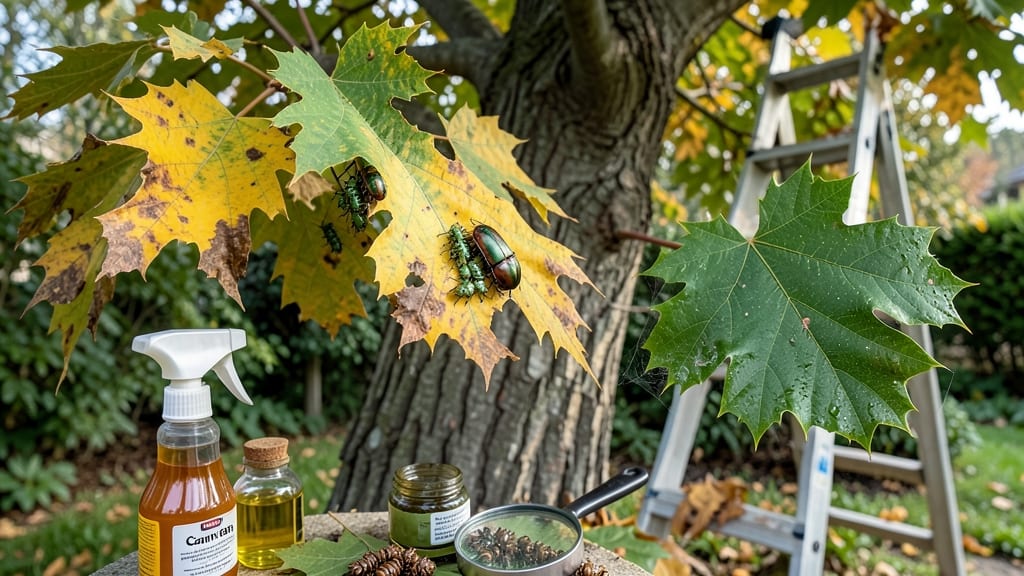
Maple tree pests can turn vibrant foliage into a skeleton of damage in weeks—unless you act fast. 🌳 I’ve watched aphids strip leaves bare and Japanese beetles skeletonize branches, but the right early intervention stops these pests before they win.
This guide gives you the fast identification tricks and treatments that work on your maple before the damage spreads.
The worst offenders—aphids, scale, and beetles—all leave telltale signs: sticky residue, chewed edges, or tiny black dots on leaves. Most homeowners wait too long, but 30 minutes of inspection now could save your tree’s summer color.
The key is acting at the first sign of trouble, whether that’s a handful of beetles or a single branch with suspicious webbing.
You’ll learn to crush infestations with targeted sprays (natural or chemical) that work within days, plus preventive tricks like pruning weak branches and encouraging predator bugs to move in. By the time your neighbors notice their maples struggling, yours will still be standing strong and healthy.
Works for sugar maples, red maples, or silver maples—no matter your climate. The same fast-acting methods apply whether you’re dealing with a single branch or a full canopy under attack. Let’s get your maple back to its full glory before the pests take over.
Underlying Causes Of Maple Tree Stress
Maple trees, with their stunning foliage and iconic syrup-producing potential, can fall victim to a variety of pests when their health declines. But why do these critters and diseases target them in the first place?
The answer often lies in the tree’s weakened state—whether due to environmental factors, poor care, or natural vulnerabilities. Let’s break down the key reasons maple trees become pest magnets and how these conditions create the perfect storm for infestations.
Maple trees thrive in specific conditions, and when those needs aren’t met, their immune systems weaken, making them easier targets for pests. Here’s how environmental factors play a role:
- Drought or Overwatering: Maple trees prefer consistently moist (but not soggy) soil. Drought stress forces trees to divert energy away from pest resistance, while overwatering can suffocate roots, reducing nutrient uptake. Both scenarios leave trees vulnerable to borers, aphids, and fungal infections.
- Extreme Temperature Swings: Sudden freezes or heatwaves disrupt the tree’s metabolic processes. For example, late-spring frosts can stunt new growth, making tender shoots prime targets for maple petiole borers. Similarly, prolonged heat stress reduces chlorophyll production, weakening the tree’s ability to fend off pests like maple scale insects.
- Poor Soil Quality: Compacted, nutrient-poor, or acidic soil (pH < 6.0) limits a maple’s access to essential minerals like nitrogen and potassium. Weakened trees are more susceptible to root-feeding larvae (e.g., Japanese beetles) and foliar diseases that attract secondary pests like ants or wasps.
💡 Pro Tip: Conduct a simple soil test (available at garden centers) to check pH and nutrient levels. Amending soil with compost or organic matter can restore balance and deter pests naturally.
Not all maple trees are equally resilient. Some species have inherent weaknesses that pests exploit:
| Species | Common Pests/Diseases | Why They’re Targeted |
|---|---|---|
| Sugar Maple (Acer saccharum) | Maple leaf cutter, aphids, tar spot fungus | Thin bark and high sugar content in leaves make them attractive to sap-sucking insects and fungal spores. |
| Silver Maple (Acer saccharinum) | Borers, powdery mildew, mites | Fast-growing but weak wood structure; borers exploit soft, watery tissue. |
| Norway Maple (Acer platanoides) | Maple scale, verticillium wilt | Aggressive root systems compete with nearby plants, stressing the tree and inviting root pathogens. |
🎯 Key Insight: If you’re planting a new maple, choose native varieties like red maple (Acer rubrum) or freeman maple hybrids, which are bred for disease resistance and pest tolerance.
Pests don’t just appear out of nowhere—they’re often drawn to trees that have been physically compromised by human activity. Here’s how:
- Improper Pruning: Over-pruning (removing >25% of foliage in one season) or topping (cutting back to a stub) creates open wounds where maple bark borers or fungal infections can take hold. Always prune during dormant season (late fall/winter) and use clean, sharp tools to minimize damage.
- Physical Injury: Lawnmower or weed whacker damage to the trunk or roots exposes the tree to bacterial or fungal invaders. Even construction vibrations can stress roots, making them susceptible to root weevils.
- Chemical Overuse: Excessive herbicides or fungicides can burn roots or disrupt the tree’s natural microbial balance. For example, glyphosate drift has been linked to increased borer activity in maples.
✨ Prevention Hack: Create a 3-foot mulch ring around the base of the tree (but avoid piling mulch against the trunk) to protect roots and retain moisture. This simple step reduces stress and deters pests like maple crown gall.
By addressing these root causes—whether through better water management, species selection, or careful maintenance—you can dramatically reduce the likelihood of pest infestations. The key is proactive care, not just reactive treatments.
Practical Fixes For Tree Troubles
When pests invade your maple tree, acting fast is key to saving its health. Below are targeted solutions for common culprits, from quick fixes to long-term prevention. Each remedy is designed to be easy to follow and tailored to the specific problem.
Scale insects cling to branches like tiny shields, sucking sap and leaving sticky residue. Here’s how to evict them:
🍳 Manual Removal (Early Stages)
- Gather tools: A stiff brush (like a toothbrush), rubbing alcohol (70% isopropyl), and horticultural oil.
- Brush off scales: Dip the brush in alcohol and scrub infested branches thoroughly.
Focus on buds, twigs, and under leaves. - Repeat weekly: Scales multiply fast—check for new clusters every 5–7 days until gone.
👨🍳 Chemical Control (Severe Infestations)
- Neem oil spray: Mix 1 tbsp neem oil + 1 tsp mild soap per quart of water. Spray every 7–10 days until scales disappear.
- Systemic insecticide: For stubborn cases, use imidacloprid (follow label rates).
Apply in early spring before pests wake up. - 💡 Pro Tip: Apply sprays early morning or late evening to avoid harming bees and other pollinators.
🌡️ Prevention: Keep Trees Thriving
- Encourage natural predators: Ladybugs and lacewings love eating scale.
Plant nearby flowers (like marigolds) to attract them. - Prune for airflow: Remove dense branches to reduce humidity—scales thrive in damp, shaded spots. - Monitor regularly: Inspect trees monthly in spring/summer with a 10x magnifying lens for early signs.
This fungal disease twists leaves into gnarled, useless curls. Act fast to stop it from spreading:
🔪 Prune Infected Leaves
- Cut and bag: Remove all curled leaves and drop them in a sealed trash bag (do not compost).
Burn if possible. - Sterilize tools: Wipe pruners with rubbing alcohol between cuts to avoid spreading spores. - 🎯 Timing Matters: Prune before new leaves unfurl in early spring.
🥘 Fungicide Treatment
- Copper fungicide: Spray copper hydroxide (like Kocide) on buds and branches before leaves emerge.
- Organic option: Mix 1 tbsp baking soda + 1 tsp soap + 1 gallon water.
Spray every 2 weeks until new growth is healthy. - 💡 Pro Tip: Water at the base (not overhead) to keep leaves dry—fungi love moisture!
✨ Long-Term Defense - Improve drainage: Fungi thrive in soggy soil.
Amend clay soil with compost or sand. - Space trees properly: Overcrowded maples get poor airflow—plant 20+ feet apart. - Avoid overhead watering: Use drip irrigation or soaker hoses to keep foliage dry.
Maple borers tunnel beneath bark, weakening the tree. These aggressive invaders need a multi-step attack:
🔪 Drill Out the Nest
- Locate entry holes: Look for sawdust-like frass or tiny holes (1/8" wide).
- Drill and kill: Use a 1/4" drill bit to bore into tunnels.
Dump in borax or diatomaceous earth (follow safety guidelines). - 💡 Pro Tip: Do this in late summer when larvae are most vulnerable.
🎯 Trap and Trap Again
- Pheromone traps: Hang maple borer traps (like Contech) in May–June to catch adults before they lay eggs.
- Sticky bands: Wrap Tanglefoot around the trunk 12–18" up to trap crawling larvae.
🌡️ Strengthen the Tree - Water deeply: Stress = borer buffet.
Water 1–2 inches per week during dry spells. - Fertilize wisely: Use a balanced 10-10-10 fertilizer in early spring to boost health. - 🔥 Emergency measure: For large infestations, consult an arborist about systemic insect growth regulators (IGRs).
These tiny sap-suckers cluster on new growth, causing leaves to yellow and curl. Here’s how to flush them out:
💦 Blast Them Off
- Strong water spray: Use a hose nozzle to blast aphids off leaves (do this early morning).
- Soapy water spray: Mix 1 tsp mild soap + 1 quart water.
Spray directly on clusters every 3–4 days. - 🎯 Repeat: Aphids reproduce fast—check daily until gone.
🐞 Bring in the Cavalry
- Ladybugs & lacewings: Buy beneficial insects online or attract them with dill, fennel, or yarrow nearby.
- Bird feeders: Install a suet feeder—birds love munching aphids.
🌿 Prevention Tips
- Reduce ant traffic: Aphids ride ants to trees. Use borax bait stations to deter ants.
- Plant resistant varieties: Some maples (like Norway maples) are less appealing to aphids.
- 💡 Pro Tip: Avoid over-fertilizing—aphids adore soft, nitrogen-rich new growth.
Final Note: Most pest problems can be prevented with good tree care. Stay vigilant, act early, and your maple will stay strong, green, and pest-free! 🌳💪
Frequently asked questions
How do I tell if my maple tree has pests or just normal seasonal stress?
Look for these pest-specific signs: sticky residue on leaves (aphids), tiny black dots moving on bark (scale insects), or chewed leaf edges (Japanese beetles). Normal stress shows as yellowing between veins or leaf drop from the bottom up. Pests create irregular damage patterns—like skeletonized leaves or webbing—while stress affects the whole tree uniformly.
Can I use the same treatment for all maple tree pests?
No—each pest needs a targeted approach. Aphids respond to soapy water sprays, while borers require drilling tunnels and applying insecticide. Always match the treatment to the pest: neem oil for scale, copper fungicide for tar spot, and pheromone traps for beetles. Mixing treatments without research can harm your tree or beneficial insects.
When should I prune my maple tree to prevent pest problems?
Prune during late fall or winter (dormant season) to avoid attracting borers or spreading fungal spores. Never prune when pests are active—this can spread infestations. Remove only dead or diseased branches (never more than 25% of foliage at once). Sterilize tools with rubbing alcohol between cuts to prevent disease transmission.
How often should I inspect my maple tree for pests?
Check your tree monthly during growing seasons (spring-fall) and weekly if you've had past infestations. Focus on new growth, undersides of leaves, and bark crevices. Use a 10x magnifying lens to spot early signs like tiny eggs or webbing. Early detection saves your tree from severe damage.
Are there any natural predators that can help control maple tree pests?
Ladybugs, lacewings, and parasitic wasps all eat maple pests. Attract them by planting dill, yarrow, or marigolds nearby. Birds also help—install a suet feeder to encourage them to snack on aphids and beetles. Healthy trees with diverse ecosystems need fewer chemical treatments.