
Pruning
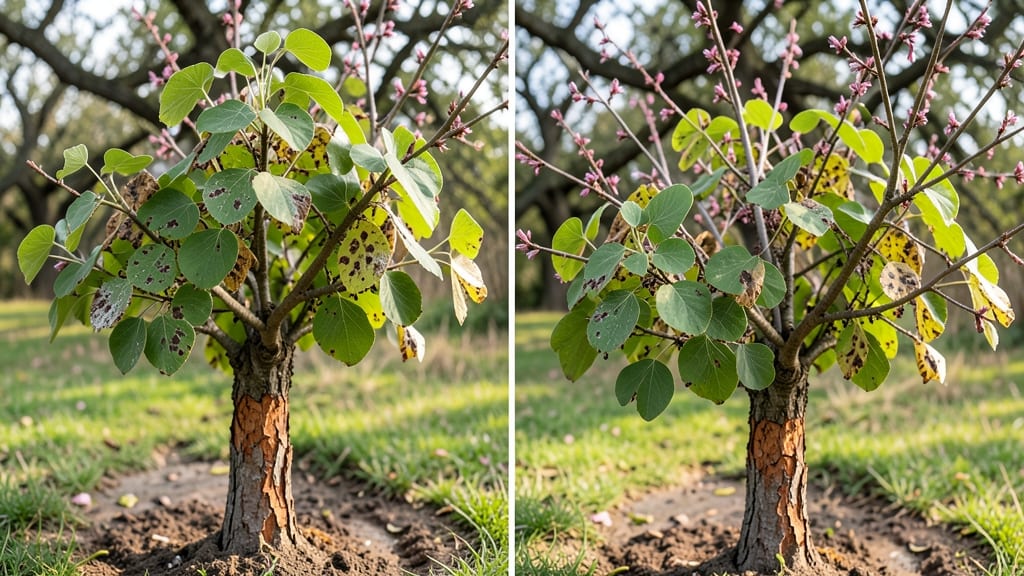
Your Oklahoma redbud tree problems started in late April, just as the pink blooms were fading—turns out, fungal blight and root rot are the sneaky villains here. 🌿 The heat and clay-heavy soil in Oklahoma create the perfect storm for these issues, and without quick action, your tree’s vibrant spring display can disappear faster than you’d think.
Fungal blight shows up as dark, water-soaked spots on leaves or stems, while root rot makes the bark soft and the soil smell foul when you dig near the base.
Spider mites and borers also love redbuds, especially during Oklahoma’s dry spells, and they stress the tree enough to invite fungal infections. The good news? Catching these early makes all the difference.
Start by pruning away infected branches with clean shears, then apply a copper fungicide or neem oil spray to stop the spread.
For root rot, improve drainage by amending the soil with compost and avoid overwatering—Oklahoma’s summer heat means deep watering only when the top 2 inches of soil are dry. Mulch helps too, keeping roots cool and moisture steady.
Once you’ve treated the problem, focus on prevention: water at the base (not the leaves) to avoid fungal spores, and fertilize lightly in early spring with a balanced 10-10-10 mix.
Oklahoma’s redbuds are tough, but they need a little extra care to bounce back from these common setbacks—and your tree will thank you with years of stunning pink blooms.
Root Causes Of Redbud Struggles
Oklahoma’s redbud trees (Cercis canadensis) are beloved for their vibrant spring blooms and adaptability—but when issues arise, they’re often rooted in environmental stress, microbial activity, or cultural mismanagement.
Understanding the why behind these problems is the first step to restoring your tree’s health. Below, we break down the most common culprits, backed by science and actionable insights.
Redbud trees thrive in well-drained soil, but Oklahoma’s heavy clay or compacted ground can trap excess moisture, creating the perfect storm for root rot and fungal blight. Here’s how it happens:
- Waterlogged roots: Redbuds prefer moist (not soggy) soil, but prolonged saturation cuts off oxygen supply to roots. Anaerobic conditions trigger Phytophthora fungi, which invade root tissues, causing brown, mushy roots and wilting leaves.
- Clay soil compaction: Oklahoma’s native clay expands when wet and shrinks when dry, forming a crust that blocks water drainage. Roots suffocate, weakening the tree’s immune response to pathogens.
- Irrigation oversights: Drip systems or overhead watering that doesn’t account for soil type can lead to chronic moisture buildup, especially in low-lying areas.
💡 Pro Tip: Test your soil’s drainage by digging a 12-inch hole, filling it with water, and timing how long it takes to drain. If it takes more than 6 hours, amend with compost or sand to improve aeration.
Oklahoma’s humid summers and sudden spring rains create ideal conditions for anthracnose and powdery mildew, two fungal diseases that plague redbuds. These pathogens exploit weak spots:
- Anthracnose (Gloeosporium spp.): Spores splash onto leaves during rainy periods, germinating in temperatures between 60–75°F. The fungus produces dark, sunken lesions on leaves, premature defoliation, and canker wounds on stems.
- Powdery Mildew (Erysiphe spp.): Thrives in shady, humid microclimates (common under dense canopies). It coats leaves with a white, talcum-like powder, reducing photosynthesis and stunting new growth.
- Wound entry points: Pruning cuts, storm damage, or insect boreholes provide entry for fungi to colonize vascular tissues, spreading disease systemically.
🌡️ Key Factor: Fungal spores require free water to infect—watering in the evening or during leaf-wet periods (like Oklahoma’s frequent afternoon thunderstorms) amplifies risk.
Redbuds are hardy, but extreme conditions—whether too hot, too cold, or too dry—compromise their defenses, making them susceptible to secondary infections. Here’s how:
| Stressor | Impact | Oklahoma Triggers |
|---|---|---|
| Drought | Leaves curl, drop prematurely, and roots shrink, reducing nutrient uptake. Weakened trees can’t fend off Verticillium wilt. | Back-to-back dry spells (e.g., 2022–2023 heatwaves) |
| Temperature swings | Rapid shifts (e.g., freezing nights followed by 80°F days) cause cold injury, cracking bark and exposing tissue to fungal invasion. | Spring frost followed by sudden warmth (common in Oklahoma’s Zone 7) |
| Urban pollution | Ozone and particulate matter (from traffic or industrial areas) thin the cuticle of leaves, making them more permeable to pathogens. | Highways or industrial zones near tree plantings |
✨ Solution: Mulch with 2–4 inches of organic matter (wood chips or pine straw) to insulate roots and retain moisture. Avoid volcanic rock mulch, which can overheat roots in Oklahoma’s summers.
Insects like emerald ash borers, scale insects, or Japanese beetles don’t just feed—they create wounds that fungi exploit. Here’s the chain reaction:
- Boring insects (e.g., EAB): Larvae tunnel under bark, disrupting the tree’s vascular system. Fungi like Ophiostoma hitchhike in, clogging xylem and causing wilt.
- Sap-sucking pests (e.g., scale): Honeydew excretions attract sooty mold, which blocks sunlight and stresses the tree, lowering its disease resistance.
- Defoliators (e.g., beetles): Heavy feeding reduces the tree’s energy reserves, making it easier for pathogens to establish.
🔥 Watch For: Wilting despite moist soil or unusual dieback in one branch—these are red flags for pest-fungal team-ups.
By identifying the root cause (literally and figuratively), you can target solutions—whether it’s improving drainage, adjusting watering habits, or introducing beneficial microbes. Stay tuned for our next section on diagnosing symptoms and restorative actions!
Quick Fixes for Oklahoma Redbud Trees
Reviving your Oklahoma redbud tree starts with targeted action—whether it’s fungal blight, root rot, or environmental stress. Below are practical, step-by-step solutions to diagnose and treat common issues, plus prevention tips to keep your tree thriving. Let’s get your redbud back in bloom! 🌿💚
Fungal blight (like anthracnose or powdery mildew) thrives in Oklahoma’s humid summers. Here’s how to eliminate it and protect your tree:
1️⃣ Prune Infected Branches
- 🔪 Cut out branches with dark, mushy spots or yellowing leaves at least 6 inches below the infection.
- 🔥 Sterilize pruners between cuts with 70% isopropyl alcohol or a 10% bleach solution (1 part bleach to 9 parts water).
- 🗑️ Remove and destroy infected debris—do not compost it.
2️⃣ Apply Fungicide
- 💊 Use a copper-based fungicide (like Copper Soap or Cheshunt Compound) or a neem oil spray (1 tbsp neem oil + 1 tsp mild soap per quart of water).
- ⏰ Spray every 7–10 days during rainy seasons (spring and fall).
- 🌧️ Apply in the evening to reduce evaporation and improve absorption.
3️⃣ Improve Airflow & Light
- 🌬️ Thin out dense foliage to allow sunlight and air to circulate.
- 🌳 Space trees 6–8 feet apart if planting new redbuds.
- 💡 Avoid overhead watering—use drip irrigation or soaker hoses instead.
💡 Pro Tip: Mulch with wood chips (2–3 inches deep) to keep soil moist but not soggy—fungi love damp conditions!
Root rot (from Phytophthora or overwatering) is deadly but reversible if caught early. Follow these steps:
1️⃣ Check the Soil
- 👨🌾 Dig 6–12 inches deep near the trunk—healthy roots are white or light tan; rotten roots are black, mushy, and smell foul.
- 💧 Test moisture: Stick your finger in the soil—if it’s soggy beyond 2 inches deep, you’re overwatering.
2️⃣ Adjust Watering Habits
- 🚰 Water deeply but infrequently—redbuds need 1–1.5 inches of water per week (including rain).
- ⏳ Let the top 2–3 inches of soil dry out between waterings.
- 🌧️ Use a moisture meter if unsure—aim for 40–60% soil moisture.
3️⃣ Improve Drainage
- 🏗️ Amend heavy clay soil with compost or sand (50/50 mix) to help water drain.
- 🪴 Avoid planting in low spots where water pools.
- 🔄 If severe, consider raising the tree’s root zone with a mound of amended soil.
4️⃣ Fungal Treatment (If Needed)
- 💊 Apply a systemic fungicide like Propiconazole (Alamo) or Phosphite-based products (e.g., Sonar AS).
- 🌿 Follow up with beneficial microbes—add mycorrhizal fungi (like MycoApply) to boost root health.
✨ Pro Tip: Aerate compacted soil with a garden fork to help roots breathe—this alone can prevent future rot!
Heat, drought, or poor soil can weaken redbuds, making them susceptible to pests and disease. Here’s how to strengthen your tree:
1️⃣ Feed the Soil
- 🌱 Add compost or aged manure (2–3 inches) around the drip line (the edge of the tree’s canopy).
- 📊 Test soil pH—redbuds prefer slightly acidic to neutral (6.0–7.0).
Adjust with lime (to raise pH) or sulfur (to lower pH) if needed. - 💪 Use a balanced fertilizer (10-10-10) in early spring—avoid high-nitrogen fertilizers in summer (they stress trees).
2️⃣ Mulch Like a Pro
- 🌿 Spread 2–3 inches of mulch (wood chips, pine straw) 3–4 inches away from the trunk.
- ❌ Avoid piling mulch against the trunk—this traps moisture and invites rot.
- 🔄 Refresh mulch annually to maintain soil moisture and temperature.
3️⃣ Protect from Extreme Weather
- ☀️ In Oklahoma’s heat, provide light shade (30–50%) during peak summer (12–3 PM).
- 🌬️ Young trees need staking in windy areas—use soft ties (not wire) to prevent trunk damage.
- ❄️ Winterize in late fall by watering deeply before the first freeze and covering the root zone with extra mulch.
🎯 Pro Tip: Mulch volcanoes kill trees! Keep mulch level and even—never in a pile around the trunk.
The best defense is a strong, healthy redbud. Follow these long-term strategies:
| Problem | Prevention Tip |
|---|---|
| Fungal Blight | Prune in dry weather (avoid spring rains) and sterilize tools regularly. |
| Root Rot | Plant on a slight slope and avoid overwatering—redbuds hate wet feet! |
| Pests (Japanese Beetles, Aphids) | Spray neem oil in early summer and install row covers for young trees. |
| Drought Stress | Deep water weekly during dry spells and mulch heavily to retain moisture. |
| Soil Compaction | Aerate annually with a garden fork and avoid heavy foot traffic near roots. |
💡 Final Reminder: Act fast—most redbud problems are easier to fix early than later. With the right care, your Oklahoma redbud will bloom beautifully for decades! 🌸🌿
Frequently asked questions
Why are my Oklahoma redbud leaves turning yellow and falling off?
Yellowing leaves (chlorosis) on redbuds usually signal nutrient deficiencies, often iron or nitrogen, or root rot from overwatering. Check soil moisture—if soggy, improve drainage with compost. For deficiencies, apply a chelated iron supplement or balanced fertilizer (10-10-10) in early spring. Oklahoma’s clay soil can lock out nutrients, so test your pH (ideal: 6.0–7.0).
How do I tell if my redbud has fungal blight vs. pest damage?
Fungal blight shows as dark, water-soaked spots on leaves or stems (often with a white powdery coating for mildew), while pests like Japanese beetles or aphids leave skeletonized leaves or sticky honeydew. Check undersides of leaves for tiny insects or webbing. Prune infected branches 6 inches below the damage and treat with copper fungicide or neem oil for fungi; use soapy water for pests.
Can I still save my redbud if the trunk looks soft or spongy?
If the trunk feels soft or smells foul when pressed, you’re dealing with advanced root rot or canker disease. While recovery is unlikely, try these steps: Prune back 1/3 of the canopy to reduce stress, improve drainage with compost/sand, and apply a systemic fungicide (Propiconazole). For severe cases, consider replacing the tree—redbuds are slow to recover from vascular diseases.
What’s the best time to prune my Oklahoma redbud to prevent problems?
Prune late winter or early spring (February–March), just before new growth starts. Avoid pruning during wet or rainy seasons (like Oklahoma’s spring), as open wounds invite fungal infections. Sterilize tools with 70% alcohol between cuts, and remove no more than 25% of the canopy at once to avoid shocking the tree.
Why does my redbud bloom poorly after a hot Oklahoma summer?
Redbuds need cool dormancy to set buds for spring blooms. If summers are too hot (like Oklahoma’s 90°F+ spells), the tree may skip flowering. Provide light afternoon shade during peak heat, deep water weekly, and fertilize in early spring with phosphorus-rich food (e.g., bone meal) to encourage blooming. Mulch heavily to protect roots from heat stress.